
“I” On Sports
By Ted Menswar
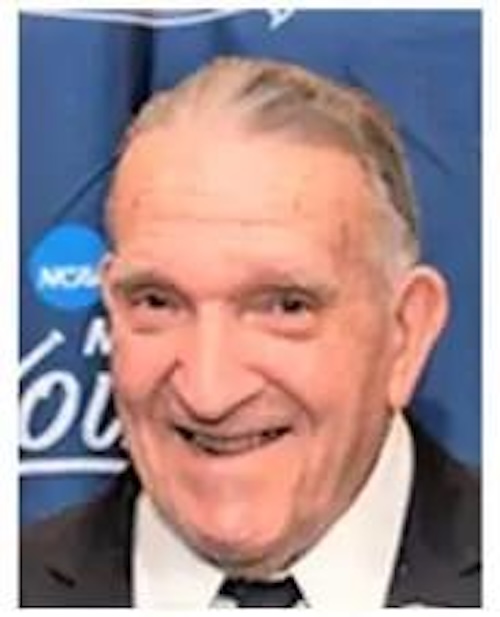
Nick Gabardina
“They say we die twice.
Once when our breathe leaves our body,
Once when the last person we know says our name.”
“Remembering My Coach, My Peer, My Friend…”
…A COACHING ICON” ~ Ted Menswar
Sadly, Nick passed away in 2019.
I’m not the last person he knew so it definitely won’t be me.
In fact, because he isn’t able to do it himself, I’m going to do my best to add more people to the list because I never want him to be forgotten.
Nick wasn’t just my coach, he was my unforgettable friend. For those of you who weren’t fortunate enough to cross the multiple paths of Nick’s life, I’m hoping that, through this story, you will “meet” him and, most importantly, never forget his name.
THE INTRO
By far, the “toughest” story I’ve written – not because I didn’t have enough material, but because much of it he didn’t want others to know. While he was a somewhat private man, even more than that, he was humble.
Though he was willing to share the stories surrounding his life, much of them were immediately followed with “but don’t write about that.” and, with a number of them, man, did I ever want to! How could a man who spent his entire life involved with sports, dedicating the overwhelming percentage of it to the youths, both male and female, of Manchester and surrounding communities, not have been interesting?
Additionally, while I’ve covered the lives of a number of extremely interesting people, none have I known as well as I do “Mr. G”…my coach (I played baseball for him at Post 79), my peer (I taught with him at Memorial), my mentor (I coached with him at 79), and my friend (for more than 50 years).
Though I knew Nick for a long time, I never was aware of his “story” which you’ll find – at least in part (i.e. – all that he’d permit me to use) – as you continue reading.
Few people have I met that have crossed paths with so many others, both famous and infamous, as this man. Few people have I met that have had such a positive influence on others, as this man. Few people have I met that have devoted their lives to helping others, as this man.
HIS YOUTH
A lifelong resident of Manchester, Nick’s first home was on Cedar Street and his first “parks” were Sheridan-Emmett and a field where JFK Coliseum now sits. Because there was no such thing as Little League or Babe Ruth baseball, his athletic career began as a catcher/pitcher for his Lincoln Street Grammar School team, playing alongside catcher Danny Campas and shortstop Billy Adams, all coached by Principal Ralph Kelly.
Then, at the ripe old age of 13, he tried out for Sweeney Post, a local American Legion baseball team, under the watchful eye of legendary head coach, Wally Tafe. Though he didn’t make the squad that summer, he did join them the following year as Wally’s hand-picked third-base coach!
As surprising as that is – and it’s definitely surprising to hear that a 14 year-old is guiding older players around the base paths, giving either the stop sign to hold them up at second or third or the green light to round the bag and head for the next one – it obviously demonstrated that Coach Tafe saw something in him that few athletes that age possess, and trusted him implicitly.
During his tenure in the box beside the “hot corner,” he remembered only one mistake.
“We were playing in the state tournament and I held our starting pitcher, Bob Farland, at third instead of sending him. When we got back to the dugout, Coach Tafe asked me why and I told him it was because it was a really hot day and Bob was pitching. He looked at me with his infamous ‘look’ accompanied by that infamous voice saying ‘We’re playing in the state tournament now!’ I got his message.”
As did many other players of that time period, Nick also played in the Park League that was comprised of two “divisions.” The Juniors were players of grammar school age while the Seniors were 8th graders and up.
At age 15, he played for Sweeney again, this time under the direction of coaching icon, Tom Padden, who Nick considers one of the two coaches who had the most impact on him. As he recalled, “Coach Padden never had a doghouse. He was always encouraging, always had faith in his players. Though I pitched and played the outfield, he still kept me in the third base coaching box. At the start of the season, he’d give me signals from the bench, Then, as it progressed, he did it less and less, then even let me call my own game to show how much he trusted me. He was in his own class.”
It was while playing for Sweeney that Nick experienced some of his greatest memories.
“I was a pitcher on the ‘47 team that went to California. There I got to personally meet the guest speaker at the banquet, a famous ballplayer by the name of George Herman Ruth, better known as ‘Babe.’ Jack Dempsey, the renowned boxer, was our celebrity mascot. He accompanied the team sitting in our dugout or right behind it.
Oh, yeah, I also got to play against a shortstop from Cincinnati you might remember. His name was Don Zimmer and was he ever good, REAL good, PRO BASEBALL good! Zim was drafted by the Dodgers and was slated to be the replacement for Pee Wee Reese. However, he was struck in the head by pitched balls several times with the final time requiring a plate be placed inside his skull and that, unfortunately, shortened his career.”
HIS HIGH SCHOOL YEARS
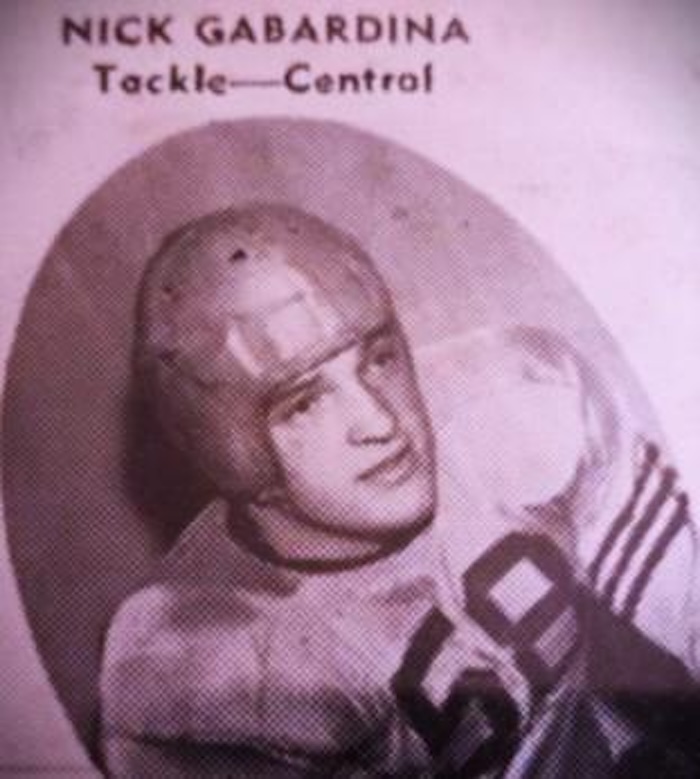
Now attending Manchester Central, he was a three-sport athlete, participating in basketball, baseball, and football as a member of the varsity for all four years in all three sports, something you rarely see today.
“As a player, I was OK. I wasn’t fast. I was just BIG.” (Writer’s note: Yes, big AND possessing enough talent to be offered a football scholarship to Brown University!) His coach? Perhaps Manchester’s most famous, most revered: Hubie McDonough, who, by the way, was Nick’s other selection for “most impacting, most memorable coach.”
As Nick put it, “He always had the right thing to say at the right time to say it and, equally important, he was a great coach of the fundamentals. Best I ever had.”
Speaking of football, one of Nick’s most “impacting” moments was as a 15-year-old freshman playing against Brewster Academy, a team comprised mainly of veterans returning from WWII whose educational and athletic careers had been interrupted.
“I played guard/tackle and after the game ended, I headed back to our bench. Only problem was I couldn’t remember which side to go to. I thought they had moved the bleachers. For a period of time I was literally ‘out on my feet’. It took me more than 30 minutes to walk back to my home near Textile Field (now Gill Stadium), a trip that usually took no more than 5 minutes! Though we didn‘t call it that back then, what I experienced was a concussion. It was a beauty and I had a number of them, as did many linemen.”
Who’d he love playing against while at Central?
“St. Joe’s (Bishop Bradley, now Trinity). We were all neighborhood kids and there was nothing like playing against close friends. While we were enemies on the field, once the game was over, our friendships continued.”
As much as he was impacted by coaches McDonough and Padden, he was equally impacted by his dad. When asked what he learned or gained from playing sports, he answered, ”Hard to say. A lot of the things put into me came from my father: play fair, do your best, don’t cheat, and don’t blame anyone else.
He worked a lot, employed as a chef until he was about 78 or 79. He went to one game, got so excited, but with a history of heart problems, he never attended another. My mom did, though. She loved to go and watch me play football. She didn’t understand the game, but loved to watch it and that carried over to football on TV.”
HIS COACHING YEARS
While his initiation to coaching started with Wally Tafe’s legion ball club as a player/coach back in 1946, now a student in college, he began his “adult phase” as an assistant during Central Little League’s inaugural season, There he helped head coach Tully Folis guide his Post Office club for one year.
That was followed by a two-year commitment to another team, Uncle Sam’s United States Army.
In 1955, he joined his brother, Ody, and head coach, Louis Georgopolous (then Elmer Simpson) as they combined their talents to guide the fortunes of Ted’s Sport Shop of Manchester East Little League and he remained there for five years.
From there he moved on to Manchester South LL for a one-year stint with two “Rays” Couture and Beaurivage, where he got the opportunity to work with the latter’s son, Ron, who developed into one of the Queen City’s most talented baseball players, exemplified by his becoming a draft choice of the Oakland A’s of MLB. (Writer’s note: it was here that I remembered my interview with Ron for the story I did on him. To this day, Ron considers Nick one of the best hitting coaches he’s ever had…and that included his time in the pros.)
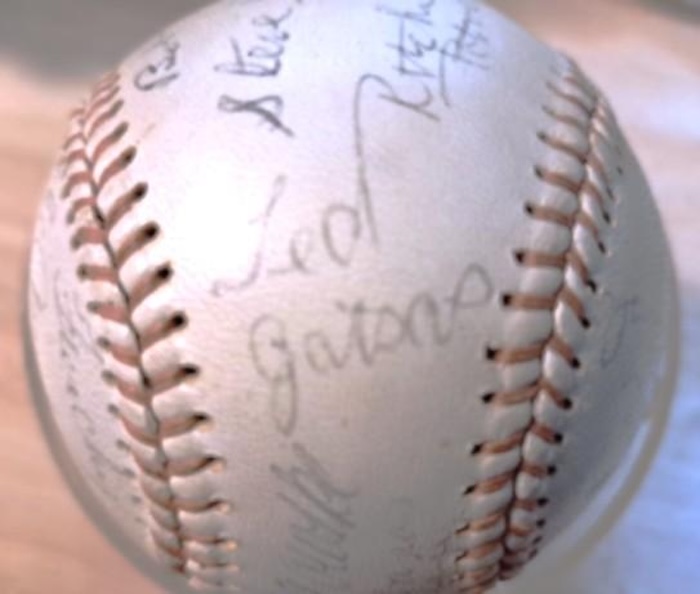
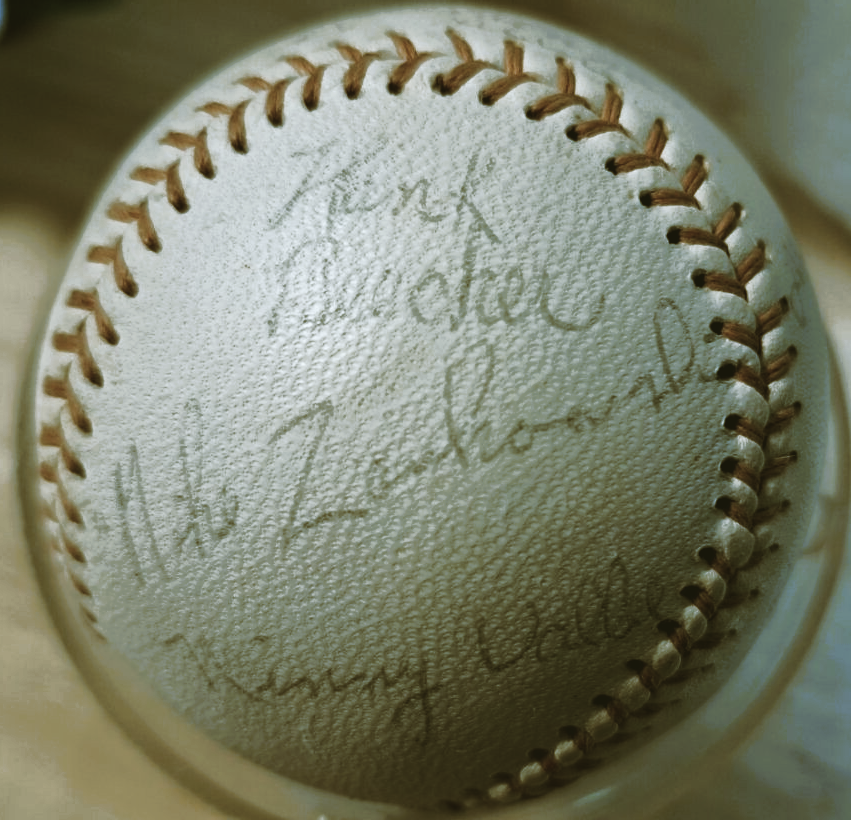
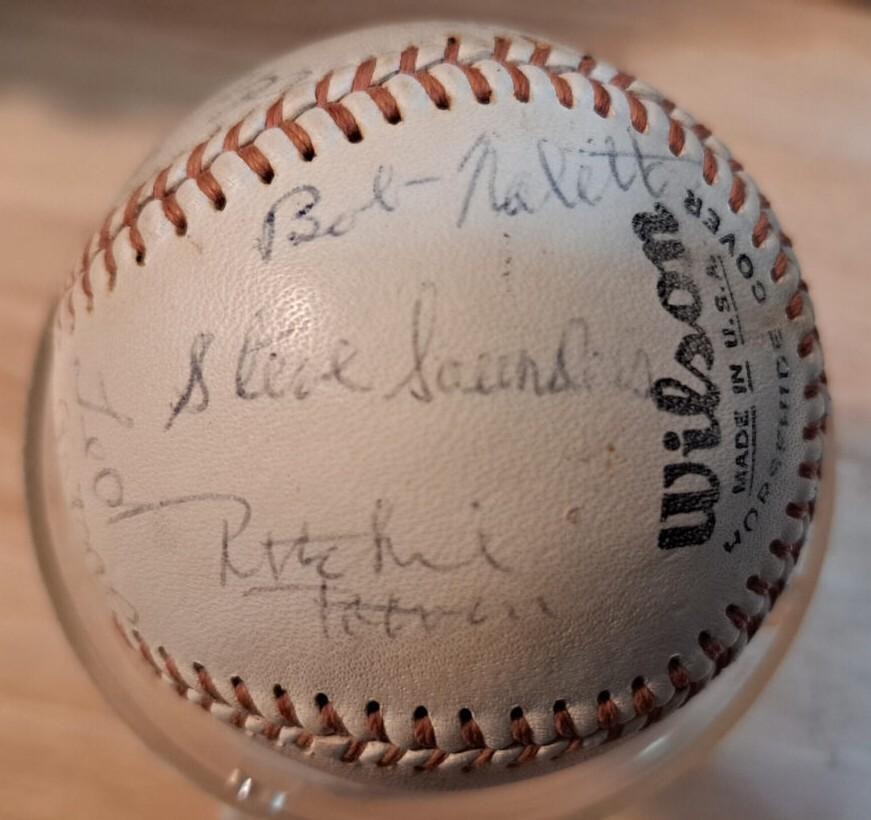
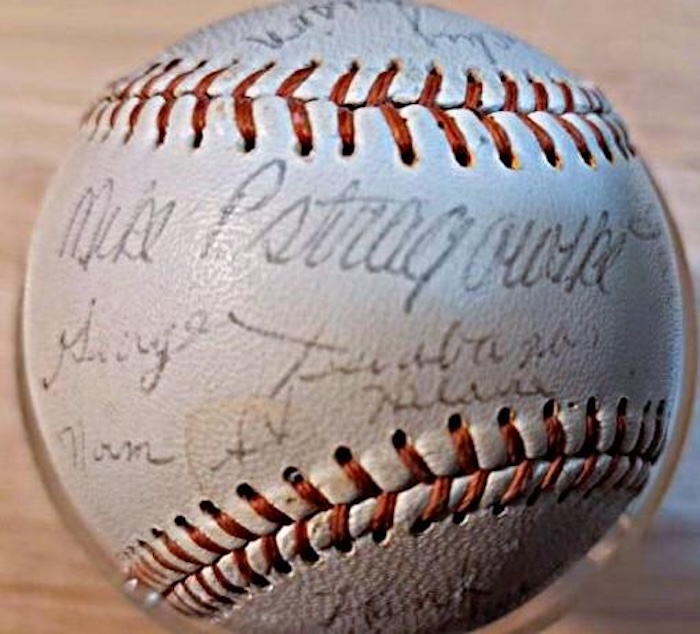
In the summer of 1958, Nick took on the position of head coach of the American Legion Post 79 baseball team, remaining there for 18 years, most of it spent with his pitching coach and friend, Jimmy Copadis. Personally speaking, “Copey” was the best one I ever had, knowledgeable, persistent, understanding, and extremely patient
When I asked Nick why he gave it all up, he answered, “Thought I had been there long enough. I was doing a lot of traveling once school got out and decided it was time to devote the entire summer to it each year. Plus, it was time to let someone else have the opportunity to lead the club”, and, following the ‘76 season, Al Desruisseaux was the next to get his chance.
In addition to Little League and legion ball, Nick also “served” the youths of Manchester as a teacher and coach at each of the city’s three public high schools.
From Central, to West, to Memorial, to UNH, to Saint Anselm, Nick’s “been there, done that”…
Coming tomorrow: Part2, Nick Gabardina, a coaching icon.
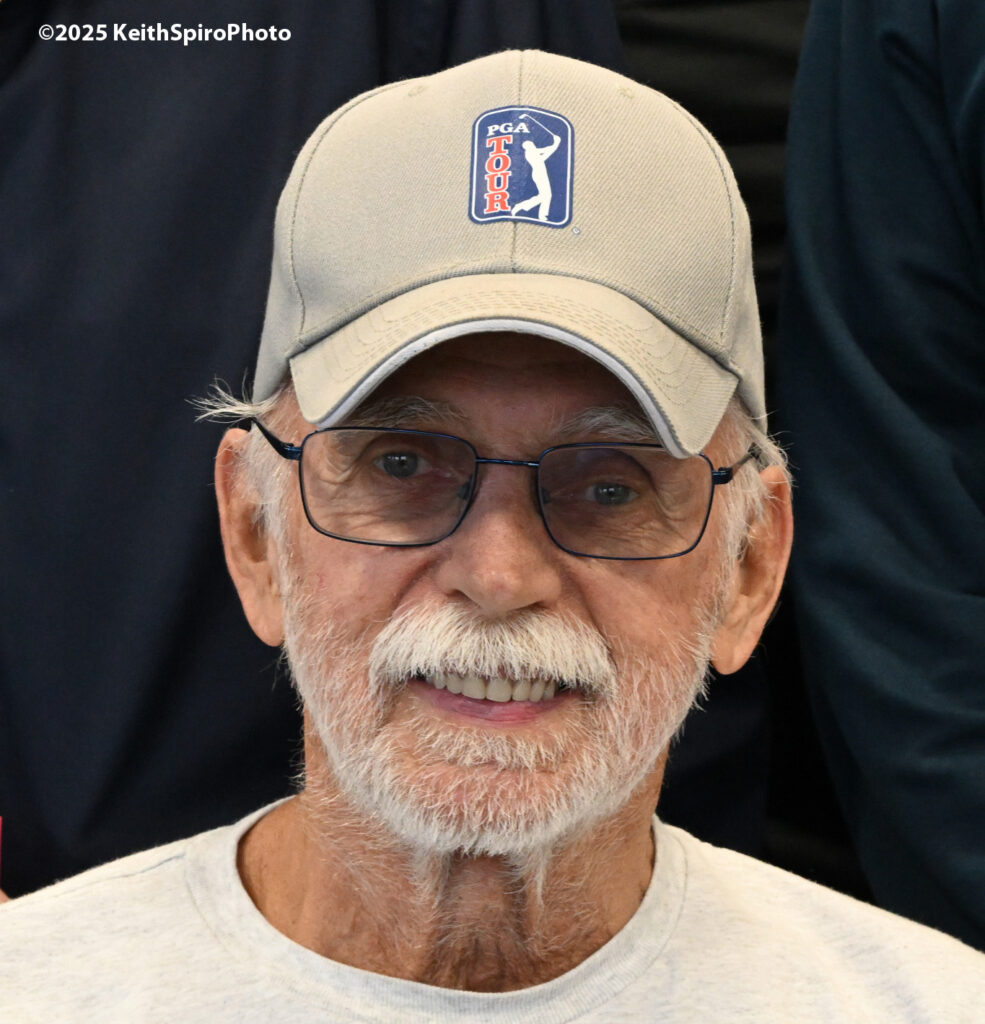
Ted Menswar Jr. is a life-long resident of the Queen City and a retired member of the English Department of Memorial High School who has been involved in local sports for 70 years as a player, a coach, a mentor and a fan. He can be reached at tedmenswar@outlook.com