
O P I N I O N
THE SOAPBOX

Stand up. Speak up. It’s your turn.
There is a troubling argument being made in Manchester right now: that supporting the tax cap, questioning the school budget, or asking for accountability somehow means a person wants to cripple public schools.
That is ridiculous.
Questioning a budget is not misinformation. Asking for accountability is not attacking children. And expecting the Manchester School District to justify spending decisions does not make anyone “anti-public school.” It makes them responsible to the taxpayers who are being asked to pay the bill.
Manchester families, seniors, renters, homeowners, and young people are all facing rising costs. They are making difficult decisions in their own homes every day. Many are cutting back, delaying purchases, working more, or doing without because they simply cannot absorb another increase. Those residents deserve respect. They should not be dismissed as enemies of education because they expect the same discipline from city government and the school district.
A clean audit does not mean every spending decision is wise. An audit confirms that financial statements are presented properly and meet accounting standards. It does not mean every budget priority is beyond question. In fact, the same audit discussion noted that special education transportation exceeded the approved budget by about $2 million and that there was not detailed student-level tracking for those transportation costs. That is exactly the kind of information taxpayers have a right to question.
The claim that the State is the real culprit also needs context. Manchester did not receive “nothing” from the State. The district’s own budget materials show total adequacy aid rising from about $64.6 million in FY22 to $70.5 million in FY23, then jumping to $97.8 million in FY24, $96.5 million in FY25, $107.6 million in FY26, and an estimated $105.8 million in FY27. So while there may be a decrease from the FY26 high point, Manchester is still receiving far more state education aid than it did just a few years ago. It is fair to debate whether the formula is enough, but it is misleading to treat the loss of an unusually high increase as if the State has abandoned the district.
Federally, IDEA made a promise 51 years ago that has never been fully kept. Manchester has never received the full federal funding it was told to expect for special education. That is a real problem, but after more than five decades, it is also a known problem. The district should expect to be shorted and budget accordingly. It should not be used as a surprise argument every time taxpayers ask questions about the rest of the budget.
The transportation argument also deserves a fair response. Yes, Manchester provides transportation for some parochial, private, and charter school students. But those families are Manchester taxpayers too. They pay the same property taxes as everyone else, while also paying privately for education or choosing a public charter option outside the traditional district. In many cases, the district is not paying the full cost to educate those students in an MSD classroom. Providing transportation has a cost, but the larger picture is that those families are also reducing the district’s instructional burden. That should be viewed as an overall savings, not treated as if those children or their parents are a drain on the city.
And this is why spending choices matter. At the same time taxpayers are being warned about devastating cuts, the district has discussed wrapping vans used to transport food from the commissary to schools. Commercial van wraps are not free. Full van wraps can commonly run several thousand dollars per vehicle, and if multiple vans are wrapped, taxpayers could be looking at tens of thousands of dollars for branding. Maybe that is small compared to the full school budget, but it sends the wrong message when residents are being told every dollar is critical.
Supporting the tax cap does not mean someone does not value public schools. It means they believe taxpayers deserve protection too. It means local government should live within limits unless there is a truly compelling reason not to. It means the burden on residents matters.
Manchester taxpayers are not saying children should go without services. They are not saying students with disabilities should be denied support. They are not saying transportation does not matter. They are not saying public schools do not matter.
What taxpayers are saying is simple: known mandates should be planned for, required services should be prioritized, administrative costs should be scrutinized, and children should not be used as leverage every time residents ask hard questions.
We can support public education and still demand accountability. We can care about children and still respect taxpayers. We can value our schools and still say that Manchester families should not be taxed beyond what they can afford.
That is not anti-school. That is responsible government.
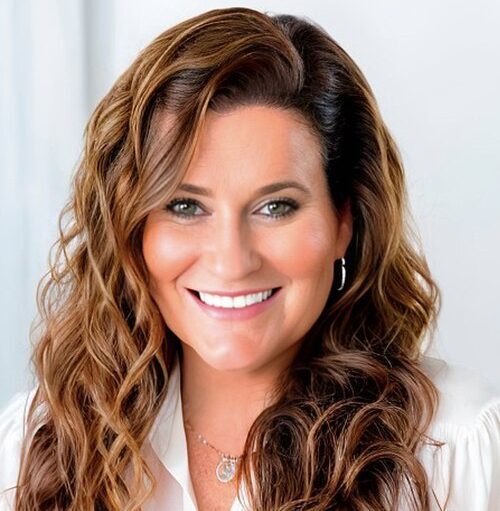
Kathleen Paquette is a Manchester resident, taxpayer, and State Representative.
Beg to differ? Agree to disagree? Comment below using our DISQUS app. Got issues of your own? You can submit to The Soapbox using our DIY feature here.