
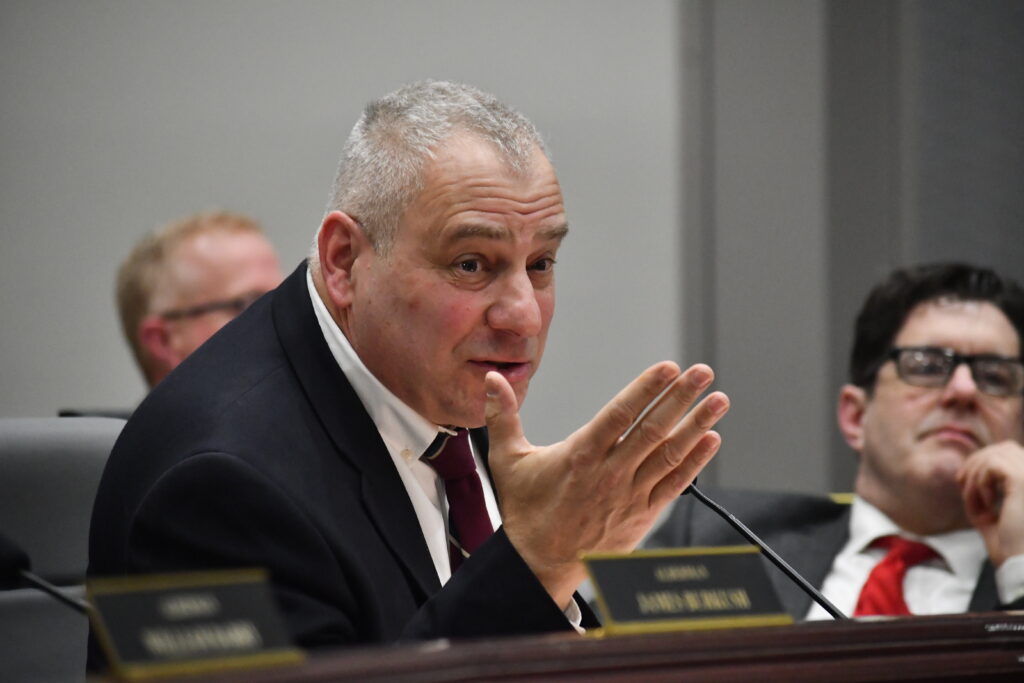
MANCHESTER, NH – Ward 8 Alderman Ed Sapienza has in recent weeks questioned the financial details around Phase 1 of the Manchester School District’s Long-Term Facilities Planning Project.
The questioning began during the March 3 Manchester Board of Mayor and Aldermen meeting, in response to an earlier request from Ward 10 Alderman Bill Barry for more details on the $290 million bond approved by the Manchester Board of Mayor and Aldermen for Phase 1, which was expected to cost $306 million in total.
There, Sapienza asked City of Manchester Finance Director Sharon Wickens why $54.3 million had already been spent on Phase 1 according to reports given to the Aldermen, but the $290 million bond had not been finalized, asking why this money had been spent and why it could not have been spent to shore up the expected $16 million gap in the Manchester Board of School Committee’s proposed Fiscal Year 2027 budget. Wickens tried to answer and provided more details in a letter two days later the Board of Mayor and Aldermen.
In the letter, she explained that she and Manchester School District Chief Financial Officer Karen DeFrancis had worked closely with the city’s financial advisor, Public Financial Management and other city financial consultants analyzing debt repayment strategies. They noticed that as more cash-flow information became available, it became clear that Phase One’s near‑term cash needs were significantly lower than originally expected.
Originally, the total $290 million amount was going to be bonded in November 2024, but given that lower total amount to be repaid and high interest-rate environment at that time, the city’s advisors recommended issuing a one-year-term bond anticipation note for $28.3 million to provide funding for the next year.
However, as November 2025 approached, updated cash-flow projections had changed and consultants recommended a second bond anticipation note for $78.4 million that would repay the first bond anticipation note and also provide short-term funding in conjunction with cash set aside for debt repayment by the Manchester School District. This $78.4 million bond anticipation note comes due in November 2026. Between the bond anticipatory notes and what amounted to $62.6 million paid by the Manchester School District in cash on repaying the bonds, which the letter indicates reduced interest repayments on the bond approximately $31 million.
Although the $31 million amount was not yet known during the March 3 meeting, Wickens indicated to Sapienza that the amount of savings was significantly higher than the $16 million amount.
During the new business section of the March 3 meeting, Manchester Mayor Jay Ruais’ provided an analogy of the cash portion of the initial repayments to paying a higher down payment on a mortgage to lower future interest payments, an analogy Wickens agreed with.
“The only problem with that is we have a budget coming to us where we know we are looking at a deficit, so maybe we should have just put the minimum amount down on the house,” Sapienza responded. “The bill’s coming. Maybe we shouldn’t put that amount down if we don’t have to,” adding that he felt it was irresponsible, given the impending budget gap.
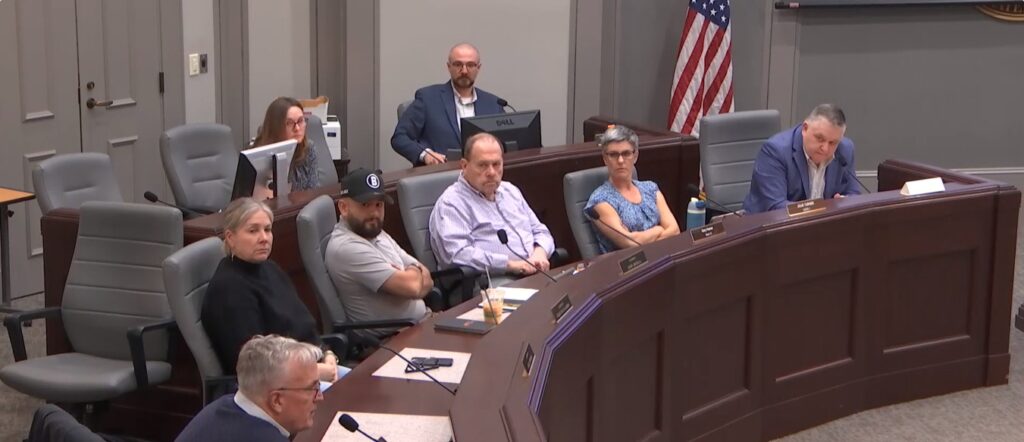
Sapienza brought the issue up again at the March 10 Manchester Joint Committee on School Buildings, a board responsible for school building projects made up of members of the Board and Mayor and Aldermen as well as the Board of School Committee.
Joint Committee on School Buildings Chair Jim O’Connell replied to Sapienza’s question stating that the amount of money appropriated by the Manchester School District for paying down bond repayments did not take into account school budgets approved by the Board of Mayor and Aldermen over the past two years that came in under the maximum allowable based on the city’s tax cap. Members of the Board of School Committee have noted that the gap between what was requested by the Board of School Committee and what was given by the Board of Mayor and Aldermen over the last two years is approximately equivalent to the budget gap the school district is facing this year, implying that money put toward the bond repayment would not be needed to be put toward budget shortfalls if the Board of School Committee’s initial budget requests had been honored.
“We didn’t have a hole before the hole was made,” said O’Connell.
O’Connell noted that last year, Manchester taxpayers actually had a tax decrease in school-related taxes due to one-time funding put toward the budget which will not be available again this year.
Manchester School District legal counsel Matt Upton also indicated that if funding had been earmarked for bond repayment initially, then that funding would have to be found somewhere else at a future time.
Sapienza indicated that his question would be asked again at future points of the budget process, with O’Connell reiterating that actions taken were from the guidance of the city’s financial advisors and some of the most knowledgeable bonding experts in the Eastern United States.
“With all respect Alderman Sapienza, it may not add up to you, but it adds up to everyone else in the room,” said O’Connell.
The Board of Mayor and Aldermen and Board of School Committee will hold a joint meeting on the budget on March 25 at Manchester Memorial High School, with Ruais providing his official budget address for the city and the school district on March 26.