
MANCHESTER, NH – Manchester’s growing special education population and the rising cost of serving students with complex needs took center stage at the January 27, 2026, Manchester Board of School Committee meeting as administrators warned of continued financial pressure heading into the 2026 – ‘27 school year.
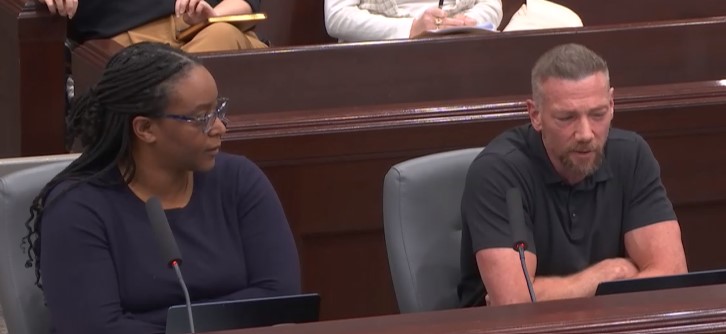
Manchester School District Assistant Superintendent of Student Services Ryan Roth and Executive Director of Student Services and Wellness Aisha Weaver presented a districtwide overview showing that more than half of Manchester’s special education students require significant services,
At the beginning of 2025’-26 school year, there were 3,065 individualized educational plans or IEPs for children with special needs, with 292 delivered with services outside the district’s 20 buildings. As of now, 318 are served out of district. Roth said that the change did not occur because of enrollment growth but a change in needs for students.
Legal obligations to the district also extend well beyond Manchester’s 20 school facilities, with Roth indicating that students receive services in charter schools, private placements and specialized programs that the district must still fund and oversee.
He also noted $1.9 million in savings for specialized transportation costs compared to this time last year due to a variety of reforms, including tighter coordination between IEP teams and transportation, more consistent review of service levels and adjustments to routes and supports to ensure Transportation is individual, individualized, appropriate, and not over assigned. Still, the total special education budget is expected to be over $1 million over budget and may change over time due to changing needs. A total of 26 of the out-of-district required IEPs cost approximately $600,000.
The Manchester School District’s Fiscal Year 2026 Budget had grown to $237,999,925 from $183,052,004 for Fiscal Year 2021. Initially the Manchester Board of School Committee recommended $246,050,206 for the Fiscal Year ’26 budget.

Manchester School District Superintendent Jenn Chmiel told the board that there are efforts to increase the number of in-district placements in the future whenever possible, with an increase of specialized classrooms put into effect as part of Phase One of the district’s facility plan.
Weaver said that the caseloads of our occupational therapy providers, speech therapy providers, and physical therapy providers have increased during Fiscal Year 2026 as a direct result of the increase in students identified with special education and related services, as well as the need for a self-contained educational environment. An additional three self-contained classrooms are also expected to be needed for elementary students, primarily for autistic-spectrum and developmental delay students.
When asked about other districts sending their IEP students to Manchester, Roth noted that Manchester offers supports that other nearby districts may not offer, leading Ward 4 Board of School Committee member Leslie Want to wonder if the district is providing IEPs when not needed. Chmiel answered that the key factor that has shifted in recent years was the addition on MTSS-A and MTSS-B to discover what every student needs to be successful and branch out from there.
Want also asked for additional projections regarding enrollment for special education students, but Chmiel said that it can be difficult to predict needs each year, especially with out-of-district placements.
“We do our very best to project forward, but I can’t guarantee that we won’t see those blips, especially with special ed,” she said.
Roth added that on a national level, variations in special needs cases vary by 2-4 percent each year and that the proportion of special needs students and those needing out-of-district services in Manchester is comparable to other school districts in New Hampshire. However, Chmiel also stated that Manchester’s staff dedicated to special needs students is small compared to what would be needed to achieve comparable staff-to-special needs student ratios in other New Hampshire school districts.

Chmiel later responded to a comment from Board of School Committee Vice Chair Jim O’Connell seeing a paradox between administrators saying the district is doing “just fine” regarding special education services while also needing more resources, disagreeing with Roth’s statement about people from other districts seeing Manchester’s special education services in a positive light.
She told O’Connell that no one said that the district was doing “just fine” in this regard, noting that the district’s special education staff is smaller than needed and cost estimates can be provided to address this shortfall. Chmiel also challenged O’Connell’s assessment around the reputation of the district’s special education services, stating that outcome data is showing that special education subgroups are performing at a higher level than has been seen in the past.
Roth also invited School Committee members to come and take a closer look at special education programs in schools.
“Behind every number is a student and we need to be mindful of that,” he said. “I don’t want to draw any correlation between out-of-district expenditures and our district not performing.”
O’Connell clarified that he was trying to commend Chmiel’s work and was trying to indicate that the district deserves more resources and should not settle for what it has been doing if he was trying to be supportive of progress that had been made.
“We need help, we have increasing costs and increasing challenges. It’s an issue for us as a school committee; it’s an issue for the city (and) it’s an issue for the state,” O’Connell said.
Ward 1 Board of School Committee member Julie Turner and Ward 2 Board of School Committee member Sean Parr asked for additional data in presentations in the future, with Parr adding that a presentation at the Teaching and Learning Committee would be welcome to try and find additional budget efficiencies. Ward 10 Board of School Committee member Gary Hamer also asked for more information in the future about what programs will be needed to be funded to allow more in-district special education services.
Board members did not take formal action on the presentation, which was for informational purposes, but several indicated the data would play a central role in upcoming budget discussions.