
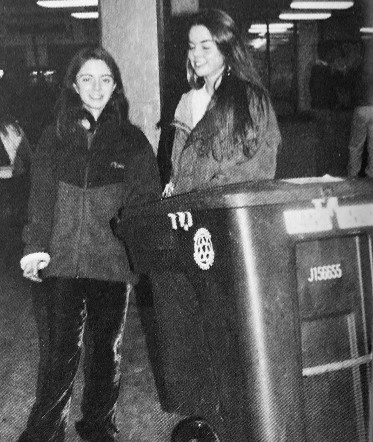
I was at Manchester High School West when the Students for Environmental Action (SEA) extracurricular club spearheaded the school’s first recycling initiative for plastic bottles and aluminum cans. I don’t recall if it included glass, such as the many Yoohoo and Snapple beverage bottles I purchased from the cafeteria’s vending machines. I do recall that members of the club had to haul the bagged recyclables in the back of their vehicles to a recycling center on Union Street. It was 1991 or 1992. And America was still on the heels of renewed environmental conservation efforts in 1989 and 1990 including preventing the expansion of a hole in the ozone layer, saving endangered species, “walking the talk” by following tips in the 1989 National Bestseller “50 Simple Things You Can Do to Save the Earth” book, and world-wide Earth Day celebrations 1990. Recycling initiatives were gaining momentum and recycling became an easy “feel good” thing we could all do to make an impact and “save the planet”.
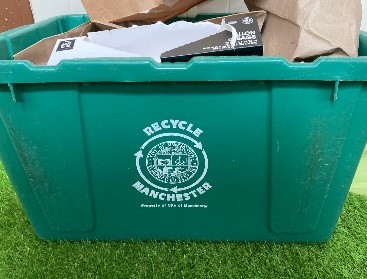
I was living in my first apartment in Manchester when the city’s Department of Public Works provided residents with rectangular green plastic recycling bins. It was 1995 or 1996. It was a dual-stream recycling system where we had to place our paper and cardboard products in a paper shopping bag within the green bin on one side and place our comingled products such as aluminum, glass, plastic, and tin on the other side. These separated recyclables went into separate areas of the recycling truck.
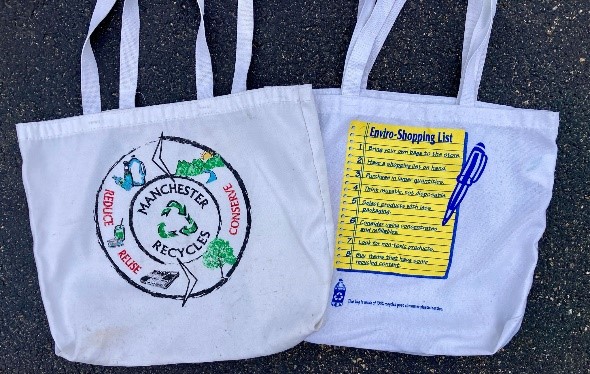
A few years later, in April of 2000, the city hosted an Earth Day festival in Veteran’s Park. It was then and there I acquired a few “Manchester Recycles” tote bags made of 100% post-consumer plastic bottles. And since I’ve had these, I’m proud to say I haven’t taken one plastic shopping bag, even during the Covid-19 pandemic when reusable bags weren’t allowed in the stores. I just bagged my groceries at my car. 26 years later, the bags are still holding up! I hope I live to see the day where single-use plastic bags and straws are relics of our unsustainable past.
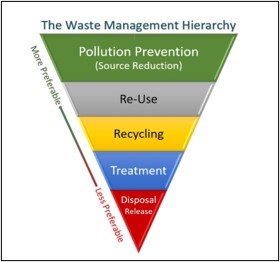
Since I have a degree in Environmental Conservation and have worked in the environmental sector for nearly 30 years the mantra “Reduce, Reuse, Recycle” lives rent free in my mind. Working for the New Hampshire Department of Environmental Services’ New Hampshire Pollution Prevention Program early on in my career also helped understand the significance of the pollution prevention hierarchy (also called the Waste Management Hierarchy) whereas “Reduce” and “Reuse” have more environmental impact than “Recycle” and that “waste is a resource out of place.” It still surprises me to this day when people stop at “recycle”, hang up their hat, and call it a day. There are so many ways we can all reduce, reuse, and lighten our environmental impact, but I’ll reserve those tips and those conversations for another time because we are here to discuss recycling.
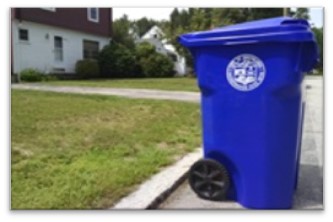
The city of Manchester swapped the green plastic recycling bins in the early 2000’s for the blue carts on wheels that we have today. Recycling was no longer dual stream; it became single stream making it easier for residents since comingled recycling could now be placed into one cart. With this effort came renewed hopes of reducing solid waste and increasing recycling. But what, and how much, is recycled? I’m often asked this question even though I don’t work in the solid waste and recycling sector but I tend to keep informed since waste reduction is part of my ethos.
Early on, I recall plastics being easy and straightforward. #1 and #2 were accepted, the rest were not. #1 and #2 were the most common, easier to recyclable, and be sold as a commodity. This made plastic recycling relatively easy and straightforward. Today, however, is a different story. Any one of us, at any given time, may encounter analysis paralysis on what to do with plastics #3 through #7, plastic bags, plastic bubble wrap, plastic utensils, plastic packaging, plastic shipping envelopes, plastic straws, plastic wrap / film, Styrofoam. Good grief! The list goes on. And if you look closely, many of these items either have “This is recyclable” language on them and / or the inclusion of the universal recycling symbol which would lead people to think it is all recyclable. But is it? Maybe somewhere. If there is enough volume and a market for the commodity. But not via Manchester’s (and most other community’s) curbside pickup (more on this in a bit).
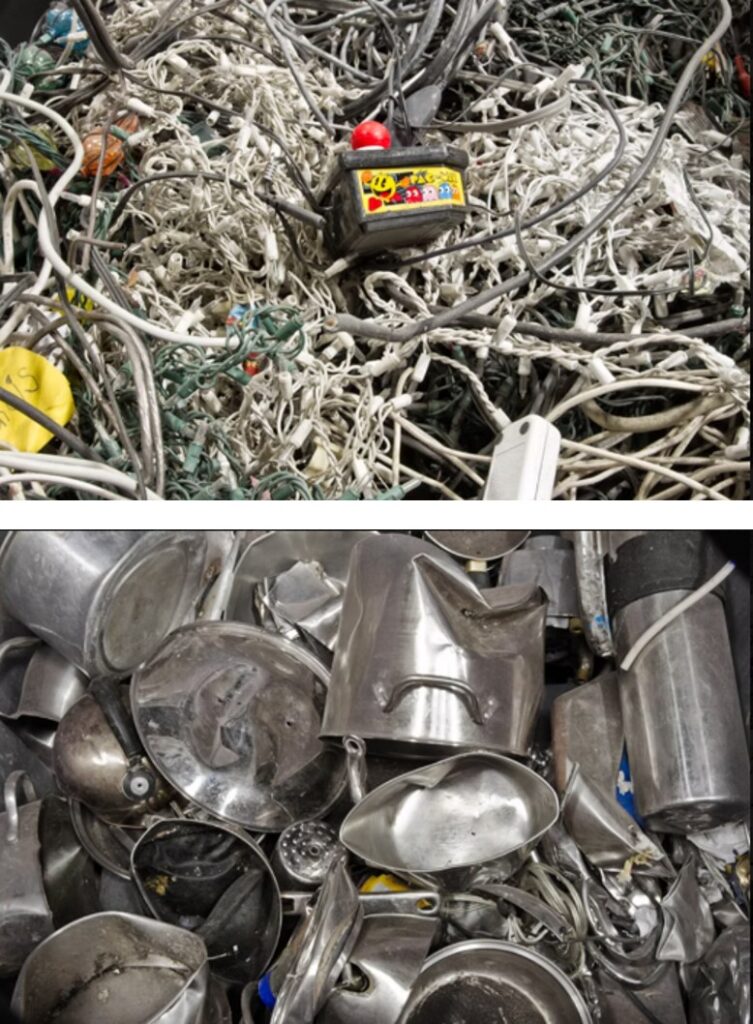
I see so much contaminated recycling wherever I go; at events, in my office building, and in city carts. Perhaps people are wishful recyclers who hope or believe an item can be recycled. Perhaps they aren’t familiar with the recycling guidelines in their area. Perhaps they see the recycling symbol on something and assume its recyclable. In all fairness, the act of recycling can also become confusing and daunting for people when what is and isn’t recyclable sometimes differs from municipality to municipality and vendor to vendor (again, this has more to do with market-driven commodities and economics). But “wishcycling” contaminates recyclable materials forcing extra sorting and screening increasing labor and costs, can damage recycling machinery (plastic bags being the biggest culprit and which can be recycled at most grocery and department stores), and may cause entire batches to be rejected and sent to landfills. Common examples of contaminants people wishcycle include plastic bags, bubble wrap, mixed plastics, scrap metal, and Styrofoam. From 2010 – 2013 I was fortunate to be able to tour several recycling facilities and waste-to-energy facilities in New England. The amount of contamination at the end of the line was astonishing. Thankfully it was all weeded out through optical, density, mechanical, and human separation, but we should attempt to recycle better to begin with.
Many people also question whether their recycling is getting recycled. Case in point, under a more recent five-year contract, it was more economical to send Manchester’s recycling to the Wheelabrator waste-to-energy facility in Pennacook instead of a recycling facility. During this time, recyclables were being incinerated and converted to an energy product instead of processed, sorted, sold as commodities, and recycled into new materials. Whenever this would come up in my discussions with people, they would get disgruntled at best. To buffer this sentiment, I’d explain that in the pollution prevention hierarchy sending our recyclables to a waste-to-energy facility is better than landfilling them since landfills are running out of space and are associated with their own environmental impacts such as potential groundwater contamination and greenhouse gas emissions. However, a new five-year contract for recycling was recently signed by the city with a different vendor.
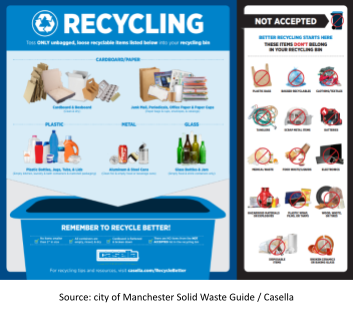
So where are Manchester’s recyclables going now? I had the opportunity to ask this question of Jerome Spooner, Solid Waste and Environmental Programs Manager for the City of Manchester at a meeting we both attended in January. The good news is that Manchester’s recyclables are being transported to Casella’s Materials Recovery Facility (MRF) in Charlestown, MA, where materials are sorted into commodities to be prepared for market. The MRF is the largest on the East Coast and one of the largest in the world. The facility was retrofitted to current state-of-the-art technologies to process up to 240,000 tons of recyclables annually. Take a “Virtual Tour of a Casella Recycling Facility! It’s pretty cool!
And what is and isn’t recyclable? I think it’s time we all took a refresher course on this, tidied up our habits, and improve our behavior. This information can be found on the city of Manchester Trash and Recycling website, particularly in the city of Manchester Solid Waste Guide. Additionally, I recently worked with the Jerome Spooner to create the lists below. Of note, because I feel like plastics are the most confusing to people, ONLY plastic #1, #2, and #5 are accepted; as there is no market for plastics #3, #4, #6 and #7. Wondering what these numbers mean?
What IS accepted by the city’s vendor.
- #1 Polyethylene terephthalate (PET or PETE). This is common, easy to recycle, and commonly found in disposable food and drink containers including water and soda bottles and prepared and frozen food containers.
- #2 High Density Polyethylene (HDPE). This is a non-transparent plastic commonly found in household cleaner bottles and some food containers.
- #5 Polypropylene (PP). This can be found in soft drink cups and certain food containers.
What IS NOT accepted by the city’s vendor:
- #3 Polyvinyl Chloride (PVC). This can be found in children’s toys and a variety of bottles.
- #4 Low Density Polyethylene (LDPE). This is soft and flexible commonly used to make thin plastic bags. Plastic bags of any kind are a definite no-no via curbside recycling and MRFs since they get tangled in and damage machinery. Most large grocery stores and department stores accept these for recycling.
- #6 Polystyrene. This is Styrofoam commonly found in takeout containers, disposable cups, and packaging materials.
- #7 Bisphenol A (BPA). This includes bio-based plastics.
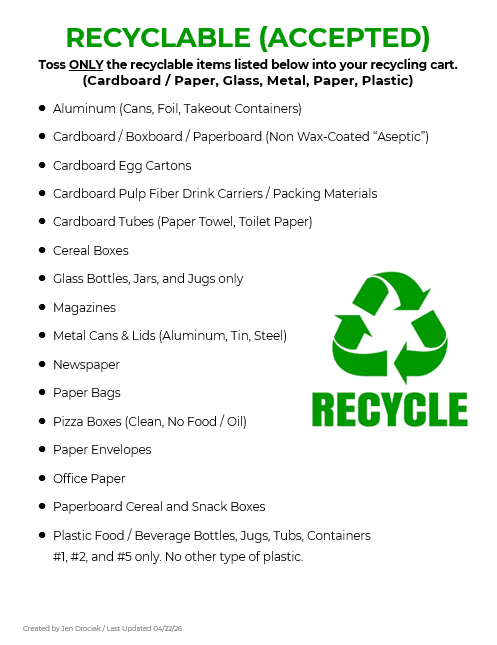
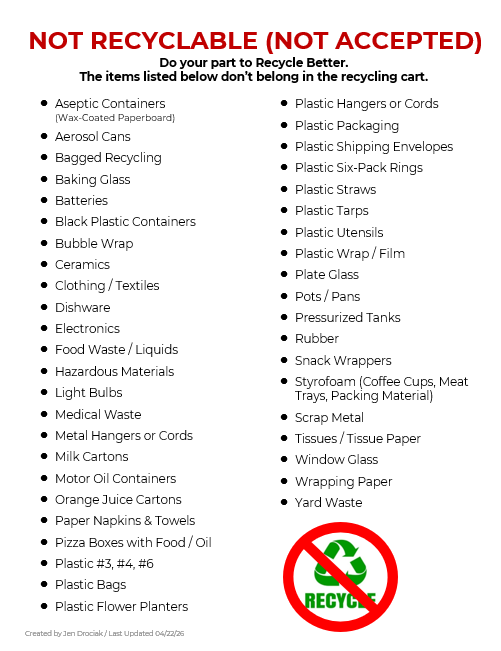
Recycling CAN be easy, and we CAN recycle better. The best advice I can give is that if something is not on the accepted list, or if you are unsure if it’s recyclable or not, dispose of it in the trash cart instead of the recycling cart.
Is it worth it? America produces the most amount of trash and municipalities continue to have recycling rates around 20 percent. Some communities exceed this with economic incentives of unit-based pricing such as “Pay as You Throw” and “Bag and Tag” programs, which I have publicly supported in the past. I believe there should be some Extender Producer Responsibility where manufacturers are held responsible for the entire lifecycles of their products. I believe there should be more avenues and incentives for communities to compost and divert food waste (I’ve been fortunate to back yard compost for 26 years but not everyone has that opportunity or the financial means to pay an external vendor for this service).
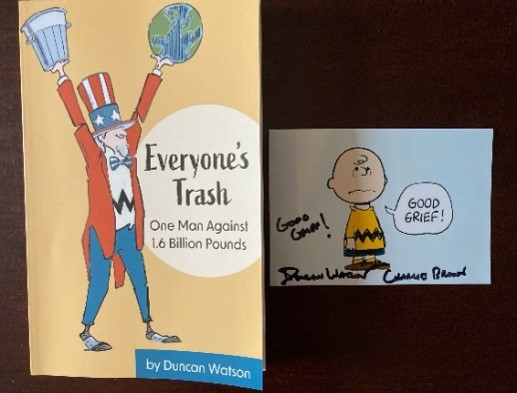
But I fundamentally believe that we all have a responsibility to be good stewards of the environment and leave a lighter footprint in all the ways that we can. Most of all, I believe there is still hope. So yes, while I believe we should all try to “Reduce” and “Reuse” before “Recycle,” I believe recycling is worth it. On a side note, on April 9, I attended an event at the Manchester City Library featuring Duncan Watson. Duncan is an expert in recycling and solid waste disposal and was the Assistant Director of Public Works in the city of Keene for over 30 years. In 2024, he authored a book called “Everyone’s Trash: One Man Against 1.6 Billion Pounds” published by Peter E. Randall Publishing. Additionally, as a child, Duncan was the voice of Charlie Brown in four television specials. Anyone who knows me knows of my love for Charlie Brown, so attending a book reading and discussion on trash and recycling by someone who voiced Charlie Brown was certainly a great night out for me.
Ducan doesn’t believe we are going to provide enough outreach and education, or “sort our way out of” the recycling challenges the world faces and believes the future is a combination of legislative authority, additional regulation, and the necessary infrastructure to achieve the metrics of New Hampshire’s Solid Waste Management Plan. By infrastructure, he references siting Advanced Materials Recovery Facilities (AMRFs) which can handle larger volumes, a wider variety of materials, and sort and divert most items (including food waste) from the landfills. One bin. Higher resource recovery. Less analysis-paralysis and decision-making on our end as the consumer, which sounds good to me. Anyway, I his book is an eye-opening and interesting read that I highly recommend. In exchange for purchasing his book he gifted me his autograph on a Charlie Brown photo card! I feel like the little red-haired girl.
Remember to Recycle Better!
- No items are smaller than 2 inches in size.
- All containers are empty, rinsed / clean, and dry.
- Cardboard is flattened and broken down.
- There are NO items from the NOT ACCEPTED list in the recycling cart.
For More Information:
- Jerome Spooner, City of Manchester Department of Public Works, Environmental Programs Manager (603) 624-6444
- Casella Recycling
- U.S. Dept. of Energy
Jen Drociak lives in Manchester, was on the Manchester Conservation Commission (2000-2006), the Manchester Heritage Commission (2020-2024), is on the Manchester Parks & Recreation Commission (2024 – present), a trustee on the board of Directors for the Manchester Historic Association, and coordinates the Manchester Urban Ponds Restoration Program. She works at the New Hampshire Department of Environmental Services. She’s also an artist and photographer and you can see three of her photographs as wraparounds on three Big Belly solar-powered compacting trash cans on Elm Street. She is also the creator of the Love Manchester t-shirt series (shop hosted by Manchester Ink Link Shop and @lovemanchesternh (Instagram).