
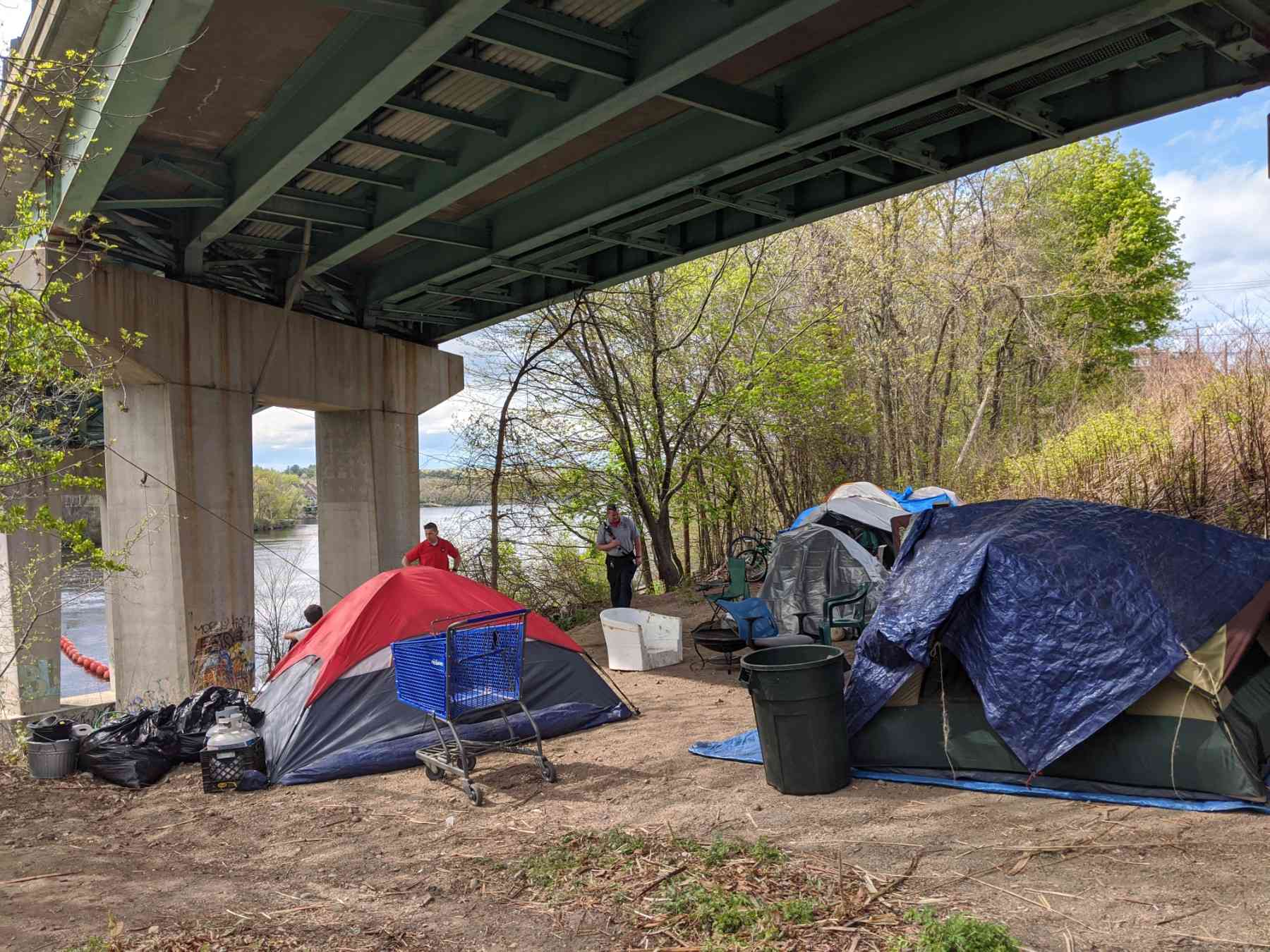
MANCHESTER, NH – According to the most recent census there are close to 300 people living unsheltered on public property in Manchester. Of those, 80 percent had some previous contact with mental health services. And only about 27 percent of those people self-report as being from Manchester. The rest come from other parts of the state, and beyond.
But every day Manchester’s outreach team heads into the woods to meet them where they are, to find out what they need, if they are sick, or hungry. At September’s Board of Aldermen meeting, Fire Chief Dan Goonan reported that they’ve got an accurate count of those living unsheltered. About 33 of those individuals had been connected to services and moved into a shelter bed or other arrangement. Another 25 had been involuntarily taken out of the camps for what Goonan described as “severe mental health problems.”
Even as the city works with state and federal officials as well as the faith community to find tangible solutions to the statewide crisis of homelessness, the problem remains that there is a large – and increasing – number of people who’ve found their way to Manchester and, with winter closing in, few safe places for them to go.
New Horizons reports that their 68 beds at the Manchester Street outreach and 39 beds at the former Angie’s place were close to capacity. They are working on winter sheltering solutions with other service providers, but that plan is still taking shape.
Goonan emphasized to the board that from what he has seen and heard, a hot meal and a cot are not the answer.
“There are a lot of terrible stories of people being abandoned by their families due to persistent mental health issues and substance abuse – it’s really a chicken and egg situation, but for those who are schizophrenic or dealing with other serious mental health issues, quite frankly, they need to be institutionalized or in a setting where someone can hold their hands. This is the No. 1 issue. Even if you got them an apartment or housing first, I don’t think a lot of these people could function. They need something more,” Goonan said.
Tuesday night Ward 3 Alderman Pat Long will officially float an idea that is something more.
He’s drafted a plan, Unsheltered 2020 Resolution [see below], that is focused on outreach and “full-circle” casework. It proposes bringing together all the organizations that have some connection to the homeless community. The goal is to move people through the process into appropriate treatment and services, whether for mental health or substance use, which then begins their transition to independence. Outreach would be a collaborative effort between Families in Transition, police and fire, Manchester Mental Health and the city health department, much as it is right now, but with city oversight.
“What I’m finding out is there are niches,” says Long, who has been working the phones to figure how who does what and how the demographics break down, as well as the data.
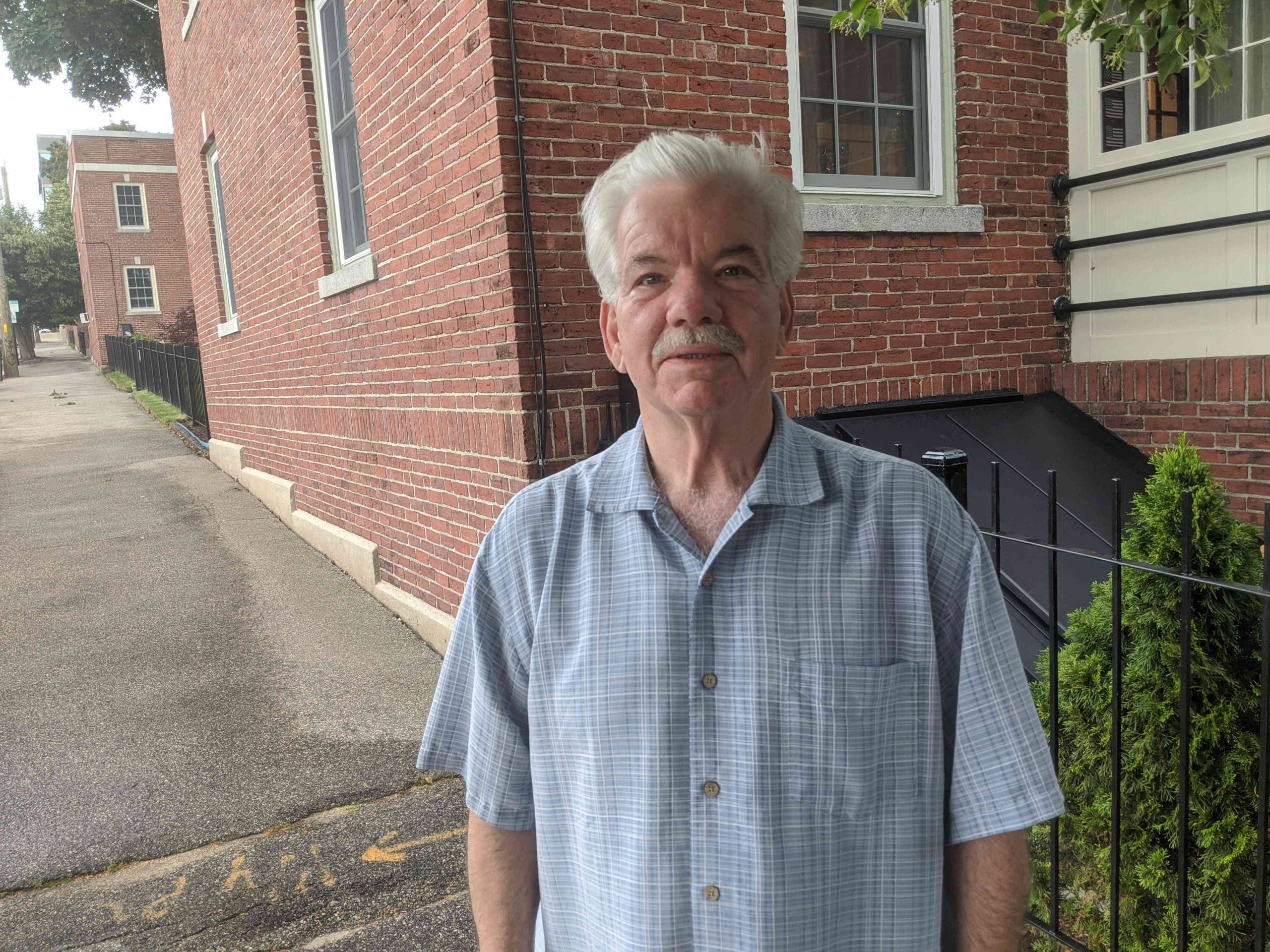
Long lives downtown not far from a homeless camp, and described an encounter he had with a man who had come from Concord and was living unsheltered with his wife. Long got to talking with the man and learned he’d mostly fallen on hard times. “He didn’t want to be in the camp, he wanted to work. So I asked him if he could pass a urine test, and he said he absolutely could.”
Long sent him to Home Depot where he was hired making $15 an hour. His wife got hired, too.
“Now both of them are working at Home Depot, and I got them into a studio apartment where the landlord gave me a free month so they could save some money. In a month he’ll be paying $950 rent plus another $100 toward his deposit,” Long said. “How many more people are like that, that you could just grab out of there and get them services and get them on their way?”
Having more people in the trenches as caseworkers, to go beyond meeting a person’s basic needs of food and shelter, is key to finding them work and a place they can live. It’s been a missing component, says Long, and one that the city hasn’t had much control over, as the existing services are either privately operated or run by non-profits. Long says his plan would be a city initiative with help from the state.
But he also would like to see more accountability among the existing organizations and outreaches, such as updating the city regularly on how many people are currently receiving help and how many people have successfully transitioned into an independent living situation. Funding should be tied to success.
The next step is for Long’s proposal to make it out of committee and be vetted before the full board.
Long believes his proposal will help put Manchester back in control, and through data collection and increasing caseworkers, can use it to make sure that the resources needed will be directed toward more permanent solutions. Living on public spaces around the city isn’t a solution, he says.
“At some point we have to draw the line. I was there. I was a drug addict. I was a drinker. I was on the streets. And when you asked me if I wanted help, or told me you could get me a good job, I said I was all set. I was all set,” he repeats, with emphasis. “I’m drinking and getting high, I’m happy. Yeah, I’m living in shit, but I’m happy. There has to be a turning point. You need outreach to build relationships. For me, it was my kid,” says Long.
“My kid was 2 years old. I had no dad – my dad left us, my mom was a paranoid schizophrenic and stayed in the hospital forever. I was an orphan at 3. The state brought me up. It was my son. I thought, how sick is this, that a 31-year-old has to sit down and say, ‘Do I want to be a part of my kid’s life?’ That was the question I had to ask myself, and thank God I said yes.”
He considers himself a man of empathy from an authentic place of knowing, but he’s also ready to move the needle on homelessness, a statewide problem that has been delivered to Manchester for lack of a meaningful state plan. Even if it means considering creating a place within the city where comprehensive services can be provided.
“I’m not going to be Mr. Popular, I don’t think,” Long says. “But it’s time to do something.”