
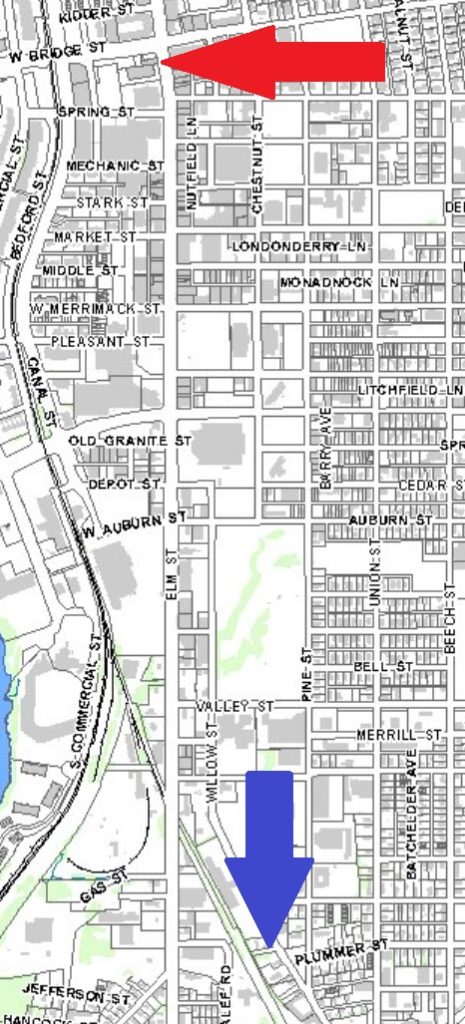
MANCHESTER, N.H. – Highlighting an 18-item, four-hour meeting, the Manchester Zoning Board of Adjustment (ZBA) approved variances on Thursday night for a pair of new developments seeking to increase the city’s affordable housing portfolio.
The properties, 1138 Elm St. and 182 Willow St., both required relief from the city’s zoning ordinances regarding minimum buildable lot area. The 182 Willow St. proposal was a little trickier as it sound to absorb 1,650 square feet from its neighboring lot at 168 Willow St. to get the requisite space needed for constructing the new residential dwelling. With that swap, both lots would require variances from requirements for landscaping, with 182 Willow St. also requiring a variance from requirements for off-street loading areas and 168 Willow St. also needing a variance on requirements for the amount of space used on a lot, also known as lot coverage.
According to the United States Department of Housing and Urban Development (HUD), “affordable” housing is classified as any housing that takes up no more than 30 percent of a household’s monthly income. As incomes can vary, the standard income generally applied for affordable housing is put to 80 percent of an area’s “average median income” or AMI, with New Hampshire’s HUD data leading to an “affordable rent” threshold of approximately $2500 per month.
Every single of the combined 71 units in the two proposed buildings is expected to be leased under that amount, with some coming in as “workforce” housing (60 percent of AMI) and some even lower than that, as some apartments at 1138 Elm St. will be listed as low as $650 per month.

Although 1138 Elm St. is located in the Central Business District, where parking is not required for new construction and it was not one of the issues under review for a variance, several members of the ZBA expressed concern about a lack of parking making the proposal unattractive for potential tenants. The small size (some units coming in at approximately 400 square feet) of the units was also a concern. Representatives of the applicant indicated that the units are targeted at elderly and poor occupants, many of whom do not have cars and instead could use nearby public transit options or walking. They added that those types of occupants often do not need much space.
Initially, the lack of windows in some areas was posed as a concern by ZBA Alternate June Trisciani, echoing concerns about a transition from office space to residential use nearby at 1230 Elm St. However, representatives of the applicant said that windows had been boarded up in the past to allow for a billboard on the side of the building as offices do not require windows, and that the billboard would be removed and windows would be returned to the building.
Public comment for 1138 Elm St. was entirely supportive, with members from Manchester Housing Alliance urging the board to support a building that would house the only affordable residential units on downtown Elm Street and praising the applicant for buildings they own on Dutton Street.
“It’s the type of living that is needed not just for disabled people, but our elderly population,” said Vanessa Blais of the Manchester Housing Alliance. “These types of projects should be encouraged and we need to be removing as many barriers as possible to get these projects on the road.”
The variance for 1138 Elm St. was approved on a 3-2 vote, with Trisiciani joined by Max Latona and Greg Powers in support and Joe Prieto and Kathryn Beleski voting in opposition.
1138 Elm St., located near the corner of Elm Street and Bridge Street, is currently an office building and will also require site plan approval and a lead safe certification since it was built before 1978 and it may contain lead paint.
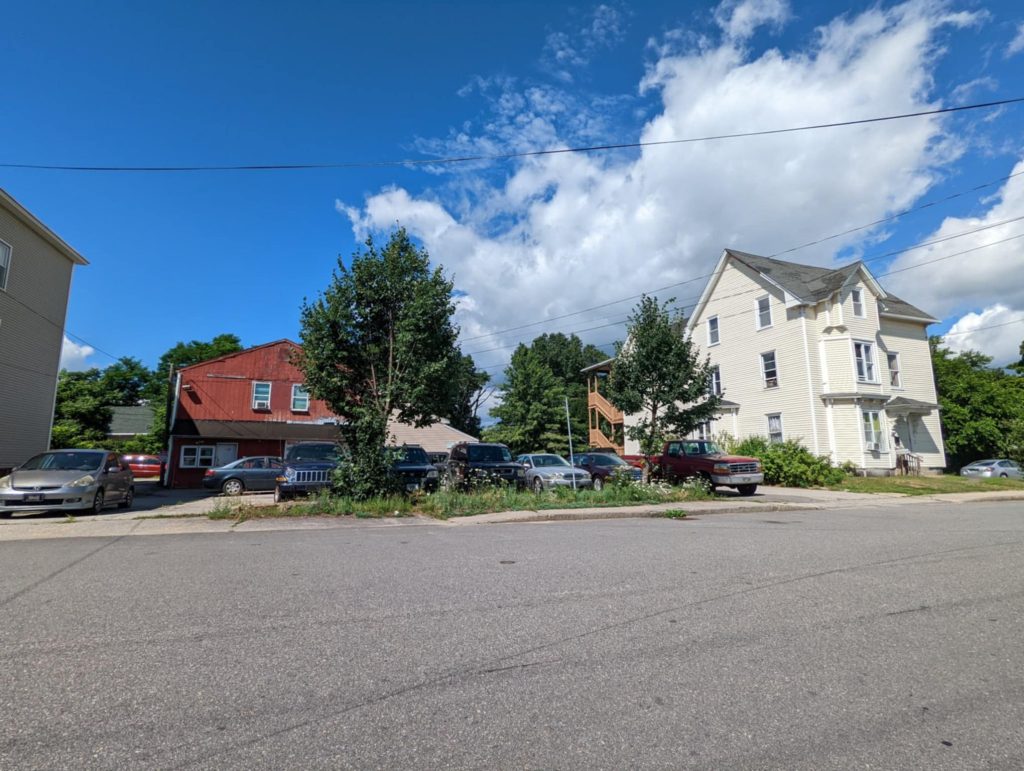
While 182 Willow St. application has nearly four times the square footage of 1138 Elm St. and would be close to what is needed for minimum square footage in the Central Business District where 1138 Elm St. is located, 182 Willow St. would need just under three times the square footage to be allowed by right given that it is in the RDV (Redevelopment – Mixed Use) Zone.
Members of the board asked Ferdinand Fricker, owner of both 182 and 168 Willow St. why he did not close his automotive business at 168 Willow St. and combine the two lots. This led to consternation from Fricker, feeling as though the board was penalizing him for trying to help stem the city’s shortage of housing.
“This is a re-development zone,” he said. “If you can’t get this done in a re-development zone, tell me where else I can do this in the city? If I can’t do this here, it will never get done.”
Fricker also harmed his cause by stating the proposal at 182 Willow St. did not have any hardship, one of the requirements to receive a variance in the State of New Hampshire, but later members of the board indicated that the shape of the lot served as a hardship.
Latona also expressed concern that the proposal was out of character with the rest of the neighborhood, while Trisciani noted that The Factory could be seen as a comparable development and the Factory and 182 Willow St. are separated by just one lot.
There were also questions about why the proposal had 34 units, with project agent Brian Pratt stating that number would be optimal to obtain grant funding from the New Hampshire Finance Authority, and without that grant funding the project would be infeasible. Members of the board also asked if approval for the variances could be tabled, but Pratt indicated that the grant funding would likely not be given without the variances, and a decision on the grants was coming the next day.
The board unanimously approved the variances for both of Fricker’s lots, although the 182 Willow St. variances were contingent upon obtaining the grant funding.
Both lots will require additional review from the Planning Board on subdivision approval and parking, with 182 Willow St. also requiring site plan approval and review regarding the merger of Auger Street into the property, a non-public street just to the north of 182 Willow St.

UPDATE 9/3/24 – A special meeting of the Manchester Board of Mayor and Aldermen was heard regarding the 1138 Elm St. property for a RSA 79E (Community Revitalization Tax Relief Incentive) application.