

MANCHESTER, N.H. – After over a year of input from residents of the city, the public got one last chance to share their views on the proposed update to Manchester’s Zoning Ordinance during a special meeting of the Board of Mayor and Aldermen on Nov. 17, 2025.
The special meeting was scheduled to allow a public hearing on the proposed set of ordinances, technically the only time the city’s government is required to provide for members of the community to give their feedback. However, this night was just the latest in a long string of input sessions, ranging from a series of community gatherings in each ward that lasted until last September to a steering committee that took feedback from those ward meetings and refined them into new drafts. Additionally, there were several presentations on the proposed set of ordinances at City Hall as well to provide overviews as well as online surveys in a process that was lauded by city officials for its thoroughness and transparency.
“If there is an example of where government works well, it’s what’s been done in the past year and a half,” said Manchester Mayor Jay Ruais.
“This is pretty special and if we had just went with a consultant, we wouldn’t have gotten the caliber of what we’ve gotten here,” said Alderman At-Large Dan O’Neil.
Members of the public were uniform in their general support for proposed set of ordinances, although there were a few individuals who requested tweaks.
Kenneth Keller, a new Manchester resident, requested more flexibility for minor automotive repair in residential areas. James Vayo, who said that he creates form-based zoning ordinances for a living, expressed concern about the ratio between the implied parking needs of minimum lot sizes in certain areas and the minimum amount of required parking spaces in some residential areas. William Smiley, a retired member of the local signage industry, felt that there should be more lenient standards for signage and provided packets of information explaining his thoughts.
Manchester Department of Planning and Community Development Director Jeffrey Belanger explained that some things are entrenched in law such as the right to pursue a variance, grandfathered uses and a recent state law regarding parking space maximums. However, he also noted that the set of ordinances will likely evolve over time as previous sets of ordinances had changed in the past.
Belanger said that the one of the key allures of the proposed set of ordinances is the attempt at streamlining regulations. One example he used came from an individual whose family had lived at a property for generations. That individual sought to realign his driveway to place two cars in it, but required a law firm and land surveyor to present a request for a variance from the Zoning Board of Adjustment; Belanger indicated that the individual could just file for a permit under the new set of ordinances.
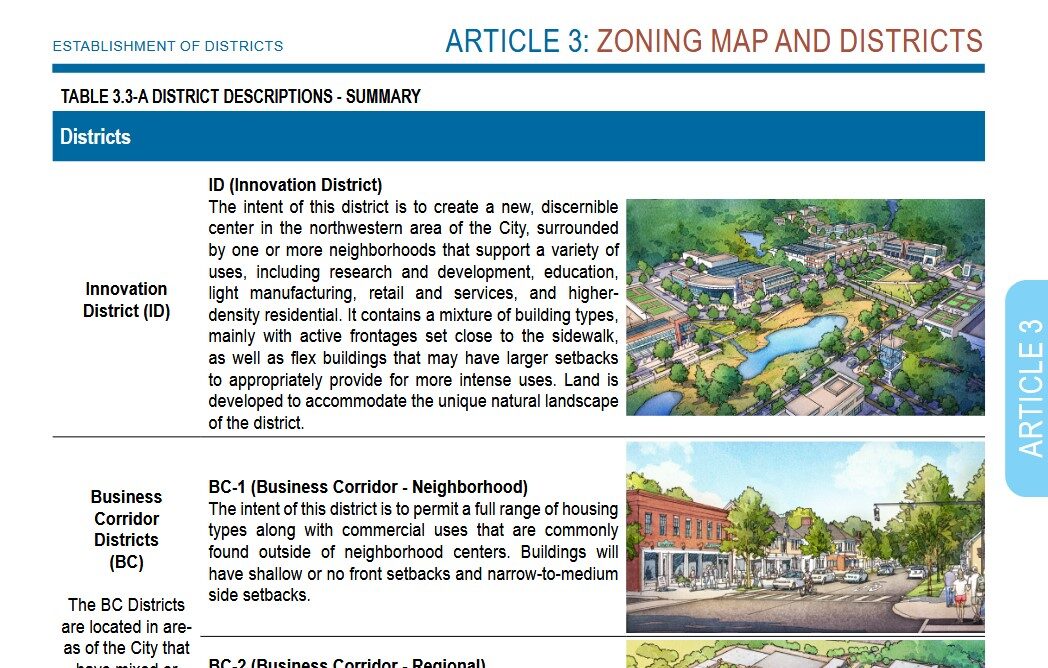
Belanger also mentioned that most types of zoning would not change, with the bulk of the changes coming in and near the city’s downtown. Ultimately, he said those changes are intended to align these areas with the reality on the ground following decades of variances. The changes also are intended to create more housing by allowing more density by right in this inner part of the city.
On Tuesday, the proposed set of ordinances were reviewed by the Manchester Board of Mayor and Aldermen’s Committee on Accounts, Enrollment and Traffic, with a final decision of ordainment of the proposed set of ordinances expected sometime in December. During Tuesday’s meetings, people did express concerns about the ordinances.
Orange Street resident Rich Girard stated concerns about methodology in the public outreach for the ordinances with non-Manchester residents’ opinions getting a larger weight than appropriate while also quoting studies that challenged the assertion that greater density would lead to more homes.
Ward 6 Alderman Crissy Kantor felt that the impact to municipal services such as the police and fire department would outweigh any potential benefits from the new set of ordinances and Ward 8 Alderman Ed Sapienza expressed skepticism that the new set of ordinances would help the city.
More information on the proposed ordinances can be found here.