
MANCHESTER, N.H. – After months, if not years, of anticipation, the second draft of Manchester’s proposed new set of zoning ordinances was released on Friday.
The zoning ordinance update, if approved, would become the fourth set of zoning ordinances in the city’s history and was developed with the intention updating the city’s land use code with the city’s needs and changed reality since the last update over 20 years ago.
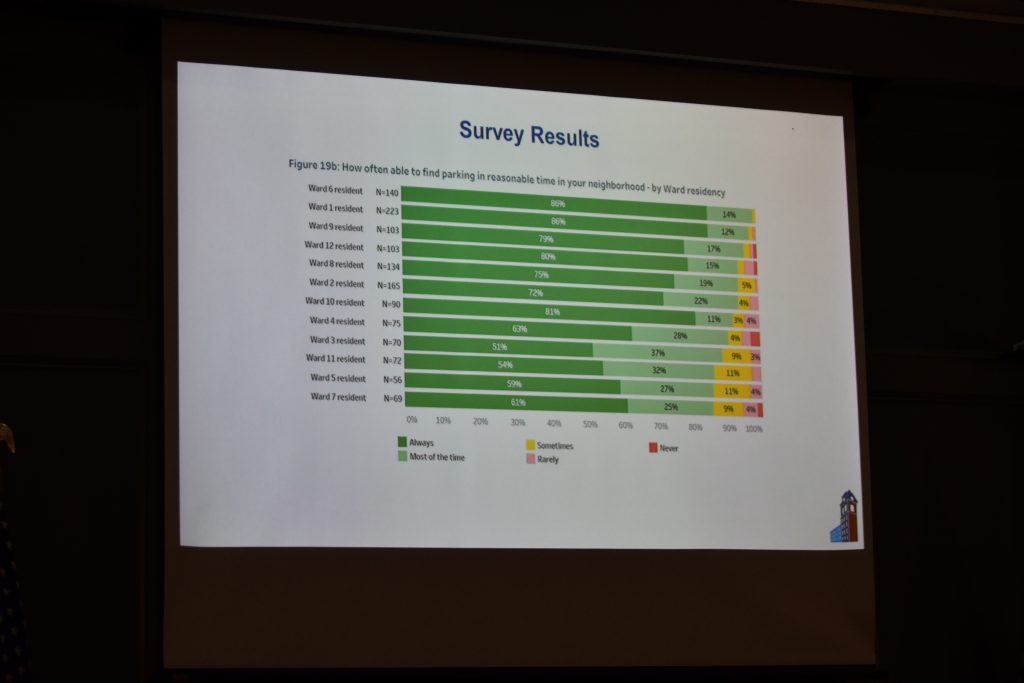
An extensive public outreach campaign around the proposed new ordinances began just over a year ago, leading to a set of meetings in each ward of the city to get feedback on how to proceed. That set of meetings ended in September along with an online survey organized by the University of New Hampshire Survey Center about the proposed new ordinances that attracted responses from 1,499 people. The data gathered from the survey and meetings was then analyzed by a 12-person steering committee before the new draft was released during Friday’s presentation at City Hall. [Click the graphic above for more info.]
Ultimately there were minimal changes between the first draft and the second draft as the data showed a strong demand for increased housing across the city, but differing opinions on what form that housing should take and where it should go. In Friday night’s presentation, City of Manchester Director of Planning and Community Development Jeff Belanger provided examples where opinions varied between the city’s urban core and suburban periphery regarding housing and various other areas.
While there were some changes in the proposed zoning map in the second draft like the elimination of a proposed high density business corridor along the eastern portion of Hanover Street and some changes on where mixed used is allowed by right, but the biggest change came in the form of parking requirements, according to Belanger.
The second draft came after the passage of new laws changing parking space requirements, but 64 percent of respondents in the survey said that new housing should have dedicated parking spots.
“We probably spent more time working on parking than any other topic since the first draft. We spent a lot of time thinking about ways to absorb parking onto private property, to help free up parking on the streets. We looked at data on national-level parking requirements, which led us to increase parking requirements for some uses that had dropped a little low. We also did a lot of design work to figure out how we could reduce some setback requirements and help people on smaller properties get an extra space or two, which, again, would take pressure off street parking,” said Belanger.
Planning Board Chair Bryce Kaw-uh thought the second draft was not perfect, but still had praise for its emphasis on increasing housing availability by reducing minimum allowable buildable lot sizes across the city.
“While the second draft isn’t everything I hoped for, that’s what makes it a good compromise. The new zoning ordinance will really help with our housing crisis so I hope every Alderman votes in favor,” said Kaw-uh.
A public hearing on the second draft is expected sometime in October or November, and the Planning and Community Development Department is soliciting comments on the second draft until Oct. 7. A vote on the zoning ordinances is possible in December, in which case they would be in effect come March.
More information on the proposed new zoning ordinances can be found at manchesternh.gov/landusecode