
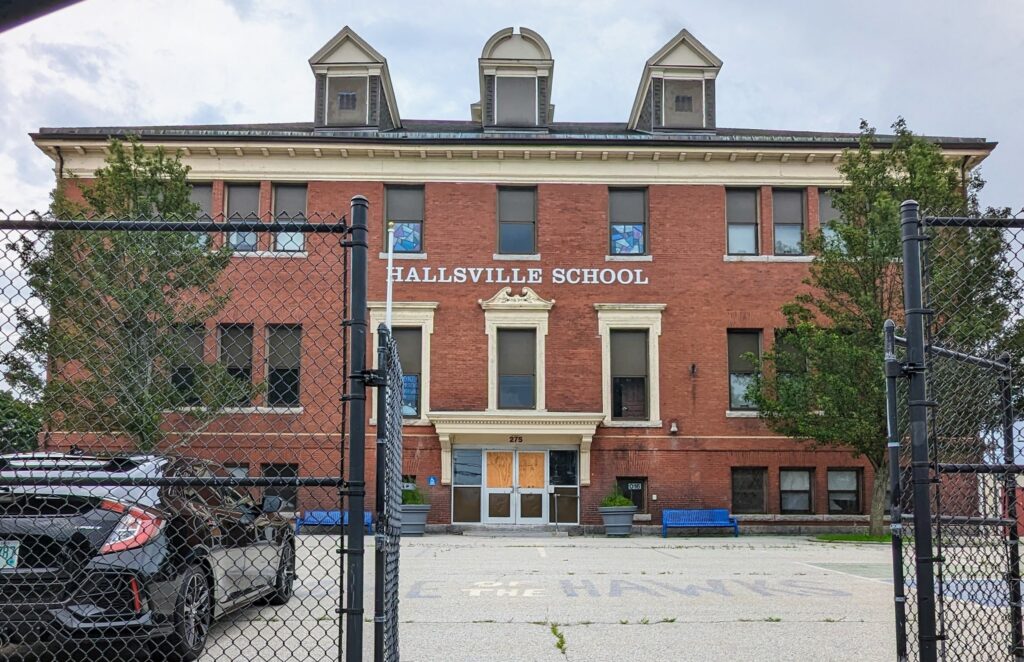
MANCHESTER, NH – The latest plan to develop the vacant Hallsville School property is a marathon, not a sprint, and will take its first steps in the coming weeks when developers submit a pre-application for Low Income Housing Tax Credits with New Hampshire Housing.
It could take up to two years for all the pieces to fall into place to redevelop the 136-year-old school building, the city and developer have said. Those pieces include financing, city board approvals and permitting, architectural plans, civil and engineering work, environmental and other testing, historic evaluation and planning, and more, said Kyle York of York Real Estate.
Mayor Jay Ruais announced May 14 that the city and the Manchester-based company had reached an agreement on a $50,000 purchase price, with York Real Estate developing the 55,000-square-foot building at 275 Jewett St. into 30 units of affordable housing.
The Board of Aldermen agreed to the contract May 6, according to the city clerk’s office. The minutes for the meeting aren’t yet publicly available and the television feed ended before the vote was taken after a non-public executive session at the end of the meeting.
The purchase will close once the project is awarded funding by NH Housing and other sources, Ruais said.

The building has been vacant since it was closed in 2021, except for use of the 1993-built gym, mostly by youth groups and pickleball leagues. A 2023 engineering study determined it would take more than $1 million simply to bring the main building’s aging envelope up to standards that would allow it to be used.
York said they’re prepared for the long run of putting the pieces into place.
“This is a hugely prideful and rewarding project to embark upon with a talented team around us,” York said. He said more details will be available as things evolve. “As you can imagine, the overall costs and scale of this project are quite immense and this is just the beginning. We’re thrilled to see the partnership take shape with the Board of Mayor and Alderman.”
The York’s contract came after more than three years of struggle by the city to find a fit for the increasingly expensive property in the densely packed neighborhood near Elliot Hospital.
The most recent request for proposals was more than a year ago, issued March 19, 2024, and included a provision to not tear down the building, and incorporate its façade into the development.
Before that RFP, the city looked into whether the building could be redeveloped as city property for community and recreational use. A November 2023 assessment by Fred Matuszewski of Matuszewski and Associates projected a price tag of nearly $5 million, with $100,000 in yearly maintenance costs.
That cost included $1.075 million to upgrade the building’s envelope, including a new roof, windows, and other structural issues, much of it from deferred maintenance.
The study came after a plan by the Granite State Children’s Alliance and Southern New Hampshire Services to redevelop the property into housing, a children’s advocacy center and more, was dropped when an expected grant for $4 million in funding fell through. Under that plan, the city would have donated the property to the two nonprofits. At the time, opinions about what to do with the property exceeded interest by developers in doing anything with it. The proposal that ended up being withdrawn was only one of two the city received in a 2022 RFP.
Ruais, in his May 14 news release announcing the project, said it’s a “big win” not only because it will add needed affordable housing, but put the property back on the city’s tax rolls.
The building will have a mix of studio, one-bedroom and two-bedroom apartments, according to Ruais.
York said that the first step are the Low Income Housing Tax Credits, which require selection by NH Housing.
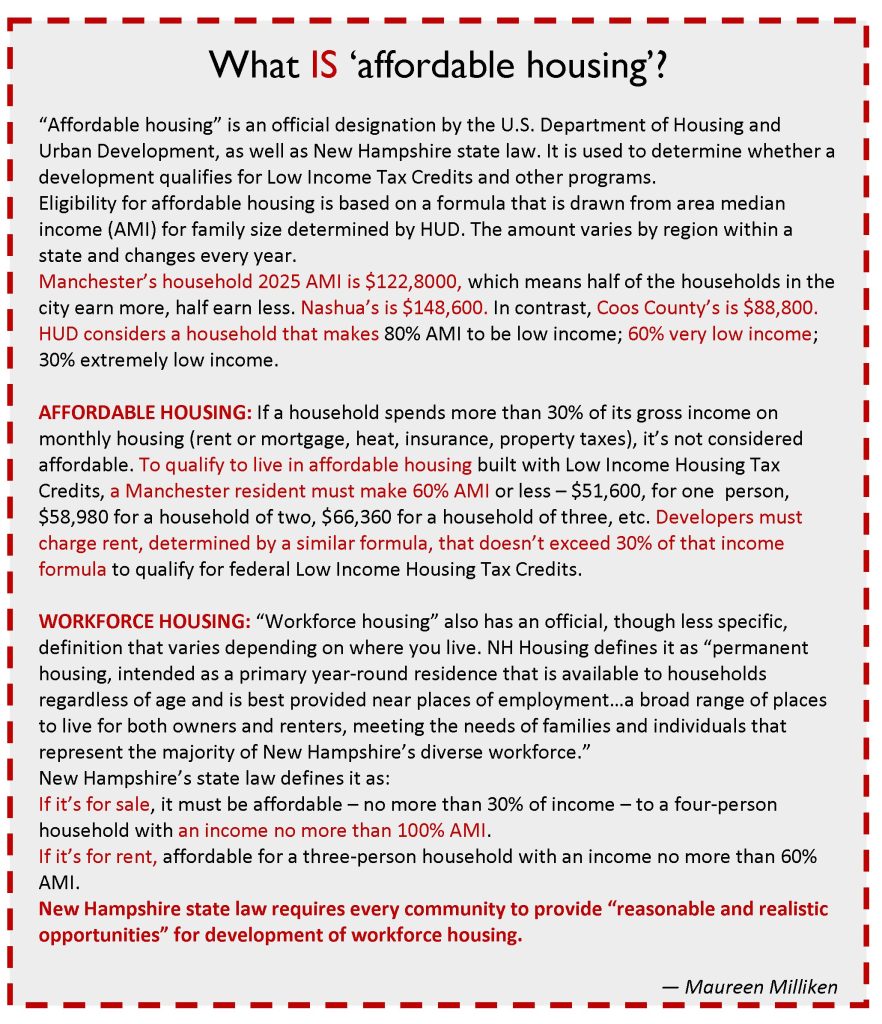
“Affordable housing” refers to housing that is specifically affordable to the local population, determined by area median income set by the U.S. Department of Housing and Urban Development. Rents charged by a developer can’t exceed what’s considered affordable – 30% of income – to those who earn a formulate based on AMI. [See box below for more].
While York’s team works on applying for the credits, “tons of work is being done around planning, permitting, zoning, etc.,” he said. “We have great partners, including architects, engineers, lawyers, tax credit consultants and our general contractor, all with deep experience in this area, including the city as this public-private partnership motivated by the same goals.”
Those goals include attention to the needs of the community that’s been the lifelong home of York and his brother, Travis, who are also developing the Queen City Center project downtown.
“The city is underserved in affordable housing and it’s something we believe we can help solve over the coming years,” York said. “Every investment we make in the city is purpose-built to uplift the community and make the city a better place to live and work.”
The project “fits in perfectly” with York Real Estate’s tagline, “Modern Revival with Spirit,” given that it’s a late-1800s building renovation, he said.
The developers are also exploring federal historic preservation tax credits, but it’s too early in the process to speak more on that, he said.
Whether they seek those tax credits or not, the developers must retain the building’s “historic façade,” a requirement in the March 19, 2024, RFP. The provision came after aldermen heard from the Manchester Heritage Commission, which wanted to see it preserved as one of the schools built by the Amoskeag Corp., which once owned the mills that built the city.
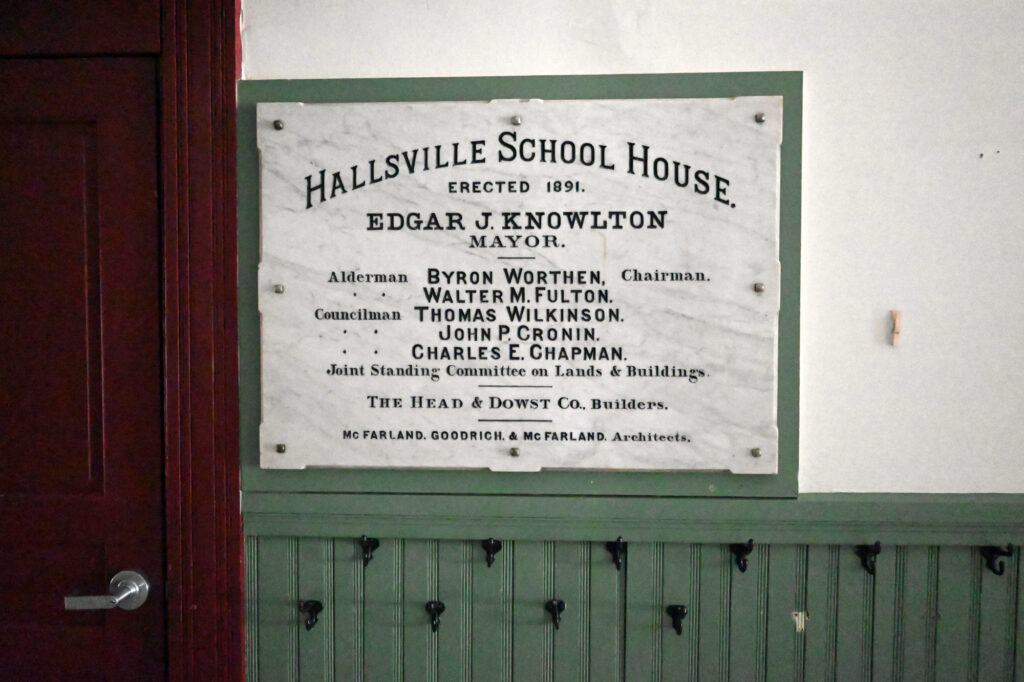
Built in 1891, the building was split in half, with a three story addition put in the middle in 1908. The gym, a lobby and an elevator that made the building accessible were added in 1992-93.
Ruais reiterated in his news release that the building will be fully renovated, but the historic façade will remain.
“The building was constructed in 1891, and it was important to the city that the beauty and history of the building continue,” he said.
Click here to access Hallsville School News Archives