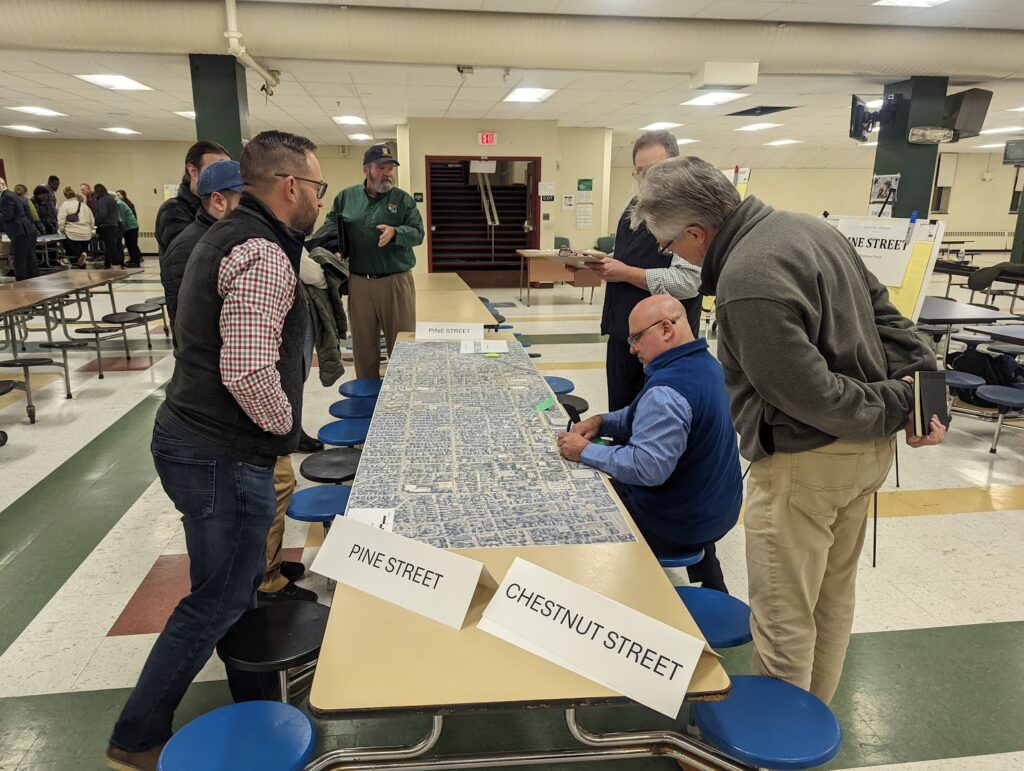
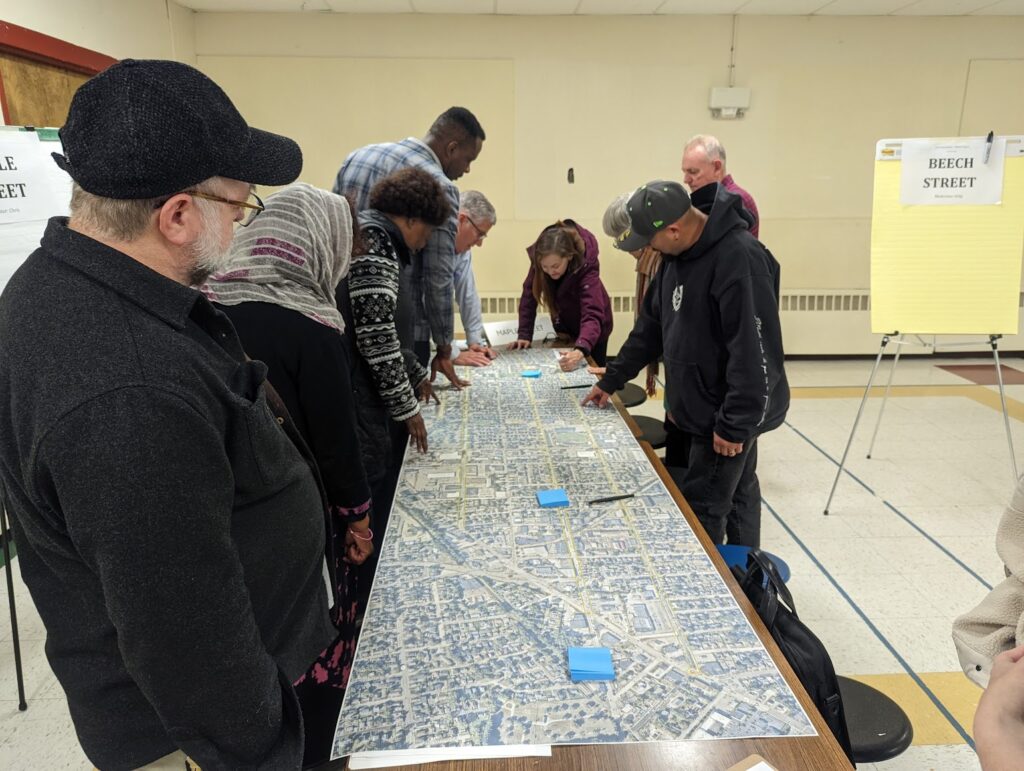
MANCHESTER, NH – Earlier this year, the City of Manchester earned a $2 million Strengthening Mobility and Revolutionizing Transportation (SMART) Grant from the U.S. Department of Transportation. This week, members of the community gathered in the cafeteria of Manchester Central High School to provide their opinions on how that money should be spent.
Funding for SMART Grants came from the Bipartisan Infrastructure Act of 2021, providing what eventually became approximately $100 million for 30 separate street infrastructure projects across the country. Manchester was one of 300 applicants for the funding, and another $15 million in funding could be provided in a second phase of the grants if enough evidence can be provided to convince federal authorities that changes from the first phase of the project were transformational enough that additional funding could provide tangible and evident results.
However, the hope is that even if the second phase of funding is not given to Manchester, these upgrades could provide a foundation for other improvements in the future.
In Manchester’s case, funding from the first phase of the SMART Grant will focus on a pilot program to modernize traffic lights for north/south streets in the center of the city: Chestnut Street, Beech Street, Pine Street and Maple Street. According to the presentation at the gathering, the city’s traffic lights currently have hardware installed in the 1970s and the lights at approximately a dozen intersections chosen would get updated hardware. Upon installation, those lights could change from a timer-based system to a system using sensors that can adapt signal patterns with motor vehicle queues or cyclist and pedestrian usage.
“Our goal is to look at how technology can improve safety, reduce congestion and enhance multi-modal travel in these neighborhoods,” said City of Manchester Traffic Engineer Kristin Clarke. “Right now our traffic lights are limited in what they can do.”
Additionally, a separate $800,000 Community Improvement Program grant has been allocated nearby on Union Street, with other grant applications currently in the works.
“Like a duck on the water, there is plenty going on that can’t be seen,” said Manchester Department of Public Works Chief Highway Engineer Caleb Dobbins. “DPW is definitely paddling around, but sometimes there’s ice on the water and things don’t happen as quickly.”
The upgrades are also expected to have an added impact given their location in a part of the city that has often felt overlooked by local, state and federal authorities.
“I want up-to-date technology in our city center, because it impacts not just the city center, but our entire community,” said Ward 5 Alderman-elect Jason Bonilla. “I want our kids to be able to walk to school safely, I want people with limited mobility to feel comfortable getting around.”
“Walking through some places, it can be very dangerous for everybody, so I’m glad we’re doing something and hopefully this can provide continued investment,” Bonilla added.
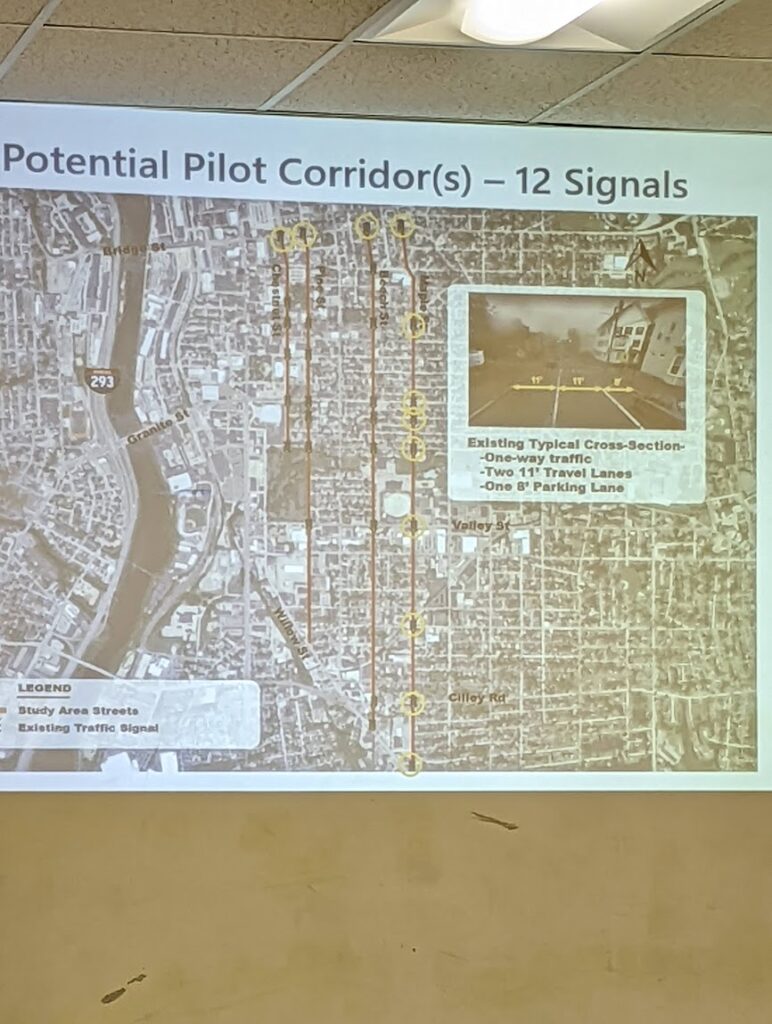
The finalist intersections, from north to south are as follows…
Chestnut Street and….
- Bridge Street
- Merrimack Street
- Lake Street
- Auburn Street
- Cilley Road
Pine Street and…
- Bridge Street
- Merrimack Street
- Lake Street
- Spruce Street
- Auburn Street
- Valley Street
Beech Street and…
- Bridge Street
- Lowell Street
- Hanover Street
- Lake Street
- Spruce Street
- Auburn Street
- Valley Street
- Cilley Road
Maple Street and….
- Bridge Street
- Hanover Street
- Spruce Street
- Auburn Street
- Valley Street
- Somerville Street
- South Willow Street
Anyone that could not attend the meeting can provide their feedback by emailing dpw_engineering@manchester.nh.gov
Bids for the improvements are expected to be requested in spring 2026, with construction over the summer and analysis of things upgraded intersections to be done from August to November 2026.