
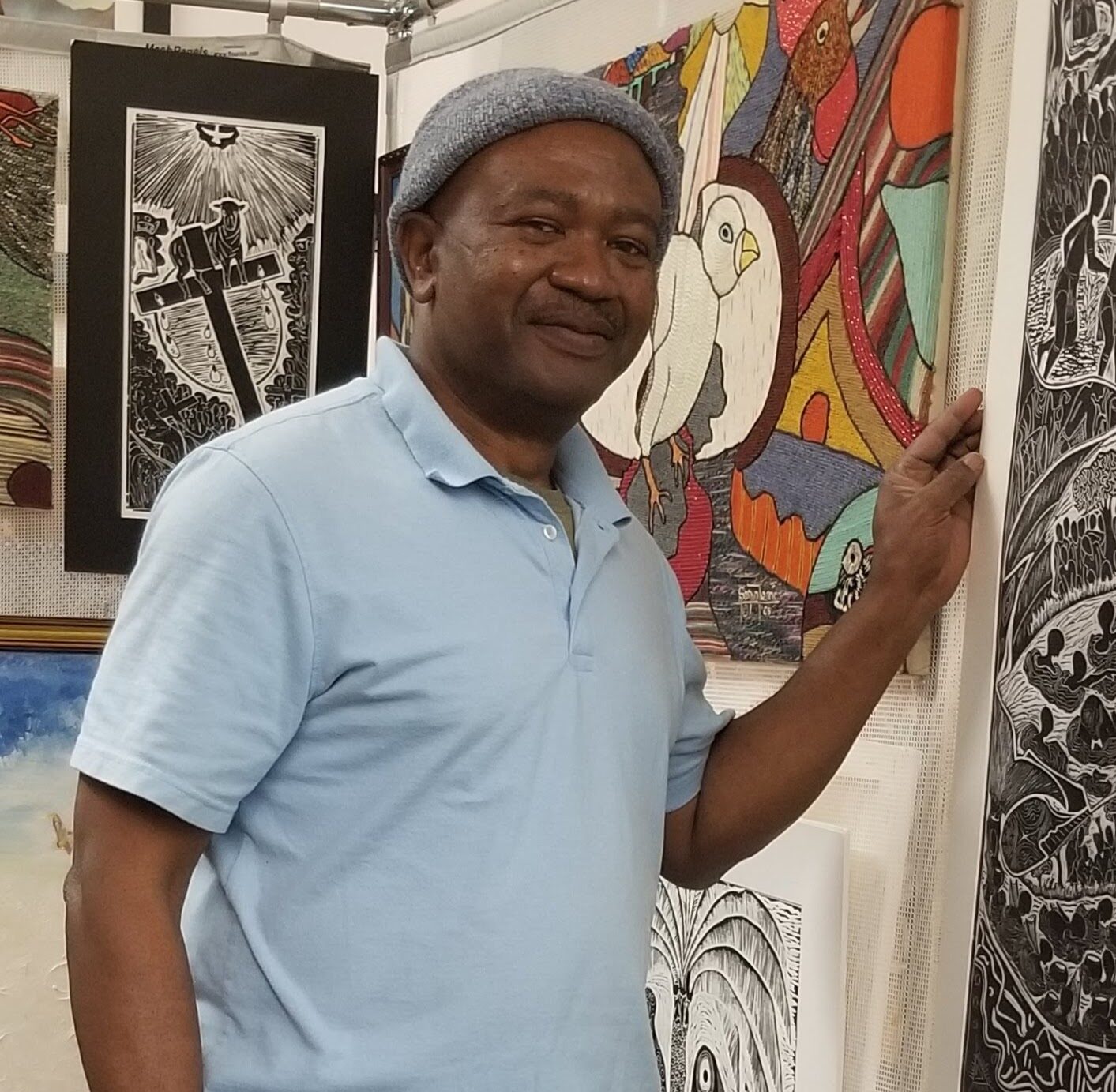
MANCHESTER, NH – Manchester resident Segun Olorunfemi considers his art as a way to pay homage to his rich Yoruba heritage, which he left behind in Nigeria almost two decades ago. The Yoruba people are an ethnic group who inhabit parts of Nigeria and other countries in West Africa.
“I use my art to talk about African culture,” said Olorunfemi, who also identifies as a musician and a storyteller. “It’s a way for me to preserve my African culture. And then [I] follow a storyline and create something that will be unique to that story. “
In 1992, Olorunfemi met his now lifelong friend Marcy Schepker, of Harrisville, at an art festival in Brussels. Their shared appreciation for art helped them connect fondly, and two years later when Olorunfemi was in Washington, D.C., on a work trip he decided on a whim to give Schepker a phone call.
“I told myself, ‘Let me see if this person is still using this number, and then she picked up and asked me where I was,’” he said about his phone call with Schepker, who is an artist based in the Monadnock Region. “She asked me to come over to New Hampshire, and that was my first time in the state.”
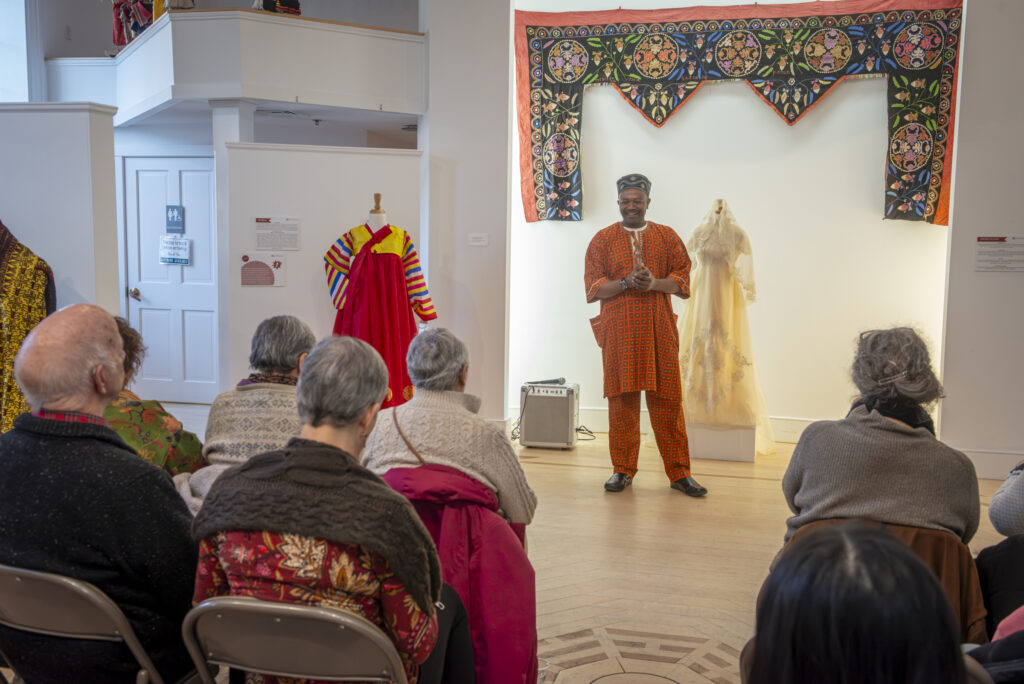
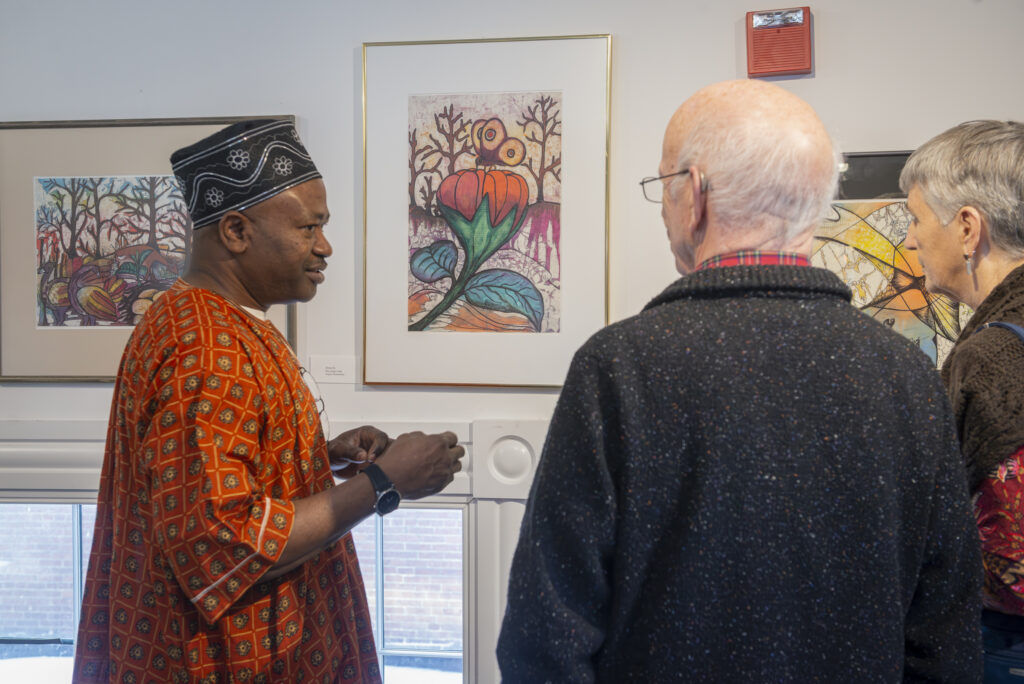
It wasn’t just Olorunfemi’s first trip to the Granite State that was serendipitous and unplanned—for the next several years he kept traveling to the state once-a-year for work, where he brought his artistic expertise to school students in the state. Grateful for this opportunity provided to him by the Very Special Arts Council of New Hampshire, in 2004 Olorunfemi was able to bring his wife and three children to New Hampshire—first to Keene, and then to Manchester.
Since moving to the state, Olorunfemi connected with the local arts community and has displayed his work mostly at Mariposa Museum and World Culture Center in Peterborough, which houses the largest collection of his work — and if you walk through the floors of the small museum nestled in the little southern New Hampshire town, chances that you’ll set your steps on a butterfly mural on the floor painted by Olorunfemi are nearly 100 percent.
His work was last seen at the Nashua Public Library, and his art takes him to places outside the state as well. Olorunfemi specializes in oil painting, batik (a wax-resist dyeing technique) and sand painting — which won him the moniker of the “sandman from Nigeria” several years ago, he fondly shared.
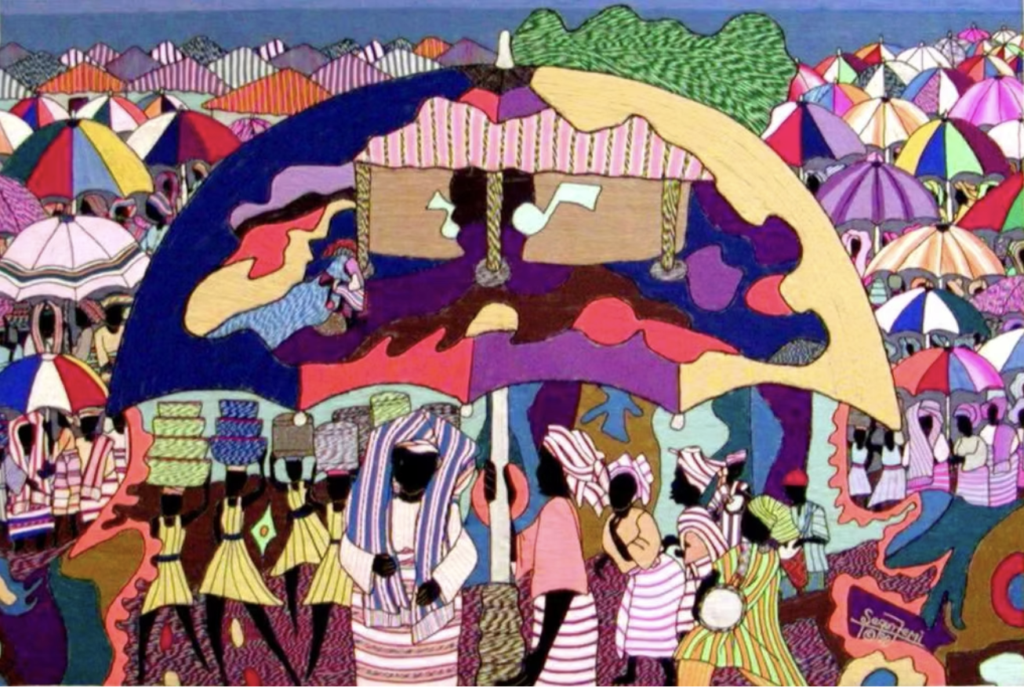
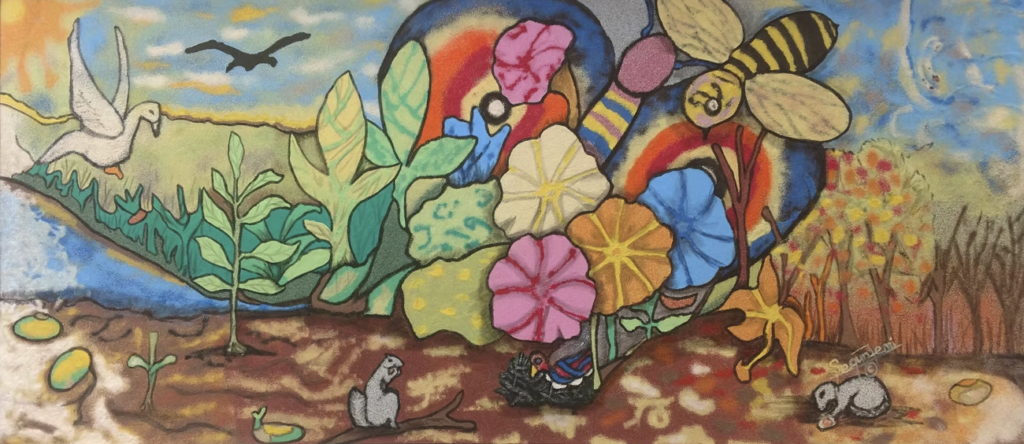
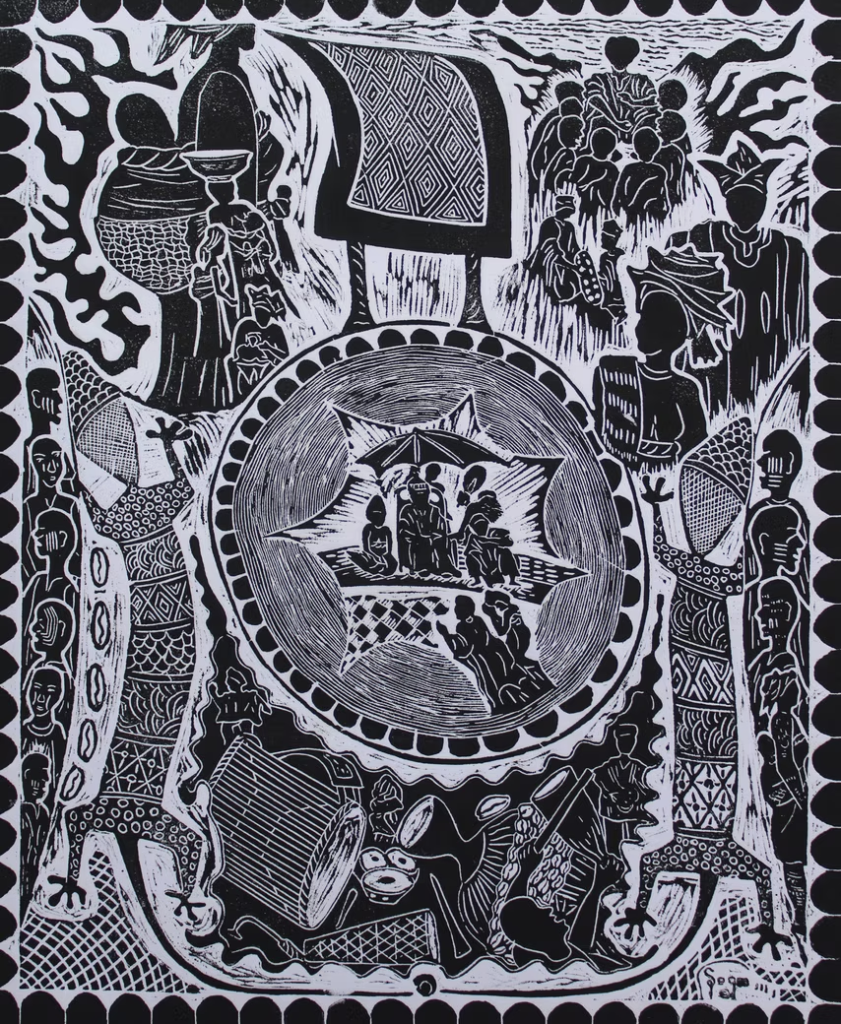
“I travel out of New Hampshire on invitation, if someone invites me,” he said, adding that his art workshops in public schools have always been well received. “I can go and I can do my workshop anywhere.”
Olorunfemi loves the impression he leaves on students through his art workshops — especially as he teaches the importance of embracing diversity and introduces them to art through the use of African motifs.
“The kids love me,” he said. “I’ve been to schools where students make it challenging to transition from my class to another because they all refuse to go. So their teacher will literally have to take away what they’re working on to leave the classroom.”
As Olorunfemi looks back at his journey as an artist through the state, he opens up about how a full-time career as an artist is difficult to sustain financially—especially in New Hampshire, where opportunities are limited.
“The only area where artists can make money is if you are into education, going into school to teach but otherwise it can be hard to sell,” he said, adding that he has also served as minister at the RCCG Victory House of Worship in Manchester since 2009. “And as you know we also don’t have too many art galleries in New Hampshire.”
Owing to the financial realities of being an artist, Olorunfemi has ventured into his own real estate business based in Southern New Hampshire.
“Yes, I started my real estate business recently. But I am still an artist,” he said.