
QUEEN CITY CHRONICLES
By Stan Garrity

Manchester’s history isn’t just dates and buildings—it’s people. In this ongoing series, local historian Stan Garrity uncovers the lives, struggles and triumphs that helped shape the Queen City we know today.
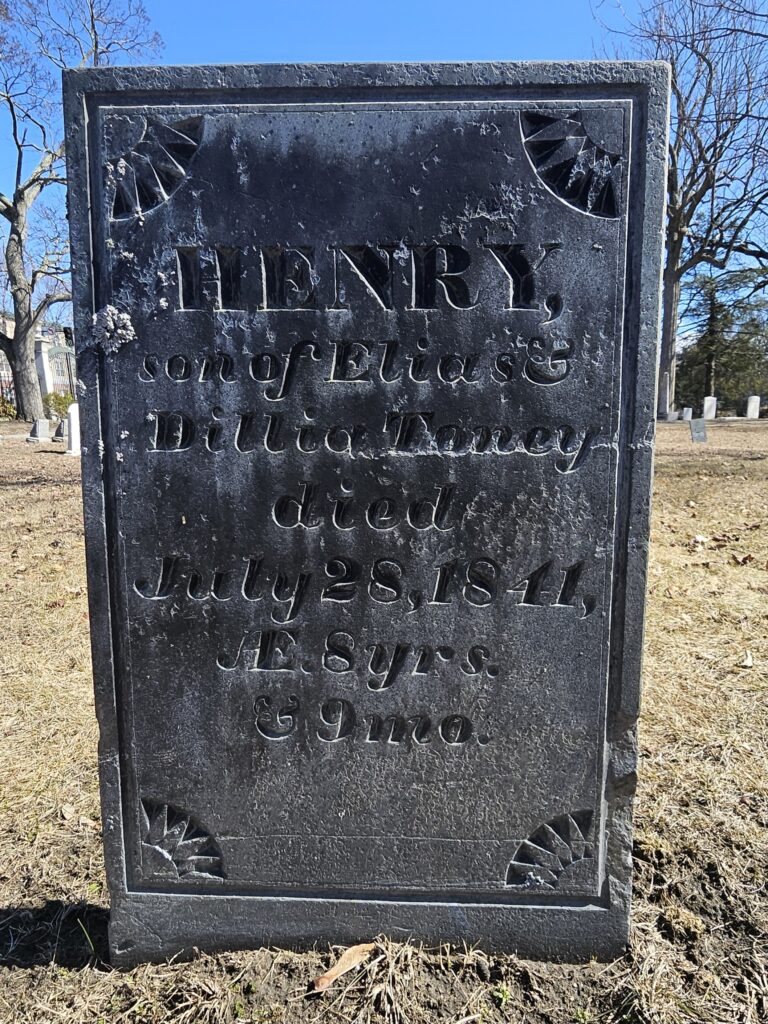
About 12 years ago as I was taking my usual early spring walk through the Valley Cemetery to see how it survived the winter when I stumbled upon an old slate gravestone in pretty good shape that I hadn’t noticed before. It was in one of the oldest parts of the cemetery on the Auburn Street side on public grounds. Public grounds is an area of the cemetery that is set aside by a town or city where people are buried at that town or city’s expense if that person or family has no means to do so themselves. As I bent down to read the inscription on the stone I saw the name, “Henry son of Elias & Delia Toney, Died July 28, 1841. 8 years. 9 mos.” I knew right away that this was a very early burial in the cemetery.
Who was this boy? Luckily the gravestone held some hints, his parents’ names. The first thing I had to do was hopefully find a death certificate for Henry. So I went to the Manchester city clerk’s office where the city clerk’s archivist holds the records for early burials. And there it was, a death notice for “Henry”, 8 years 10 mos., cause of death, measles, parents Elias & Delia Toney, “Colored Boy. I went, “Whoa what have we found here”? We also found a death notice for Elisa Toney, Henry’s father, who died April 6, 1855 at 63 years old. The cause of death “Consumption,” an early description for tuberculosis. We then found Delia who died Nov. 22, 1873, with no cause of death mentioned. Elias was buried in Valley Cemetery and Delia’s death certificate was recorded as buried in Manchester with no cemetery location, but we both felt confident that she was in Valley.
To this date no markings or gravestones have been found for either Elisa or Delia, but they are most likely not too far from where their son Henry lies. This was the start of my journey to find the Black history of Manchester
My next research brought me to the 1850 U.S. Census where I found Elias and Delia living in Manchester with 11 other people. Caroline Proctor, 25, William Toney, 32, George Toney, 22, Elizabeth Toney, 21, Nancy Toney, 19, Henry Toney, 3, Mary Toney, 1, William Toney, 10 months, Laura Reed, 20, Edward Quimby, 19. There is no indication who all these other occupants were. All are listed only as either male or female, and all as Black. Elias, William, George, and Edward Quimby stated their occupation as being a barber. Some were obviously children of Elias and Delia, but some were not. Or were they? Most were born in Massachusetts, some in New Hampshire and one in New York. There were no addresses on a lot of the buildings at that time and the census didn’t mention any so it was going to take a little more research to find out exactly where they lived.
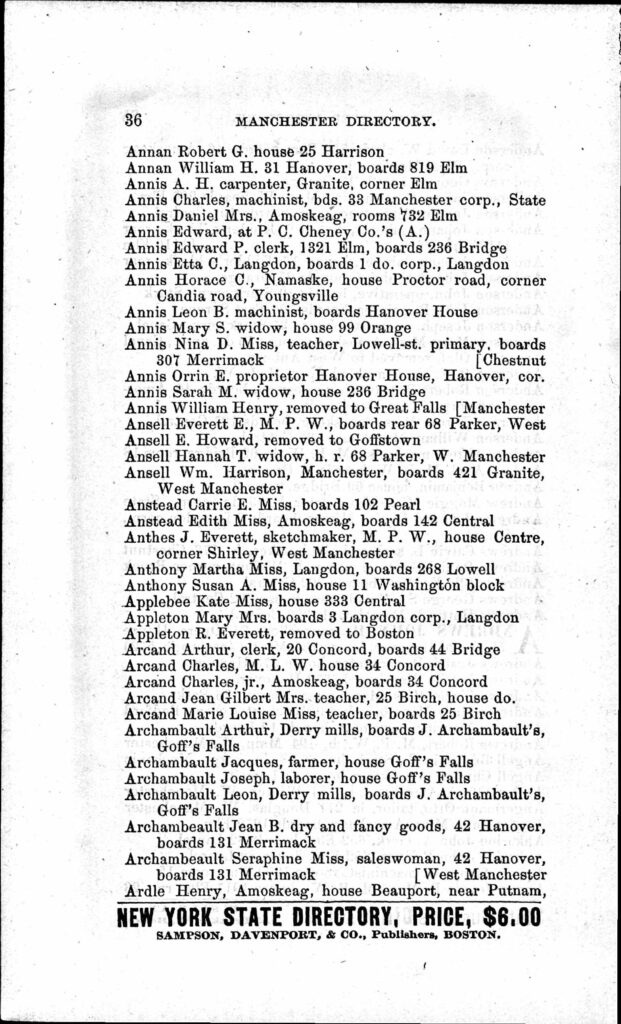
To find out more, I then went to the Manchester Historical Association Research Center to start searching the city directories. The city directories at that time were a wealth of information. They listed the adults, male and female who lived in the city, what they did for work if they had employment, and where they lived if they had an address, or a landmark.

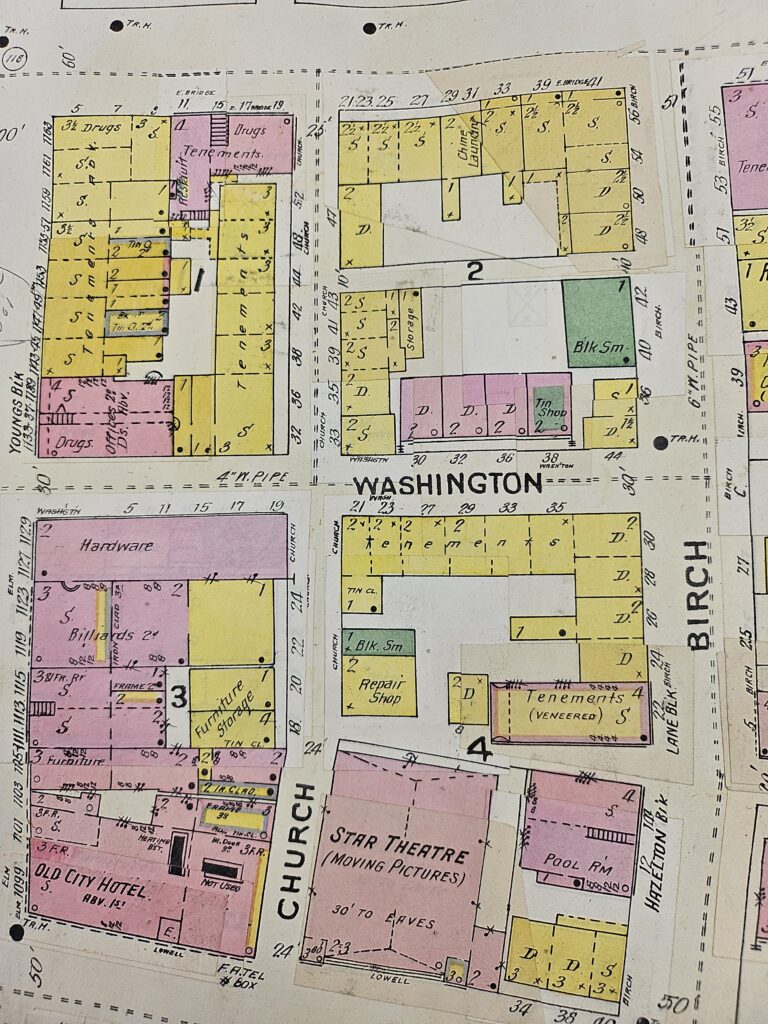
It was here I found Elias in the 1844 directory listed as a barber on Amherst Street and living on Lowell Street. Two years later he showed up as a hairdresser living on Washington Street. He also had a shop on Elm and Concord streets. Then, in 1848, he was a hairdresser in the Riddle Building on the northeast corner of Hanover and Elm streets, and living on Church Street. In 1855, the year that he died, he was still working as a hairdresser and living on the corner of Washington and Church streets.
So one can pretty much narrow down where Elias and his family lived when the 1850 census was taken. Church street is the back alley that runs north to a dead-end behind what is now The Bridge Cafe. Washington Street until the 1970s ran from Elm Street on the northside of The Bridge Cafe to what is now Kosciuszko (formally Birch Street). So one can still see where Elias and his family lived in 1850.
In the early city directories a person could pay to take an ad for their business. It was here I found one for Elias.
- Elias Tony
- Barber and Hair-Dresser
- No. 3 and No 4. Hanover Street
- Riddle’s Building, Manchester
And then again two years later with an ad like this in 1850
- Dunlop &Toney,
- Hair-Dressing Emporium of Fashion
- Nos. 3 & 4, Riddle’s Building

It was often in Manchester that when another Black barber came to Manchester they would be taken in to work with an already established barber as in this situation. Some were even runaway slaves hiding from the bounty hunter.
In the 1850 U.S. Census Dunlop was living in Manchester with Margaret E Dunlop, his wife, and Robert Gibson, barber, and Abraham Roper, barber. All were marked as mulatto and all born in Virginia.
On October 17, 1885 in a weekly column called, “Pencilings by the Rambler,” in the Manchester Union, I found a story that can pretty well explain who Elias Toney was.

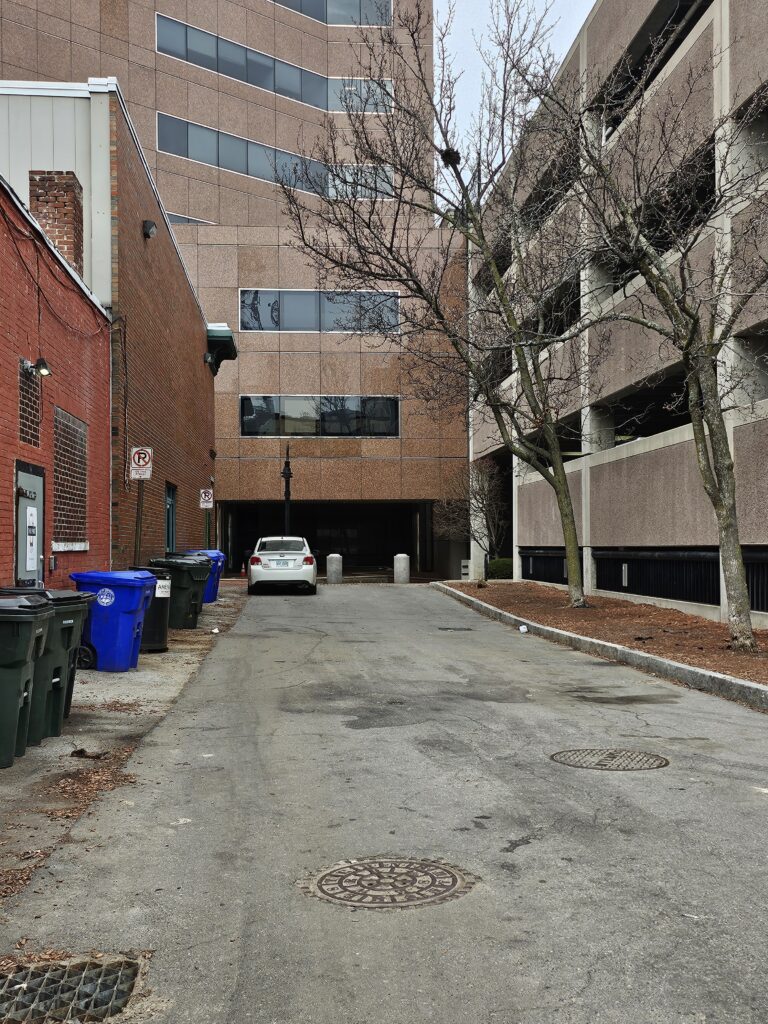
View of Church Street and what was once Washington Street and where they would have met. Photos/Stan Garrity
Toney was known as’ “Toney the Barber.” He was said to be one of the “favorites of the general public, and a victim of innumerable practical jokes which he endured with the utmost good nature, and that he was a heavily built fellow, and dark complected.” It was also mentioned that for a long time he enjoyed the monopoly of the shaving and hair cutting business.
He was a good man and a good barber, but just like anyone else he had failings. He loves to gossip more than any woman and that he would play crackers all hours of the day and night even going without food at times while his boys would cut hair. It was in the fall in the early 1840s that Toney was an actor in a comedy play that sold out to a full house where Elias got rave reviews.
Elias Toney was born in 1792 in Worcester Massachusetts, most likely free. The Toney name had been established there for a long time and even today there are Toney families in that city. In 1814 he married Delia Leonard also of Worcester born 1796. We know Elias and Delia were in Manchester in 1841 by the death of their son Henry.
They most likely came to Manchester for work. The Amoskeag Manufacturing Corporation had just laid out the city with its store fronts, churches, parks, mill buildings and corporation housing. Manchester was growing fast and five years after they arrived Manchester would incorporate as the first city in New Hampshire.
The 1850 census shows there were eleven people living with them in what was I’m sure a pretty small apartment on the corner of Church and Washington Street. Who were these others that were living with them?
William Tony, 32 years old, born in Massachusetts, and a barber, is obviously the oldest son of Elias and Delia. William actually shows up on the 1840 census of Manchester where Elias does not. So William may have come to the city before Elias and the rest of the family. An article from a newspaper dated April 17, 1840 explains where William’s barber shop was.
Removal
“William Toney, Hair-Dresser who recently rented a shop on Elm Street, has removed, and may now be found at the shop lately occupied by Mr. Lewis on Amherst Street where he is ready to wait upon all who wish for his services in the Hair Dressing Business, which will be carried on in all its various branches. Cakes, Fruits, Confectionary, Soap, Hair, Oil, &c, &c, for sale as above.
For the longest time I was pretty sure that Elias was the first Black barber in the city until I found William in the 1840 census. The reason why I never like to say first, oldest, or biggest in anything now. Just when you think you got it right, you don’t.
Nancy Toney on the 1850 census is William Toney’s wife, 21 years old and born in New York state. Then there is another Henry Toney, 3 years old, Mary Toney 1, and William Toney Jr. 10 months. These all appear to be their children. Maybe? Nancy died of consumption September 24, 1850, just after the 1850 census was taken leaving her husband a widower with three children.
William Toney doesn’t show up again in any records in Manchester after the death of Nancy. However I did find a William Toney in Worcester, Massachusetts, working as a barber. This is mostly him. There were no indications that his children were with him in Worcester at that time. The only record of significance that was found was the 1860 U.S. Census from Manchester where a Henry Toney, 13 years old living at the City Farm on Mammoth Road. This must be the same person that was living with the Toney’s in the 1850 census. The City Farm was a place where one could live and work if that person or family was down on their luck. It also housed petty crimes individuals that could work off their fines. William must have left Henry with Elias and Delia. Then after Elias died it may have been too much for Delia and she had to leave Henry here. The old City Farm is now the popular Derryfield Country Club Golf Course.
Edward Quimby and Laura Reed on the 1850 census an unmarried couple that were living with the Toney’s came from Worcester. Edward was a barber, Laura had no employment. They soon went back to Worcester where they married and had one child, Charles, who died at 13 years of age from lung fever.
Who were George Toney, 22, and Elizabeth, 21, also on that 1850 census. George was a barber and son of Elias and Delia and Elizebeth Freeman was wife to George. By 1860 they show on the census as living in Concord, NH, in the same building with Charles Proctor a barber and Caroline Proctor. The same Caroline on the 1850 census, and oldest daughter of Elias and Delia. George and Elizebeth have three children, Charles, Caroline and Arthur. Just after the 1860 census was taken George died in Manchester, September 15, 1860, of consumption, It’s unknown where he is buried. Elizabeth left Concord with her children and remarried in Worcester to Charles Rhodes.
Susan Toney, 21, on the census is another daughter of Elias and Delia. By 1860 Susan was living with her mother Delia and a man named George Wentworth. George is 21 years old born in New Hampshire and his occupation is that of a hostler (a person who takes care of horses). William, now 10, and who is thought to be the son of William and Nancy is also on that census. They were still living at the same address.
On July 28, 1851 Susan married John J P Bassett a Black barber in Nashville, New Hampshire. You read that right, Nashville. This is an area in Nashua just north of the Nashua River that split for a short time from Nashua in 1836 after a dispute over where the town hall should be placed. Today the area is called the Nashville Historic District and has been listed on the National Registry of Historic Places.
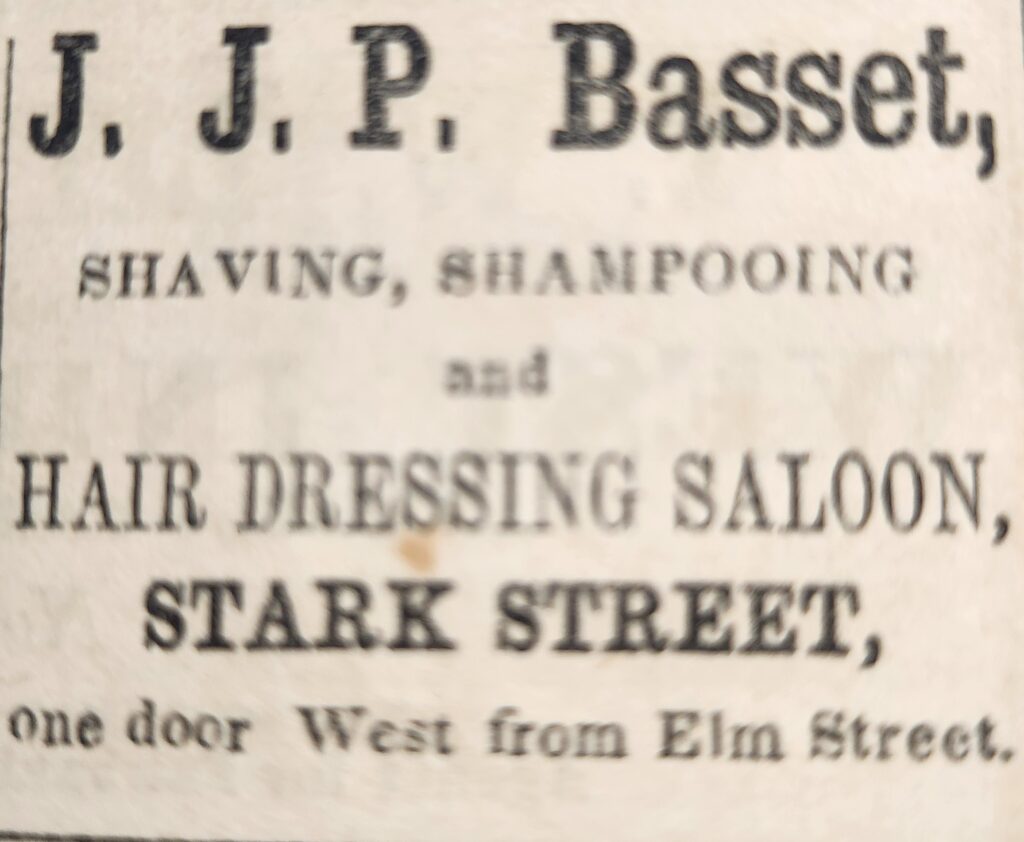
Bassett and Susan move back to Manchester and John where had an ad in the 1852 city directory as having a Hair-Dressing Saloon on Stark Street one door down from Elm. Today a barber shop still sits on that spot. John B P Bassett died Dec. 24, 1859 in Cambridge Massachusetts. It’s still unknown what happened to their marriage.
By 1870 Susan was still living with her mother Delia on Washington Street along with John May, Black, 19 years old, born in Virginia and is a machinist apprentice. In 1866 a Daniel May was found in the city directory and working as a barber. Is this the same person? By 1884 Susan shows on a city directory living in the same Washington Street apartment building and going by the name of Susan A. Anthony.
On February 19, 1900, an article was found in the Manchester Mirror;
- FOUND DEAD
- Old Age and Exposure
- Said to Be the Cause.
- The Body Was Found Swarming With Vermin.
- Such the Sad Fate of Susan Anthony, Colored.
Susan was found dead in her apartment on Concord and Church streets by two girls who would frequently check on her and bring her food. The frightened girls immediately ran from the building looking for help. The authorities were notified and the body was removed from the building, taken to the coroner then to the Wallace Funeral home on Hanover Street where she was prepared for burial.
Susan was said to be a longtime resident and a familiar figure on the streets of downtown Manchester. She was known as a psychic and palm reader. People would often visit her to have their fortunes told. It is unknown why she changed her name to Anthony. Maybe it just sounded better with the profession she was in.
Susan Toney Anthony led a dark, lonely life. She died in extreme poverty and in a terrible condition with little real friends. The two girls that found her must have cared for her deeply to take the time to visit her and listen to her stories of the past. Susan is buried pretty much under a tree on public grounds at Pine Grove Cemetery.
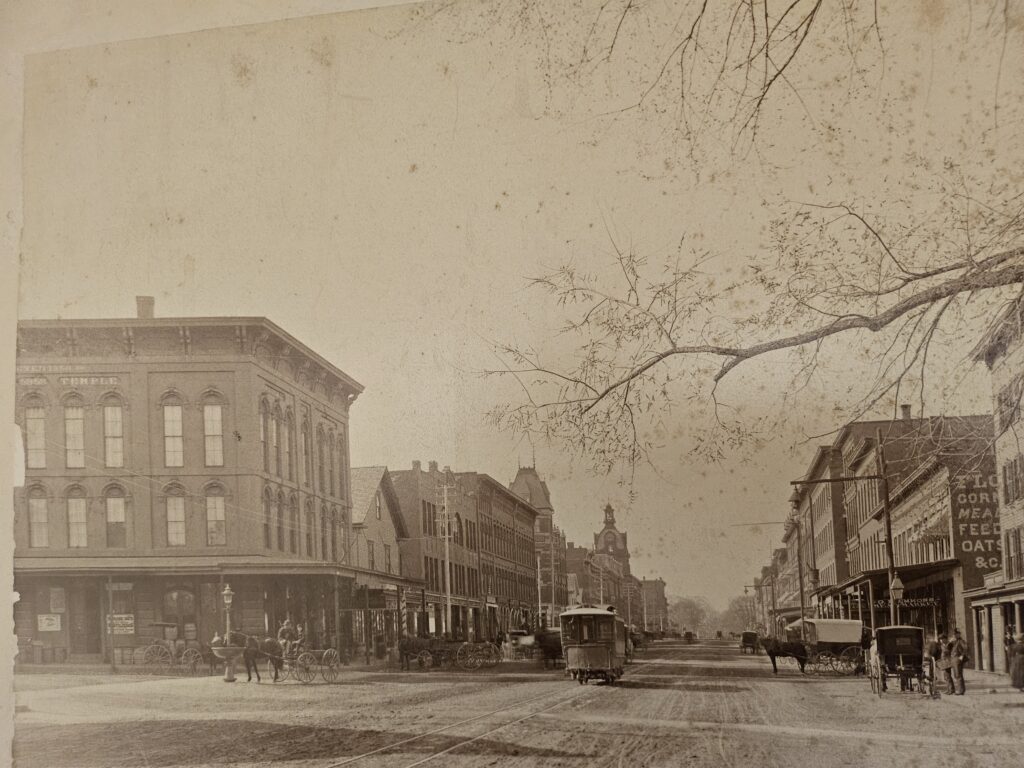
Caroline Proctor, daughter of Elias and Delia, married Charles Proctor in Manchester July of 1849. Charles was also from Worcester and a barber. Seeing that Manchester had plenty of barbers in downtown Manchester Charles looked to Concord for a place to set up shop. Charles got lucky and found a place for his shop within the store fronts of the Masonic Temple building on the northwest corner of Pleasant and Main streets. At the same time finding a place to stay across the street where George Toney and Elizabeth lived. A short time later Caroline arrived to live with him, along with another Black barber from Massachusetts by the name of Samuel Nichols.
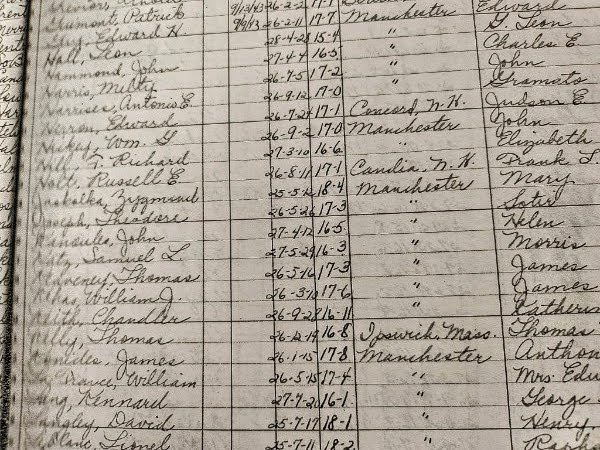
Then on April 12, 1861, the U.S. Civil War broke out. Many expected the war to be brief, but history shows that wasn’t the case and in March of 1863 the North passed the unpopular Enrollment Act, where, “All able bodied male citizens and immigrants intending to become citizens aged 20 to 45 were liable for military duty.” This act of Congress was passed a year after the Confederate states did the same.
Proctor registered in Concord on July 1, 1863. He was listed as 37, “colored,” a barber and disabled for life. No where else was there any mention or documentation of Charles being disabled.
In the city of Concord Proctor was said to be known as a “Colored Gentleman.” Educated, well spoken, and sharp dresser and as professor of “tonsorial art.” It was for these reasons in 1867 after being unhappy with previous mayors the Republican party of Concord decided to run Proctor for that powerful position.
This being only four years after the war the local newspapers would have a field day with it. The racism was at its highest level. The Independent Democrat newspaper wrote how, during the Civil War, draft riots, “Colored orphan asylums were burned, negroes were hung to a lamp post, colored boys were chased into the river, and the sacking and burning the residences of white men who befriended the fatherless.” Nevertheless the Republican party and Proctor were determined.
The day of the election, April 2, 1867, as voting started Proctor had an early lead that he maintained throughout the day. Fearful that a Black man may become Mayor of Concord, the alarm was sounded and the polls were kept open way into the night to defeat him. The next day the Concord Patriot Newspaper said the following quote, ‘The Citizen’s Reform Ticket,’ carries the name of Charles H. Proctor, well known Colored Barber. We are glad to see our Democratic ‘Friends’ putting forward such a respectable man and hope they will never vote for a worse one.” After Mr. Proctor’s defeat they said the following, “Negro equality is a fine thing to talk about, “but not the thing for personal appreciation at home.” The results of the election were as follows.
Whole Number 1132
Necessary for choice 567
Scattering 52
B.S. Goodwin 93
Charles H. Proctor 357
John Abbott 630
When the election was all said and done John Abbott, son of one of the early families of Concord, had won the election. If only 64 more votes here cast against him there would have been a runoff between Proctor and Abbott. One can only imagine how that would have turned out. After the election Charles and Caroline went on with their daily lives. Charles maintained his business as a popular barber about the town and I’m sure politics was the everyday conversation in the chair.
By 1880 Charles and Caroline were still in Concord and according to the census had a daughter named Ella. However things don’t match up with the census saying Ella was born in Connecticut and her parents were born in Virginia and Connecticut. It looks more like Charles and Ella had taken Ella in. Then in 1882 Charles, Caroline, and Ella were back in Manchester, living at 11 Washington Street, along with Caroline’s sister Susan Toney Anthony.
On July 27, 1983, Charles Proctor, son of Mingo and Fanny, the man that at one time could have been the first Black person elected as mayor to a New Hampshire city was dead of paralysis (stroke). It was said that the authorities found him in pretty bad shape in an old run down apartment on Washington Street.
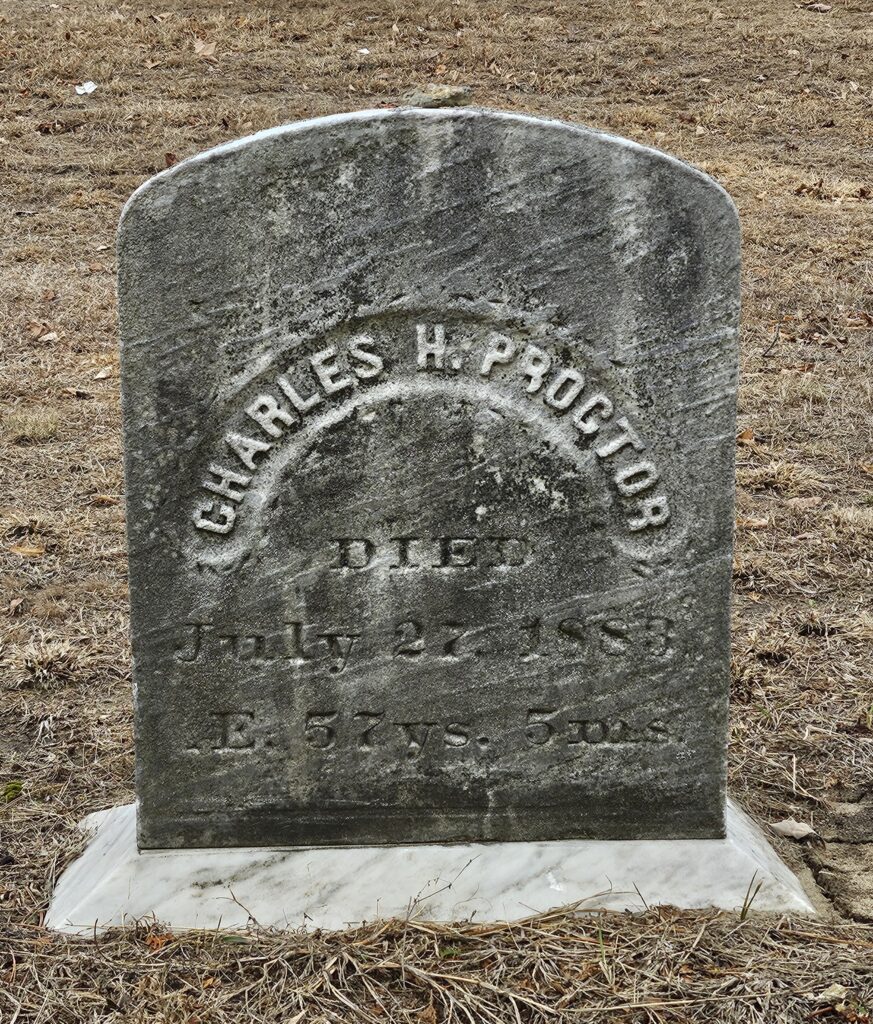
Charles was buried on public grounds at Pine Grove Cemetery by himself in an area where no one else has been buried to this day and a good size monument has been placed on his grave. Charles had no money to pay for his own gravesite and the cemetery has no records of who paid for his gravestove or why he is buried where he is.
My guess is people from Concord, maybe his clients or the Republican party paid for his stone. Right now it remains a mystery.
By 1888 Caroline and Ella were still together living on Washington Street. Then in 1891 the city directory states that Caroline had moved to Lewiston, Maine, and Ella had moved to Newport, Rhode Island. Ella was only 19 at that time.
By 1900 Ella was 27 and living in Boston, married to James Burnett, a cook, and having two daughters, Caroline, 3, and Rosabelle, 1 year old. Caroline Proctor is also living with them and is listed as a lodger. There was no indication that Caroline Proctor was her mother. Caroline Proctor should have been listed as Jame Burnett’s mother-in-law if Ella was her daughter. However Ella did name her first daughter after her. So it remains unclear.
Caroline Toney Proctor died in Boston of endocarditis and dysentery July 22, 1902. Her body was brought back to Manchester to be buried on public grounds at Pine Grove Cemetery. Not with her husband, Charles, but across the road in a separate section all together. A recent search shows that Charles Proctor, his wife Caroline Toney, and her sister, Susan Toney, are all buried within 10 yards of one another.
And what of measles, the disease that killed little Henry Toney? According to the World Health Organization, measles is one of the most contagious diseases humans have ever faced dating back to as early as the 9th century. Even more than 100 years later after Henry Toney’s death, in a summary by the National Library of Medicine reported that, “during the 1950s an annual average of greater than 500,000 cases of measles and nearly 500 deaths due to measles were reported in the United States. Surveys indicate 95% of the population had been infected with measles by the age of 15.”
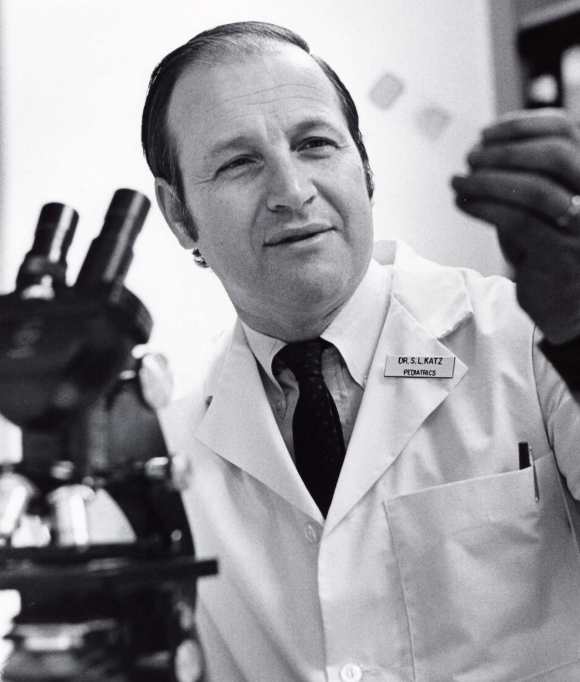
By 1963 Dr. Samuel Katz, a pediatrician and virologist while a staff member at Boston’s Children’s Hospital, worked with Dr. John Enders for 12 years to develop the attenuated measles virus vaccine. The work was published in 1962, and the vaccine was licensed in 1963. By 1968 the incidence of measles in the United States had dropped to less than 10%. Katz was born and made his home in Manchester.
Samuel Katz went to Manchester Central High School. After graduating in 1944 he attended Dartmouth College for his undergraduate studies. In 1945 he joined the Navy and was sent to San Diego to attend hospital training school. Afterward, he returned to Dartmouth to complete his undergraduate degree. He then went to Dartmouth Medical School and in 1952 he completed his medical degree at Harvard Medical School. Samuel was also a good drummer playing at numerous locations in and around Manchester.
All this from “the Boy In The Cemetery.”
You can reach Stan Garrity at genebystan@gmail.com.