
Story Produced by NH Business Review, a member of

MANCHESTER, NH – Velcro Companies plans to consolidate textiles manufacturing from its Queen City site to its production facility in Somersworth but is committed to remaining in New Hampshire, the company told NH Business Review on Monday.
Velcro, which has operated in Manchester for nearly 70 years, is the only U.S. manufacturer of textile hook and loop fasteners, a product with broad consumer and industrial applications. The company opened the Somersworth plant about 25 years ago.
“We’re very early in a multiyear project,” said Mark Elliott, director of internal and corporate communications for Velcro, in an email. “The company plans to maintain its North American headquarters in Manchester at 95 Sundial Avenue, including a critical manufacturing site, research and development lab, and offices.”
Elliott said no workers have been laid off but that jobs will be affected by the change. The company employs about 400 people in Manchester and nearly 200 in Somersworth.
“Employees affected by this decision may be considered for positions in Manchester and Somersworth,” Elliott said.
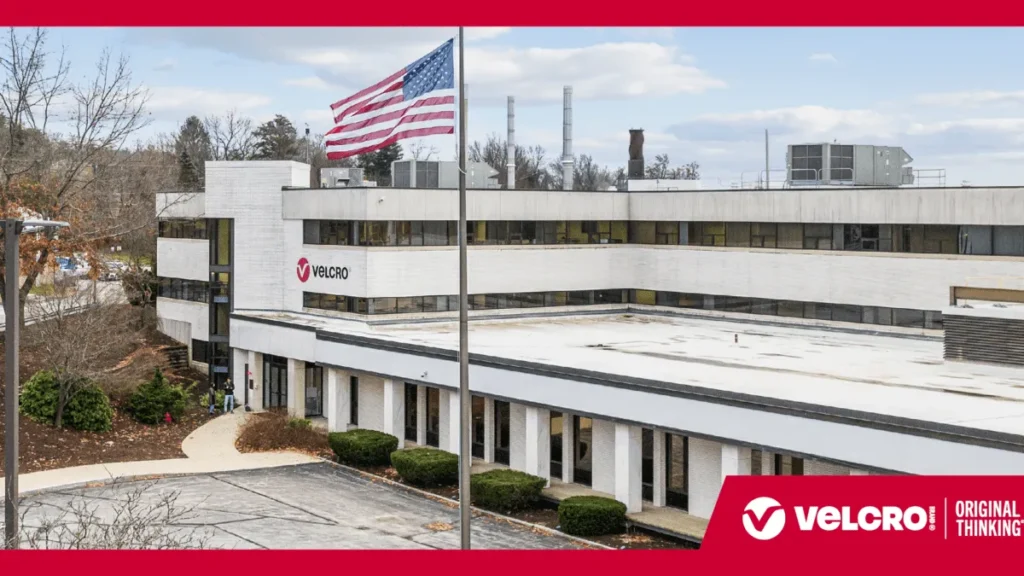
“While we’re still very early in this process, and there have been no changes, we have made the decision to consolidate our Manchester Building 1 textiles manufacturing into our existing Somersworth facility,” he said. “We will maintain our manufacturing footprint in New Hampshire in Manchester Building 3 and Somersworth as well as our offices and research and development lab in Manchester Building 2.”
Velcro is a global company with manufacturing plants and distribution centers all over the world. The current uncertainty about tariffs enacted by the Trump administration was not a factor in the New Hampshire changes, Elliot said.
“Our global supply chain team is working tirelessly to mitigate challenges that arise from the evolving economic environment,” Elliott said. “As the only U.S. manufacturer of textile hook and loop (products), we are uniquely positioned to serve our U.S. customers. Given that we have a local for local supply chain strategy, we are not seeing a significant impact from tariffs.”
Likewise, he said artificial intelligence did not play a role in the consolidation plans in Manchester.
“While we have begun to explore and implement artificial intelligence into some of our workstreams, we view it as an asset to support our people in their work through improved insights, intelligence and productivity,” he said.
Swiss electrical engineer George de Mestral was inspired to create the hook and loop fasteners in 1941 while taking a walk through the woods, according to a history posted on the Velcro website. “He discovered the cocklebur is comprised of hundreds of tiny hooks that cling tenaciously to fabrics and animal fur.”
Velcro S.A. was formed in Switzerland in 1951 by de Mestral, Alfred Gonet, Andre-Louis Burnier and Jean Michaud. The company obtained additional patents in Germany.
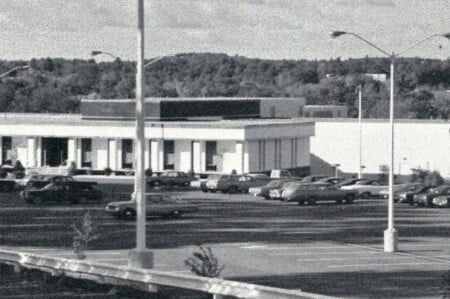
Velcro opened its first U.S. manufacturing plant in Manchester in 1957, attracted by the city’s manufacturing legacy: “Manchester, New Hampshire, was home to some of the best textile workers in the world.”

These articles are being shared by partners in the Granite State News Collaborative. Don’t just read this. Share it with one person who doesn’t usually follow local news — that’s how we make an impact. For more information, visit collaborativenh.org.