


Gofftown’s Michael Skinner, a survivor of sexual abuse and trafficking in both New Hampshire and Massachusetts as a young child at the hands of his parents, recounts his victimization, recovery and current mission to advocate for trauma survivors in the release this week of The Lunchbox Theory: Lessons Learned From Trauma and Abuse (Peter E. Randall Publisher; Portsmouth). It is a gritty, necessary and ultimately hopeful book that details his amazing journey from soul-crushing physical and sexual abuse to an advocate who’s addressed both Washington D.C.’s National Press Club and Georgetown University’s conference on “Children in Slavery-The 21st Century Summit.” The latter was sponsored by both the State Department and the United Nations.
Skinner has published the online newsletter Surviving Spirit for over 20 years and has presented the lessons of his story and made music at a Hawaiian womens’ prison, to law enforcement and to clergy sexual assault survivors, to name just a few of his many audiences.
The author’s 1993 breakdown/breakthrough saw him lose his marriage, contact with his daughters and his successful music promotion and booking business. He is adamant that he and many others are best-described as survivors of mental health injuries, not mental illness. Get run over by a Mack truck and the predictable result will be, as Jimi Hendrix sang in Crosstown Traffic, “…tire tracks all across your back.”
The healing from trauma advocate quotes Dr. John Briere, director of the Psychological Trauma Program at LAC-USC Medical Center, in The Lunchbox Theory: “If we could somehow end child abuse and neglect, the 800 pages of the DSM [The Diagnostic and Statistical Manual of Psychiatric Disorders] would be shrunk to a pamphlet in two generations.”
According to LaFASA (The Louisiana Foundation Against Sexual Assault), the monetary cost, hardly the only cost to society, of a rape is $151,423, not including court and incarceration costs. One of four women and one in six men in the United States is sexually assaulted by the age of 18, a silent epidemic.
Abused children are often forced to take on the roll of adults in violent homes when the real adults disengage, don’t care, or seek escape through addictions. Hatred of their children can toxically deflect a contempt of self. The paramount goal of children in such families-in-name-only is survival. The family rules of engagement drawn up by the abusers are inherently unfair and often tragic. The abuser can throw anything at the dartboard. The abused child can only try to stop the darts with his hands.

One example of this is the charge by the abuser that their child, not their escapist fantasy-based pipe dream, has ruined the abuser’s life. “If it wasn’t for you I’d be dancing with the Rockettes at Radio City in New York,” Betty told the author more than once, twisting a cruel psychic blade into him. (Skinner labels his parents “Dick” and “Betty” throughout the book, reasoning correctly they did little to earn “Father” and “Mother).”
And yet, as Skinner writes in The Lunchbox Theory, “All too often, survivors of abuse who bring forth their stories of suffering find that, for the most part, they are ignored.”
In a shameless and brazen act of feigned ignorance and cognitive dissonance, fired Attorney General Pam Bondi went to great lengths over the past year to protect Jeffrey Epstein and Ghislaine Maxwell’s once expanding web of rich and powerful pedophiles and cowards. This despite her 2014 TV spot while campaining for Florida Attorney General: “I’ll fight to put human trafficking monsters where the belong-behind bars.”
The “monster” in this case could only have been Epstein. How soon she accidentally-on-purpose forgot.
A key ingredient in Skinner’s recovery has been making music. “My five daughters are all musically inclined,” Skinner said. “My daughter Michelle has an exceptional voice. Her voice is her instrument. It’s been great fun gigging with her.”
In the mid-70s, drummer Skinner and the successful group Train toured the United Kingdom for two years after originally planning a three-month stay. Unfortunately, their manager, supposedly clean and sober, vamoosed with a good part of the band’s considerable earnings without paying, as George Harrison wrote, the Taxman. In the United Kingdom, the value added tax is seven percent. Their manager hadn’t paid a Penny Lane of it.
“It broke the heart of the band,” Skinner said.
A precursor of the author’s internal storm to come was a drive from Liverpool to Wales between gigs.
“I would go to a bluff overlooking what I thought was the Atlantic Ocean,” Skinner recounted. “I now know it was the Irish Sea. The setting was a majestic overview. I realized it was the first time in my life that I felt safe. I had this whole ocean separating me from my abusers.”
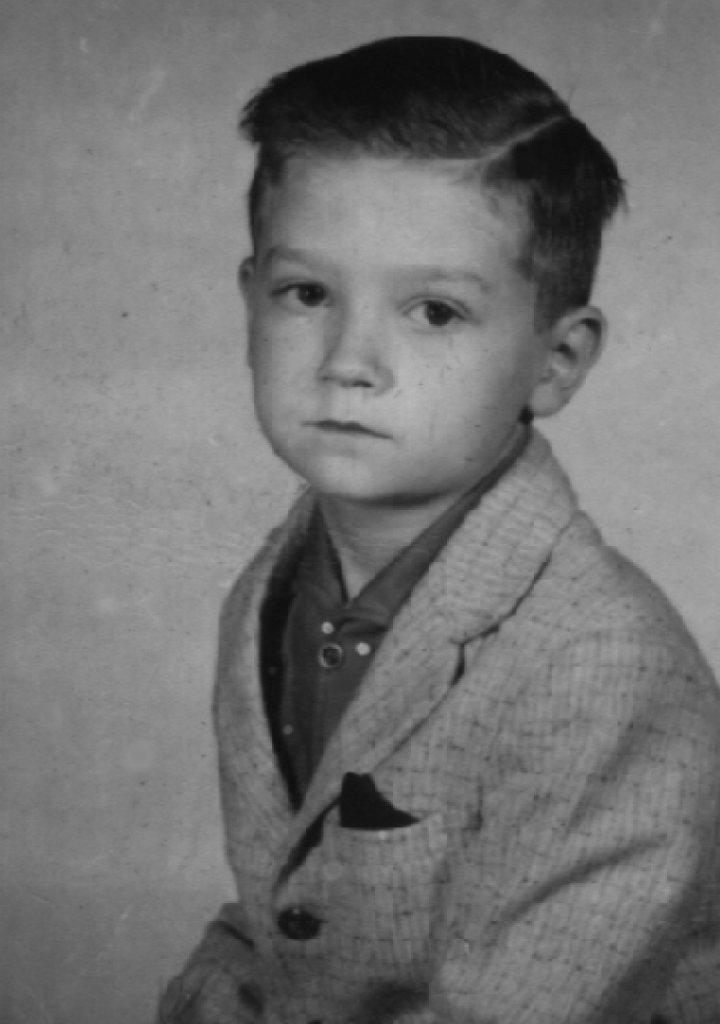
Nature has been another important factor in my healing,” Skinner continued. His family moved from Cambridge to Billerica in 1960 when the survivor turned advocate was six years old.
“The field across the street led to a huge area of streams, brooks and forest,” Skinner said in describing the less-settled Billerica of 70 years ago. “I would spend hours there building a protective tree fort. Beyond the woods was a yard for the Boston & Maine Railroad. Unbeknowst to them there was an impressive woodpile I’m sure they wanted me to have to build my fort!”
A childhood fantasy born out of need for the author was to climb the iron rungs of a train car with Canadian logos on it and then ride the roof of the boxcar North where he was certain the Royal Canadian Mounted Police would protect him. Skinner was at times perplexed in grammar school by the kindnesses of a teacher, health care professionals and the parents of several of his friends. His fourth-grade teacher encouraged the author’s wish to attend West Point, saying, “Michael, you’re very smart and a hard worker.” This differed from Dick and Betty yelling “Who do you think you are?” in his excitement about the Beatles post-Ed Sullivan in 1964. A drum set or guitar was out of the question. Skinner’s career as a drummer began with tapping on a knee, a tapletop or a schoolbook. Attempts at singing drew Dick’s review of his son “sounding like a castrated hyena.”
An attack from the elder Skinner could come unprovoked, especially when he was drunk, and in any sexual, verbal or belittling form. One way of abuse was his application of a chokehold lifting the author off the ground. The child seriously considered his father being the Boston Strangler.
By the start of high school Skinner was sleeping with a knife under his pillow and a chair propped against his door from the inside. He also knew how to accesss his father’s shotgun and ammunition….just in case. He looked for fights and drank heavily, often sleeping in his car or couch-surfing at the homes of friends. He asked for a hiatus from the popular local rock band Resistance on the heels of being told by his high school principal that he was “not a good representative for the school.”
“I cared for people but trusted no one,” Skinner writes. “Trauma disconnects us from people.”
“The best defense against lies is publicity,” murdered Russian dissident Alexei Navalny wrote in his 2024 autobiography.
On the website you can learn much more about Michael and his book and CDs can also be ordered.
New Hampshire Coalition Against Domestic and Sexual Violence 24/7 helpline: 1-866-644-3574.
“Stranger Danger” is misleading, according to the author. A circa 1960 photo including Dick and Betty in The Lunch Box Theory is startling in its posed but convincing normalcy. There are five adults in the portrait. Three were severely abused. Two of those and another adult pictured were perverse abusers. Michael Skinner has broken the chain of generational trauma. The Lunchbox Theory is the engaging and informative proof.