
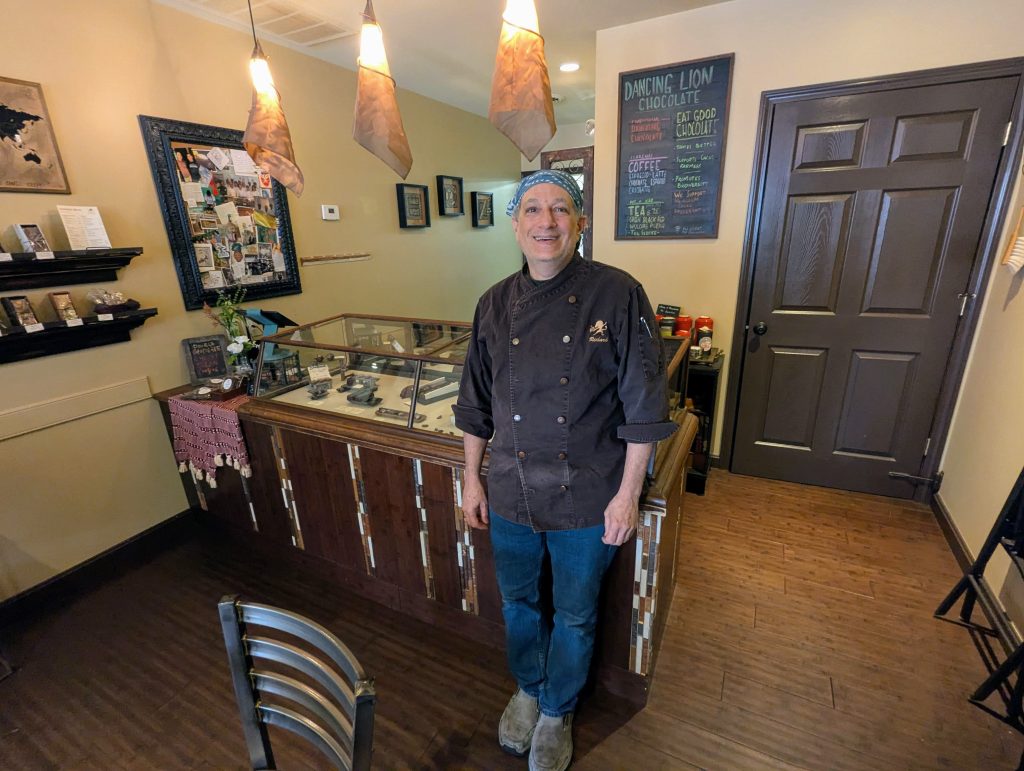
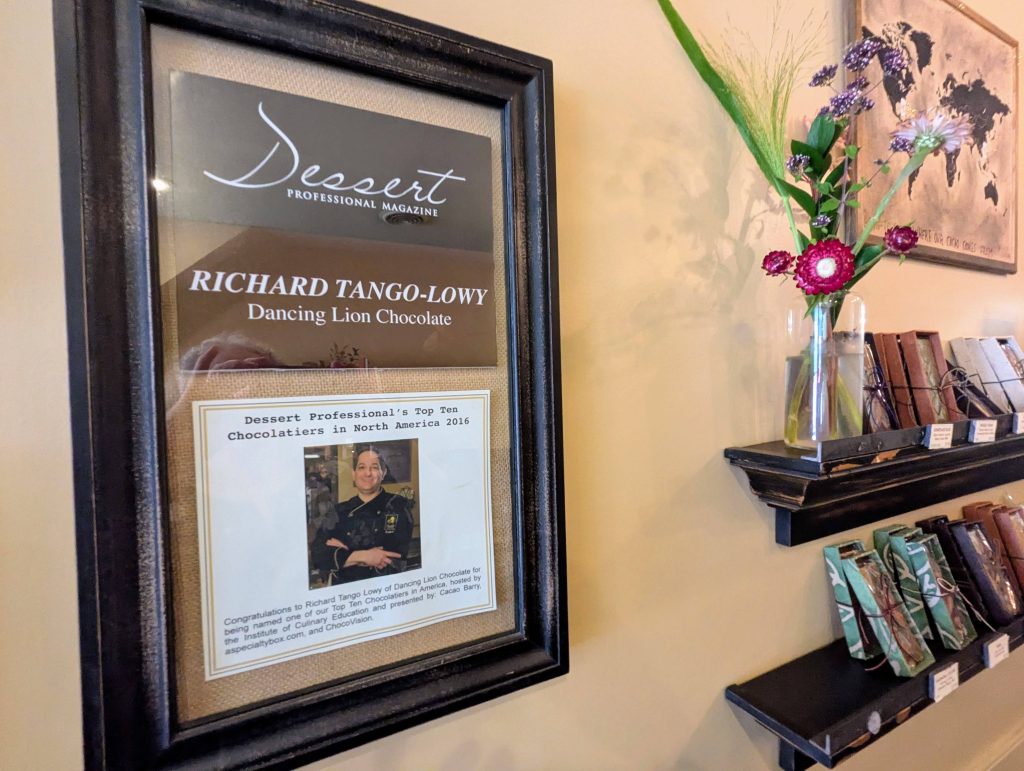
MANCHESTER, NH – We think we know chocolate. It’s a simple pleasure – a sweet treat, an indulgence, a comforting bite. But what if that’s like looking at a single brushstroke and thinking you understand the entire painting? For years, in an unlikely setting here in the Queen City, world-renowned chocolatier Richard Tango-Lowy has been crafting a different story at his shop, Dancing Lion Chocolate, which will officially close Oct. 2.
RELATED STORY: Closing one door, opening another: Dancing Lion’s final days and HCP’s global mission
This isn’t a story of failure, but of completion. Tango-Lowy is closing the shop because his “piece of art,” as he calls it, is finally finished. In his final days behind the counter, he unspooled a series of profound lessons that reveal the universe hiding within every cacao bean, transforming our understanding of this everyday food into a complex nexus of art, science, history, and human connection.
In a culture obsessed with infinite scaling and perpetual growth, Tango-Lowy’s philosophy feels like a quiet revolution. He sees his business not as a machine to be scaled indefinitely, but as a singular work of art that has reached its natural and perfect conclusion. The practical motivation was human enough – after years of holiday seasons that were non-stop “nuts,” he confides, “I just don’t want to do another holiday season.”
But the artistic finality was what truly mattered.
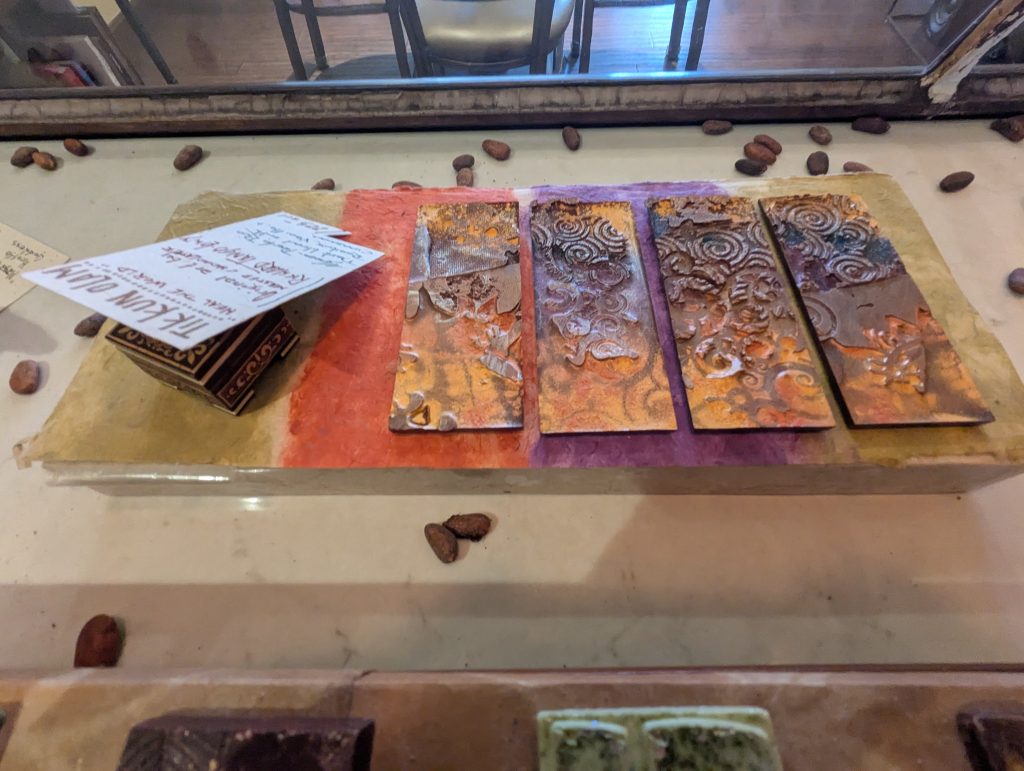
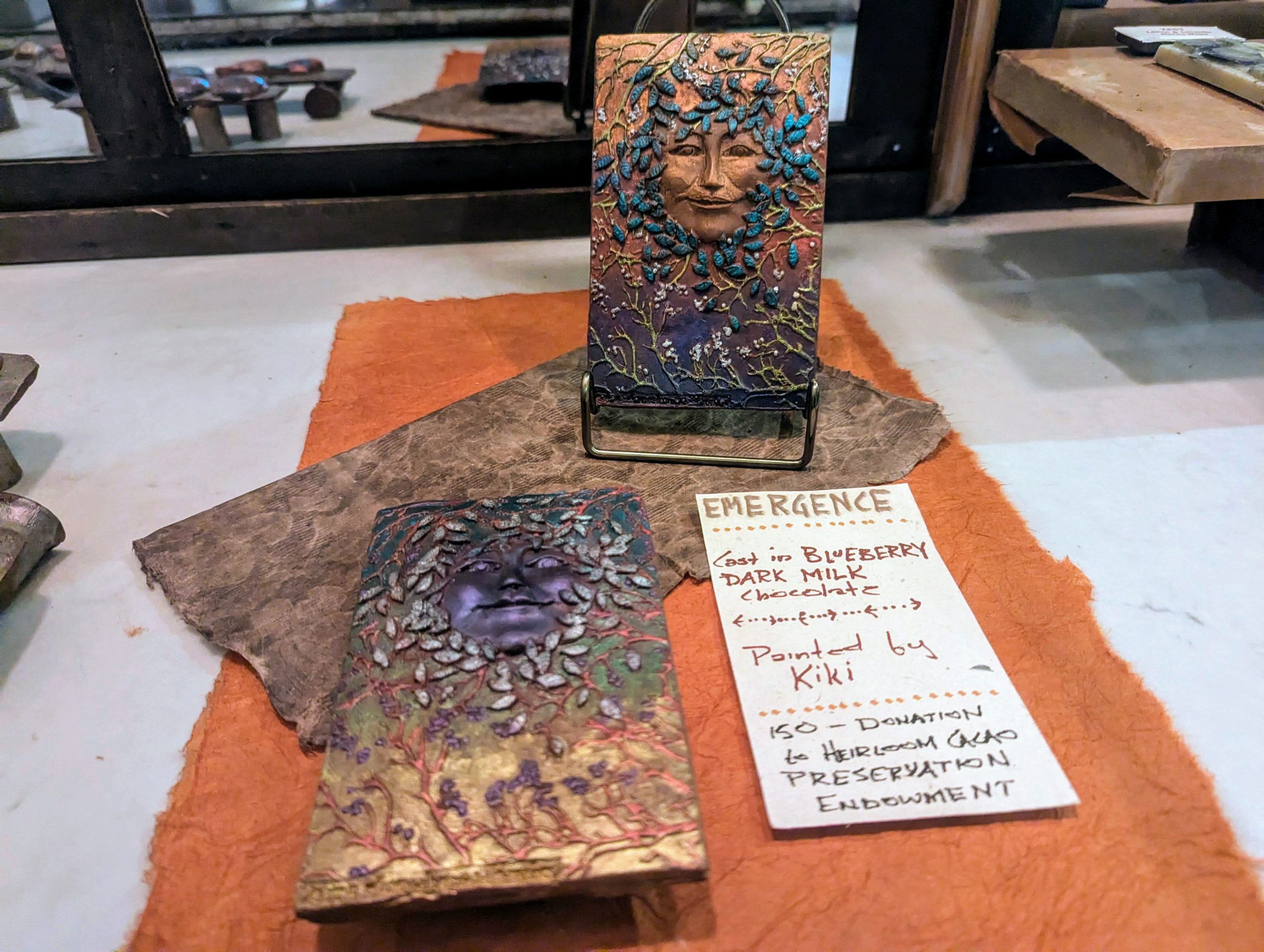
He knew the precise moment the piece was finished. It was after creating a new, intricate chocolate sculpture. As he unmolded it, he realized its name and meaning.
“’Heal yourself by healing the world.’ I realized that’s what this whole shop has been about the whole time. I hadn’t realized it until I made the piece,” Tango-Lowy said.
That creation was the final word in the poem; to continue would be to tamper with a finished masterpiece.
“This Dancing Lion Chocolate has always been a piece of art, right? That you form and you create, goes where it wants and you explore. But yeah, eventually it’s done. And if you keep going, you mess it up,” Tango-Lowy says with the profundity of a beat poet ready to hit the road again for a new adventure.
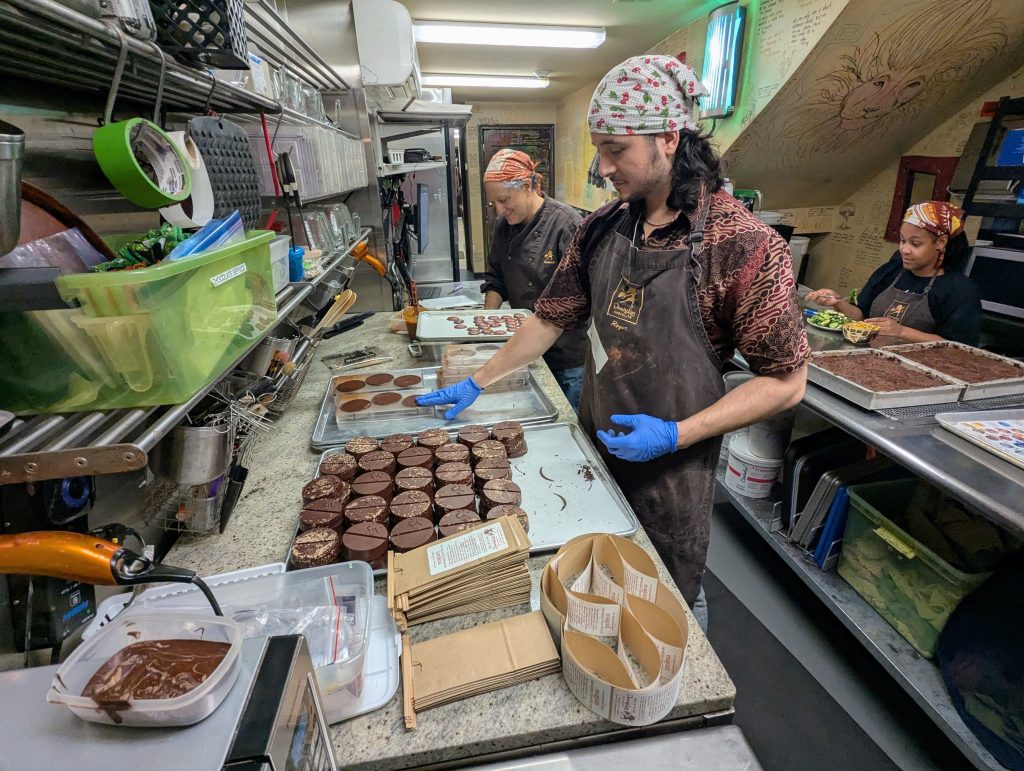
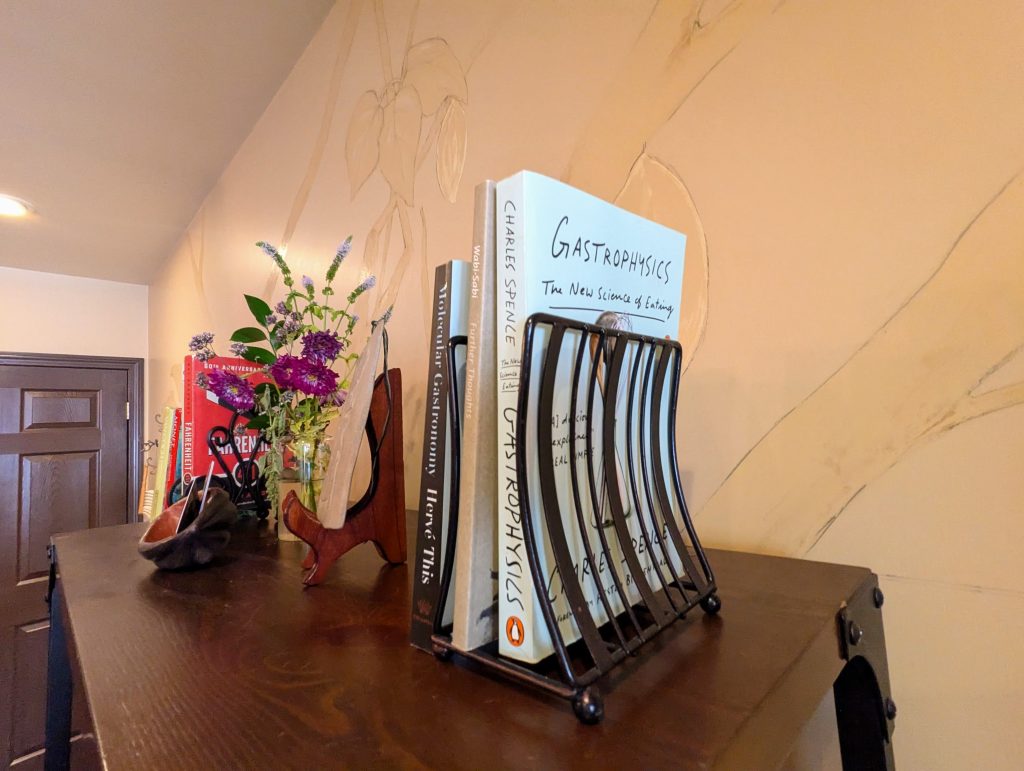
Behind the artistry of Dancing Lion lies a reverence for hard science. Tango-Lowy, who began his career in physics, approaches chocolate with a scientist’s rigor. This is not just a matter of melting and molding; it’s a deep dive into cacao genetics, geology, and the complex chemistry of fermentation. To prove a point about truffle texture, his shop has collaborated with the material science department at Northeastern University and even sent ganache to a particle analyzer in Switzerland. For a paper on flavor, he worked with the USDA’s premier cacao research group.
This scientific obsession has tangible results. He tells the story of a rare cacao from Belize that must be fermented for exactly two days instead of the usual week. Get it wrong, and the beans don’t taste like chocolate. They taste like green peppers. It is a constant battle against entropy to coax beauty from a notoriously difficult raw material.
“It’s so hard to make good chocolate. It’s insanely hard to make good chocolate,” he says, with the authority of one who knows.
Forget the simple timeline of Aztecs and Spanish explorers. The true story of chocolate is a geological and anthropological epic stretching back millions of years, and Tango-Lowy tells it with the passion of a historian unearthing a lost civilization.
• A River Ran the Other Way: The ancient precursors to the cacao tree first emerged in the upper Amazon basin around 12 million years ago, at a time when the Amazon River flowed in the opposite direction it does today.
• A Human Touch: The iconic white seeds of prized Criollo cacao beans are not a purely natural phenomenon. They are the result of ancient human interaction, where indigenous peoples isolated specific strains and selectively bred them for thousands of years, creating a genetic mutation.
• Ancient Superhighways: The trade routes of early civilizations were far more extensive than many realize. Cacao wasn’t just a local delicacy; it was a major trade commodity found as far north as Cahokia, the massive indigenous city near the Great Lakes, connected by a vast and sophisticated network.
By his own admission, Tango-Lowy runs “the most expensive chocolate shop in the world.” But yet, it’s not in Paris, Tokyo, or New York. It’s in Manchester – a city not typically seen as a global “foodie” mecca. Skeptics would assume such a high-end, artistic venture could never survive here.
They would be wrong.
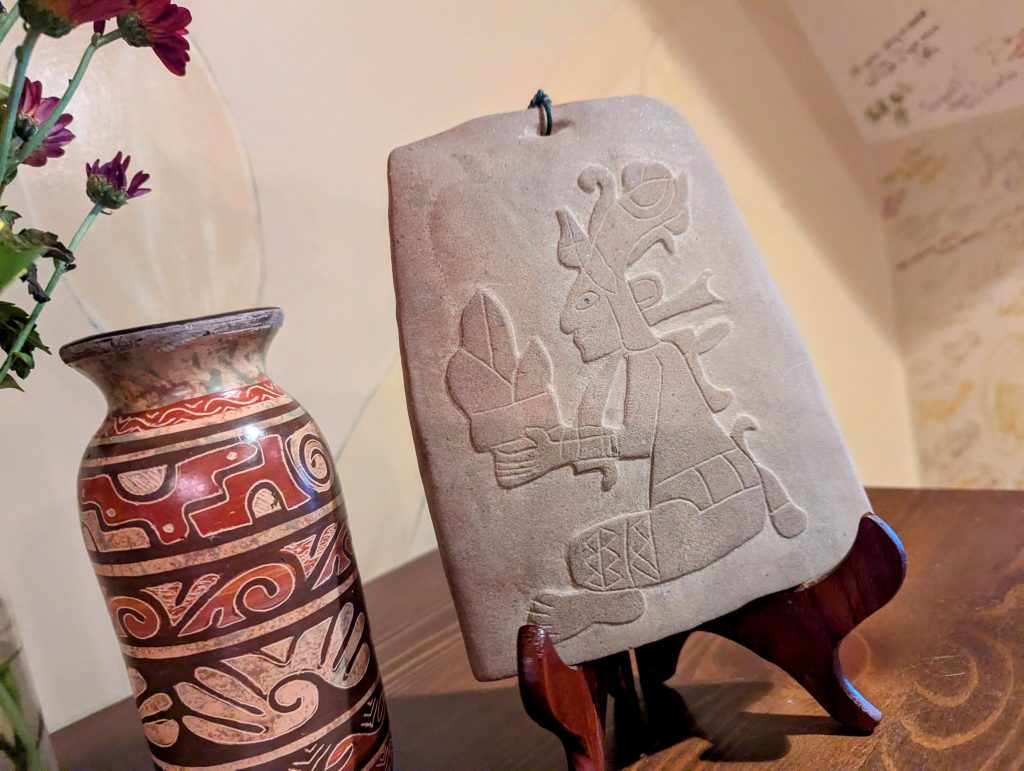
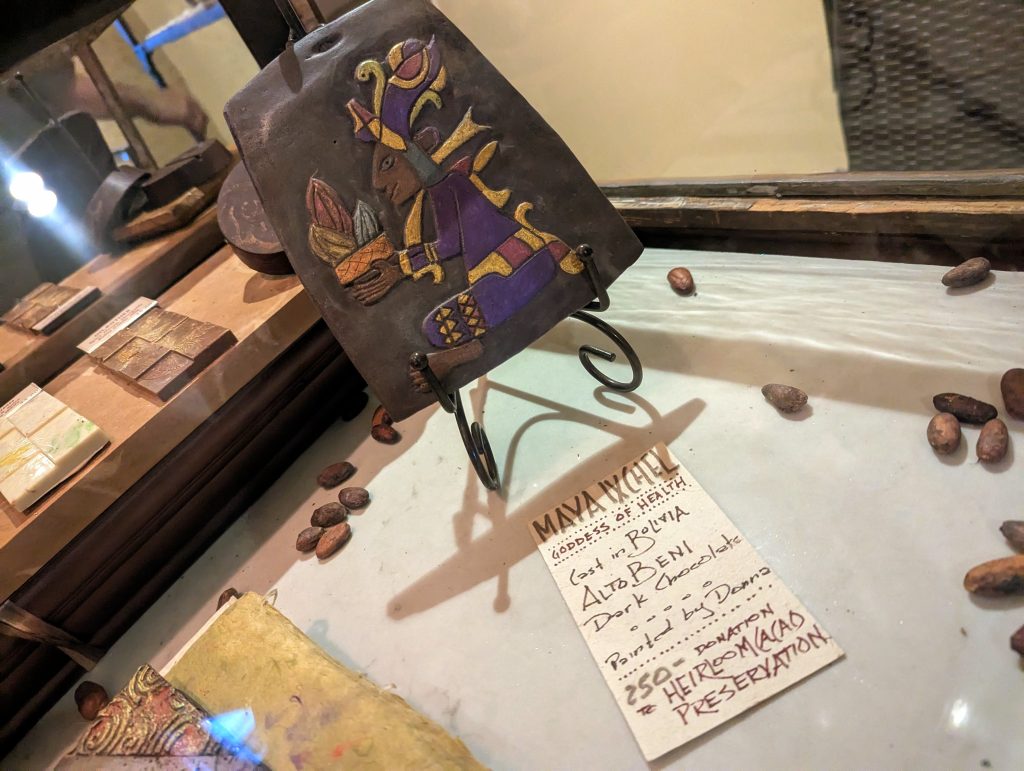
Above, chocolate art imitates art: A carving of the Maya “goddess of the moon” Ixchel, recreated. Photos/Carol Robidoux
The core business of Dancing Lion Chocolate has not been tourists or wealthy collectors, but locals. These were everyday people willing to pay for integrity, for the stories behind the beans, and for unparalleled quality. Tango-Lowy’s success is a testament to the idea that genuine craftsmanship creates its own gravity, challenging the cynical notion that artistic food can only thrive in the world’s largest cultural capitals.
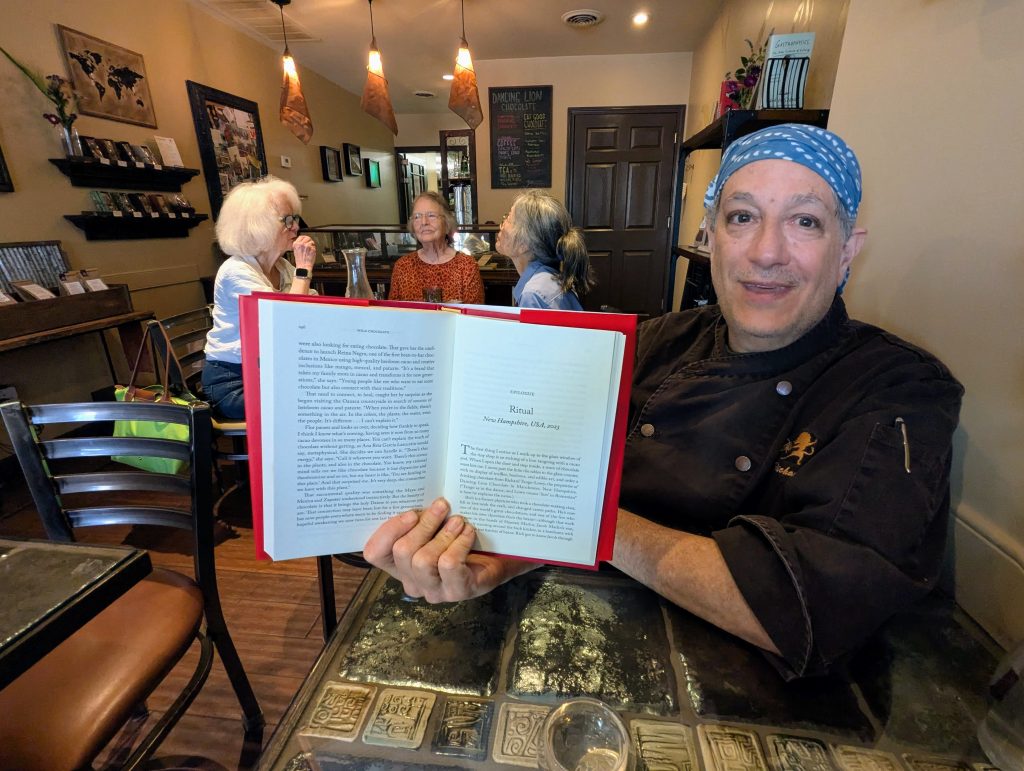
During one of the shop’s final days, a group of customers arrived who had traveled over an hour from Grantham for one last visit. They weren’t lifelong chocolate connoisseurs. In fact, their passion was brand new, ignited by a single source: “Wild Chocolate,” a book by food writer Rowan Jacobson.
One of the women explained that reading it had turned her from a casual chocolate fan into a self-described “chocoholic fanatic.” Her conviction was so strong that she made her friends read the book before they were allowed to join her on the “field trip” to the shop. Their journey wasn’t just about tasting chocolate; it was a pilgrimage inspired by a narrative that gave them a new lens through which to see it. Tango-Lowy was more than happy to sign copies of the book and thank them for their patronage.
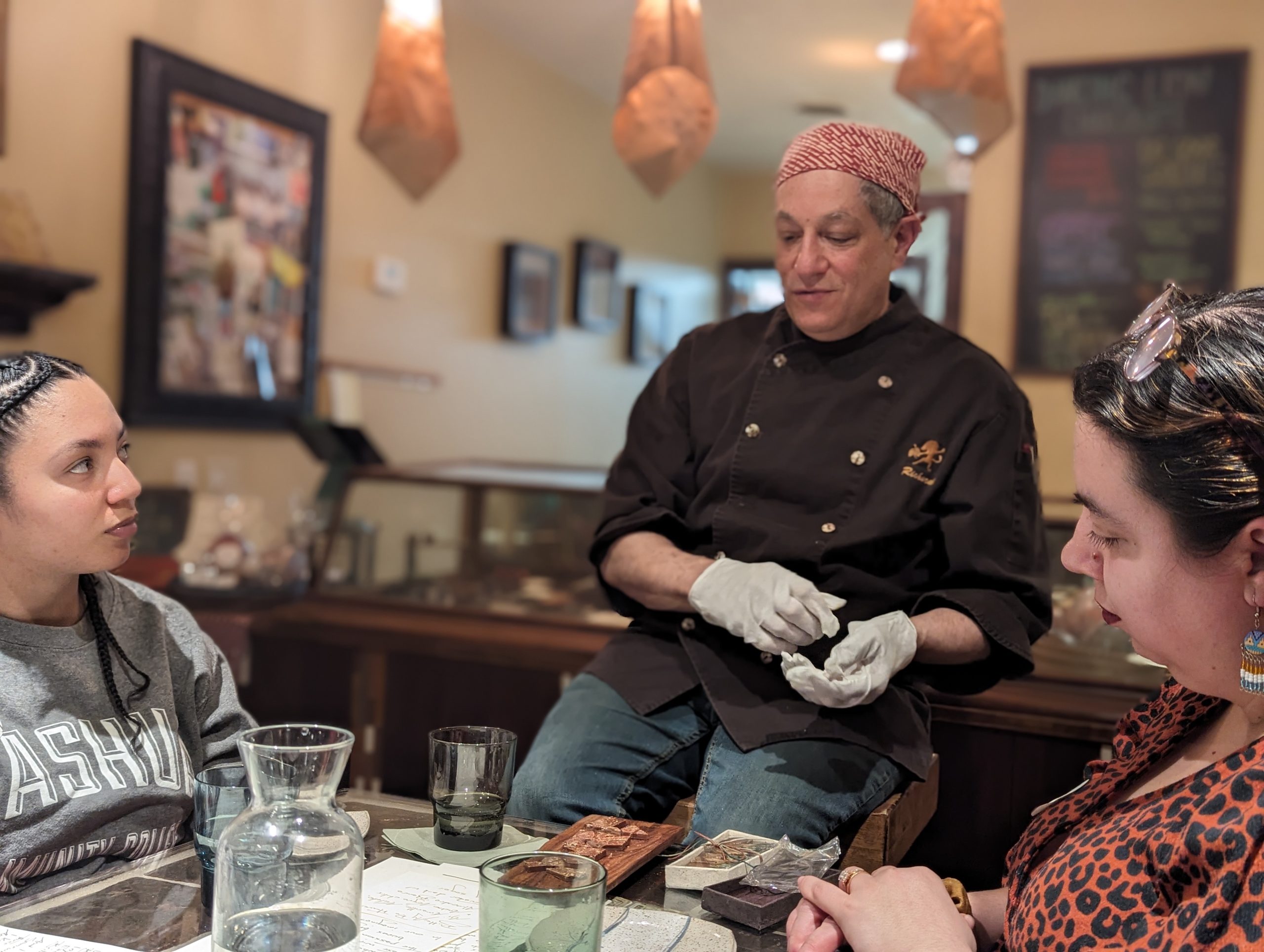
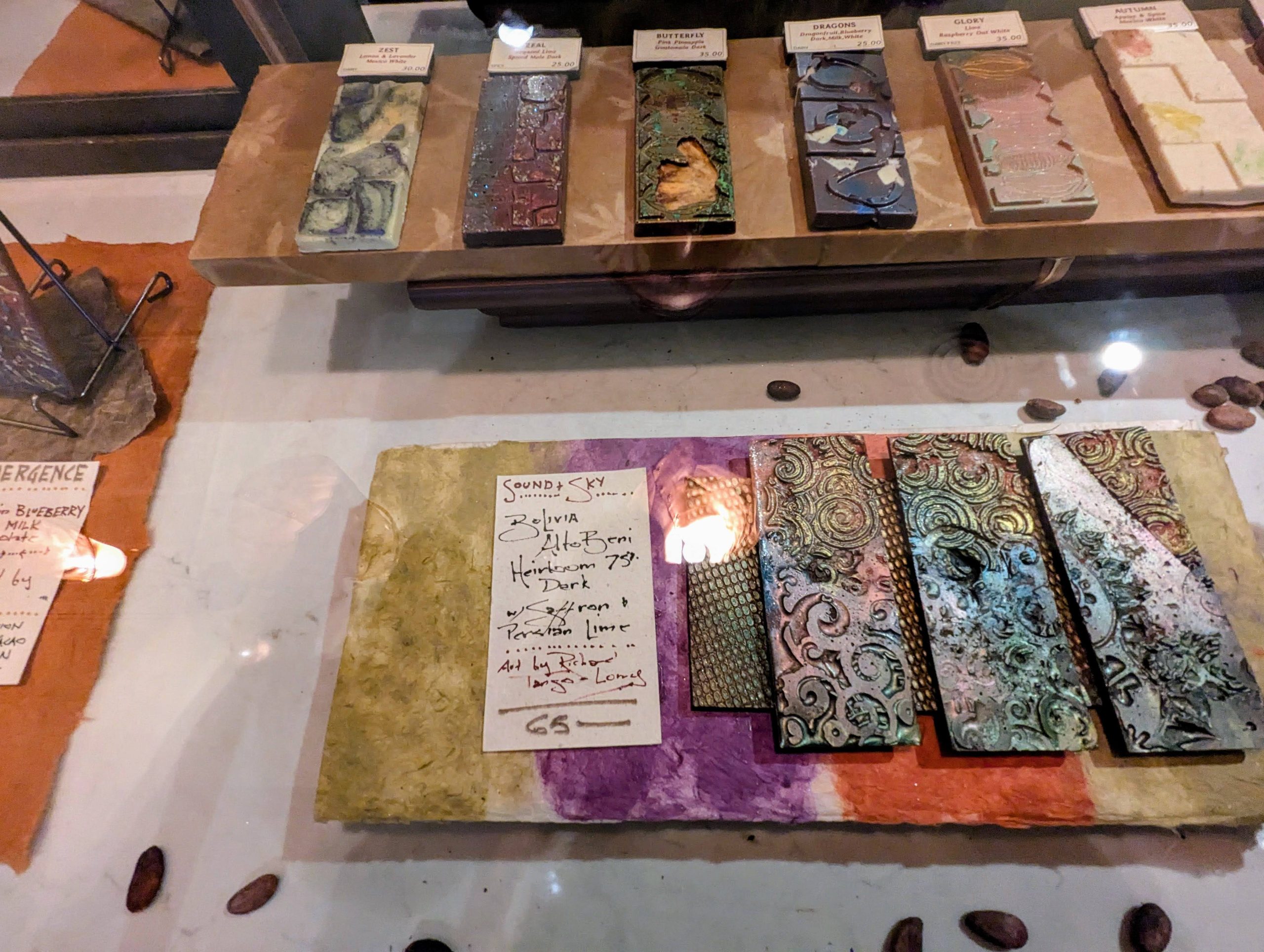
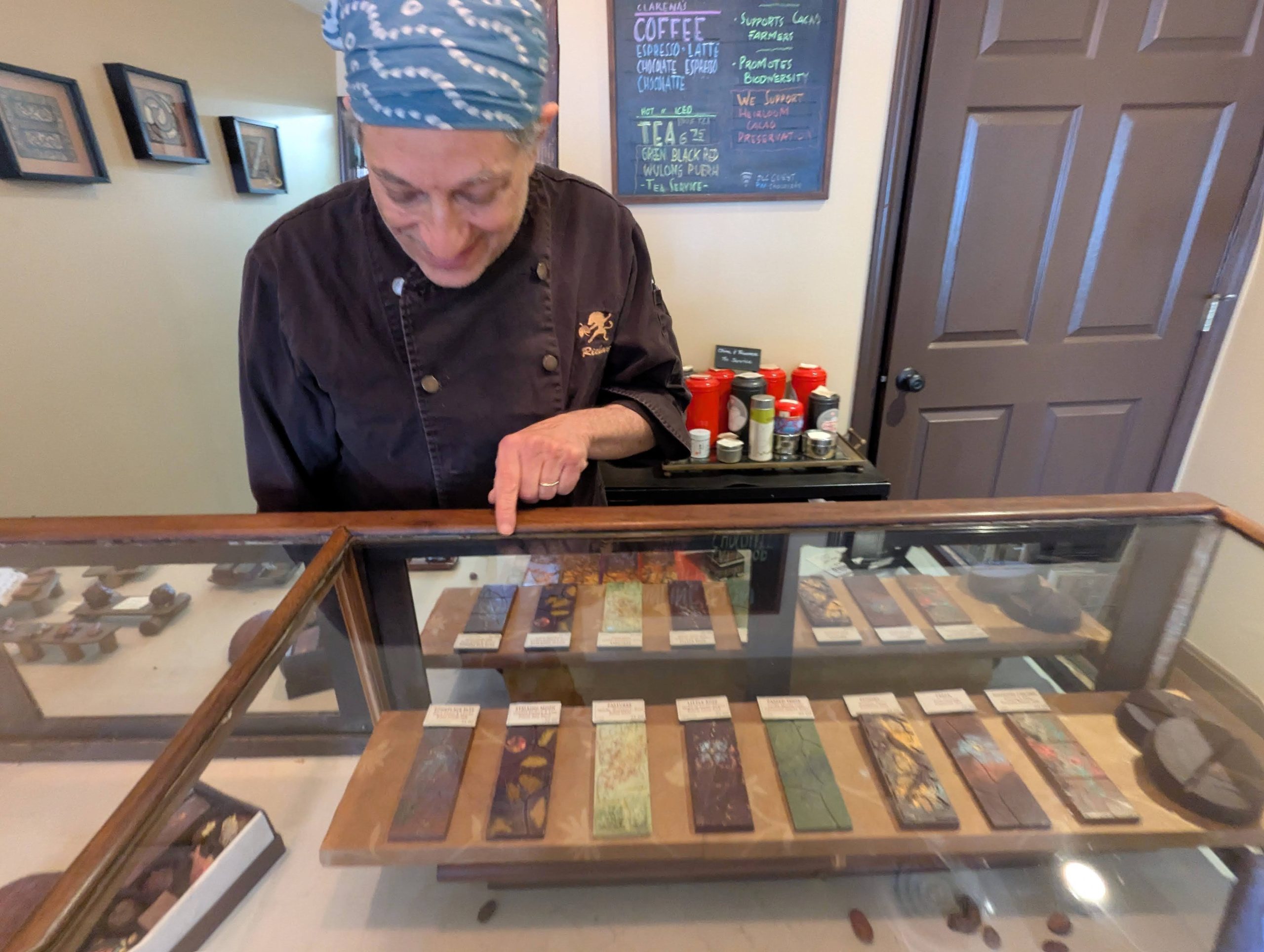
While the doors to Dancing Lion Chocolate are closing, Richard’s influence is metastasizing. He is actively “passing the torch,” mentoring a new generation of chocolatiers who will carry his scientific and artistic approach forward. His legacy won’t be a single, static shop, but a living, evolving network of artisans whose work is a direct extension of his own.
He proudly points to Ryan Flaherty of Two Poet Chocolate in Dover, who is buying most of Richard’s equipment to open his own brick-and-mortar shop. He celebrates Jonathan Taub of Clandestine Chocolates in Hopkinton, who is buying Richard’s remaining stock of rare chocolate to use for the next year, saying, “there’s just nothing else like it.” He encourages a visit to Fernando Velez of Chokaico in Connecticut. This is the ultimate legacy: the art form will not die with the shop; it will multiply and evolve through the hands of the many people he has inspired.
The story of Dancing Lion Chocolate is about so much more than a delicious product. It’s a powerful lesson that the everyday things we take for granted can contain incredible depths of science, art, history, and human connection. Tango-Lowy’s work proves that mastery isn’t just about creating something beautiful, but about understanding it so completely that you also know, with perfect clarity, when it’s finished.
The next act has already begun – Tango-Lowy and his wife are moving to Costa Rica where they have a home – he will sell the building on Elm Street at the end of October and, because they live in the upstairs apartment, they will hit the road after that.
Don’t call it a retirement; Tango-Lowy, at 60, is just getting started when it comes to exploring all the possibilities of cacao. This, he says, is a transition to what will be his third or fourth career. “I’ll stop working when I’m dead,” he says, and he means it.
He plans to keep working through education including Ecole Chocolat (in Vancouver) where he’s been teaching since 2014. And he will devote more time to Heirloom Cacao Preservation (HCP), which has been one of his primary passions and for which he currently serves as Board president. [Read more on that here.]
The organization fulfills his inner nerd and melds his scientific approach to chocolate to the conservation and sustainability of cacao from the corners of the world.
As things wind down he has been enjoying the slow parade of regulars who’ve come in their own time to say goodbye in their own way. It’s bittersweet, something Tango-Lowy has a refined taste for.
“The art to me is done,” he says again, for emphasis. “It’s like when you write a poem, you know – once you’ve hit the last word, if you keep adding to it, you’re only going to mess it up.”