
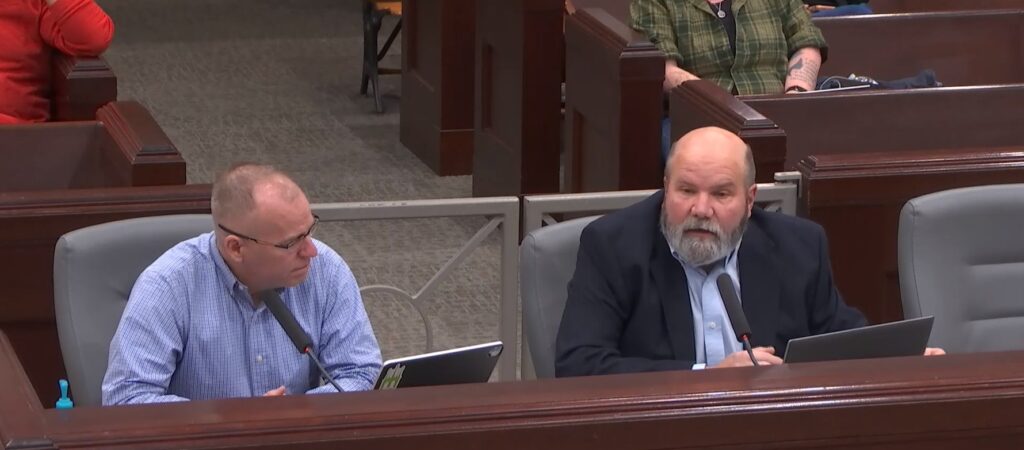
MANCHESTER, N.H. – Leaders of Manchester’s Department of Public Works provided a presentation to the Board of Mayor and Aldermen during their Feb. 3, 2026 meeting that had a stark and familiar message: continuing current road repaving funding levels will lead to average road in the city becoming “poor” in the near future.
Manchester Department of Public Works Highway Engineer Caleb Dobbins discussed the current state of Manchester’s roads and stated that according to the pavement condition index (PCI), the average road in Manchester is currently a 63 out of 100. Anything above 71 is considered “good,” anything below 55 is considered “poor,” and 56 to 70 as “fair.” Originally designed by the U.S. Army Corps of Engineers and later adopted for roads, these scores are based on a variety of factors in the health of the road for deductions for things like cracking, potholes and other defects.
Currently, about 45 percent of city roads are considered in good condition, 20 percent fair, and 35 percent poor following a recent external analysis that used automated equipment to assess all 413 centerline miles of Manchester roads in 10-foot increments. Dobbins stated that ratio of road quality was roughly consistent throughout the city.
These scores, along with usage and other factors such as future utility projects buried under the roads impact repaving schedules.
An amount of $12 million for road repaving, the amount recommended last year, would put the average road next year at about 64. The amount needed to get that average into the “good” range would be approximately $18 million next year according to Dobbins and the $6 million amount allocated last year would likely see the average dip to 58.
Subsequent years under the recommended $12 million amount are likely to continue decreasing the average. However, Dobbins and Manchester Department of Public Works Director Tim Clougherty noted that if bad and poor roads could be addressed, the amount for repaving would drop since less work is needed to repave roads in good condition, but the drop from good can happen rapidly.
“I think a road is very similar to the roof of your house. Sometimes you can just put another layer of roofing material on. Sometimes you’ve got to take off all the shingles. Sometimes the wood underneath is rotten and you’ve got to take it down to the rafters,” Dobbins told the board. “That’s what we kind of have here. What we’re trying to do is keep that roof in as good condition as possible. The problem is once you get to that point the roof is leaking. Now, all of the sudden, things become more expensive because you’re replacing the ceiling in your bedroom instead of just the roof.”
In response to a question from Ward 10 Alderman Bill Barry, Clougherty said that it would not be feasible for the city to do more repaving than the minor repairs it does now, with outside local contractors available to provide more extensive projects.
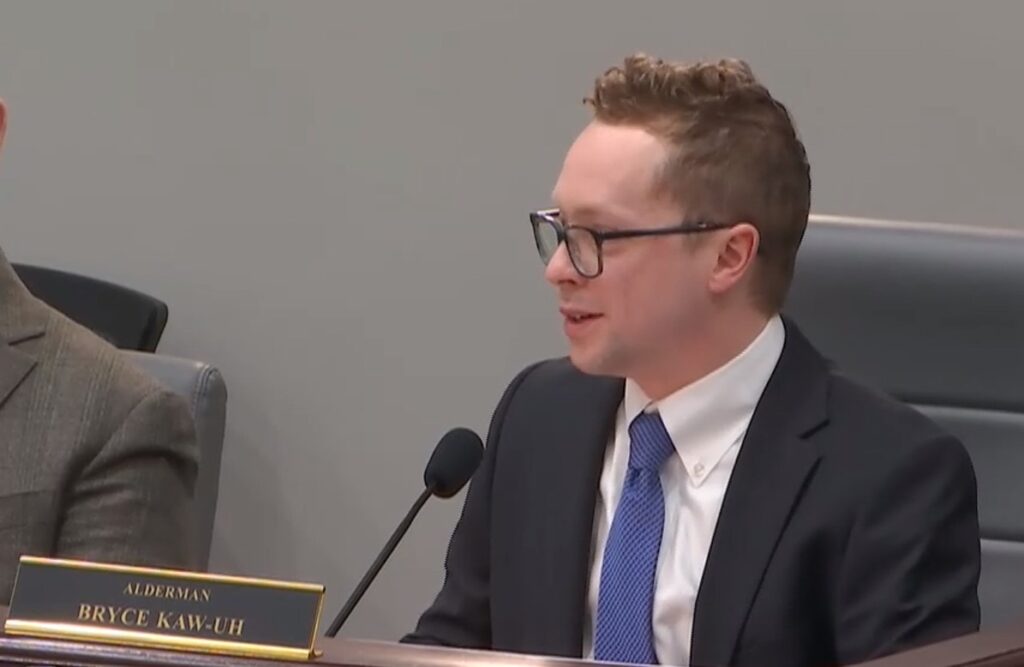
Ward 1 Alderman Bryce Kaw-uh stated that ultimately this issue comes down to what the people of Manchester want and the board acknowledging what it will take to accomplish those needs.
“We can’t pretend that we don’t know what the problem is, that we are not investing in the maintenance of our roads,” he said. “We have 400 miles of it. It’s not going to be cheap, but the people of Manchester deserve to drive on a road that’s not going to destroy their cars, and so I hope we can all agree on that and work in this budget cycle toward something that gets us closer to having actually good roads across the city.”
Slides from the presentation can be seen in a .pdf below as of Feb. 5, 2026.