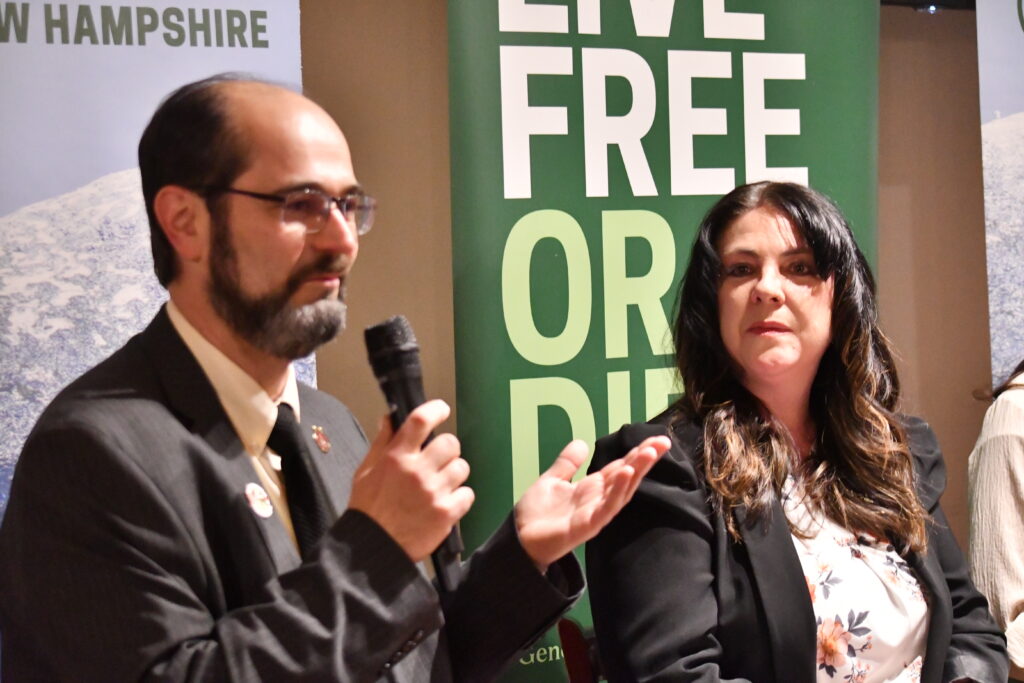
MANCHESTER, N.H. – Is socialism bad? For the crowd in the event room at the Stark Brewery on Feb. 4, 2026, the answer was definitely yes.
In an event held by Americans for Prosperity – New Hampshire, a panel discussed the competing visions for America between recently elected New York City Mayor Zohran Mamdani as what was seen as comparable types of policies versus pursuing limited government economic intervention.
Americans for Prosperity Northeast Regional Director Ross Connolly and Americans for Prosperity – New Hampshire Deputy State Director Sarah Scott specifically dissected the messaging of Mamdani’s campaign and the concept of socialism as compassionate.
Connolly said that promises from Mamdani to make New York City more affordable were disingenuous, stating that the city has never been affordable and never could be affordable while retaining its role as the center of the world’s economy. However, he also noted that those promises and others by democratic socialists can seem appealing and that his demeanor was also appealing, with conservatives needing to copy the intellectual and emotional appeal captured by Mamdani’s campaign.
“That election was not about socialism versus capitalism, people fell for his message that he would make the city more affordable,” said Connolly.
“His campaign was near flawless. He made it cool to follow him. What we need to do is make freedom cool,” he added.

Scott said that it was important for conservatives to point out the unfulfilled promises of socialist countries and agreed with Connolly’s view that Mamdani’s approach should be used by conservative candidates to attract people to conservative policies.
“Communism and socialism give hope by promising things,” she said. “We also need to a create a vision for the American dream where we’re not going to hand it to you, but we’re going to give you the opportunity to do it yourself.”
Connolly, who described himself as a former Communist, stated that New York City is beginning to see an exodus of people fueling the city’s financial sector, with many moving to Miami or Texas. He believes that Mamdani’s policies impacts on the city’s financial sector will eventually be seen in comparison to the decline of the automotive industry in Detroit.
“New York thinks they’re very special but they could easily take the same turn (as Detroit),” said Connolly.
He added that ideas such as rent control would not lower housing prices in New York City, as landlords would eventually stop seeking to improve or invest in housing when profit incentives were capped.
While Connolly supported some of Mamdani’s actions cutting fines and fees for small business, he expressed frustration over the impact of New York City as well as the State of New York and its economy’s size impacting New Hampshire through things like banning natural gas pipelines, leading to higher energy prices in New Hampshire.
He also talked about how people he talks to in other states share their jealousy of New Hampshire and its policies, such as Vermont residents paying more for healthcare than Granite Staters and Maine having lower GDP growth than its neighbors to the west.

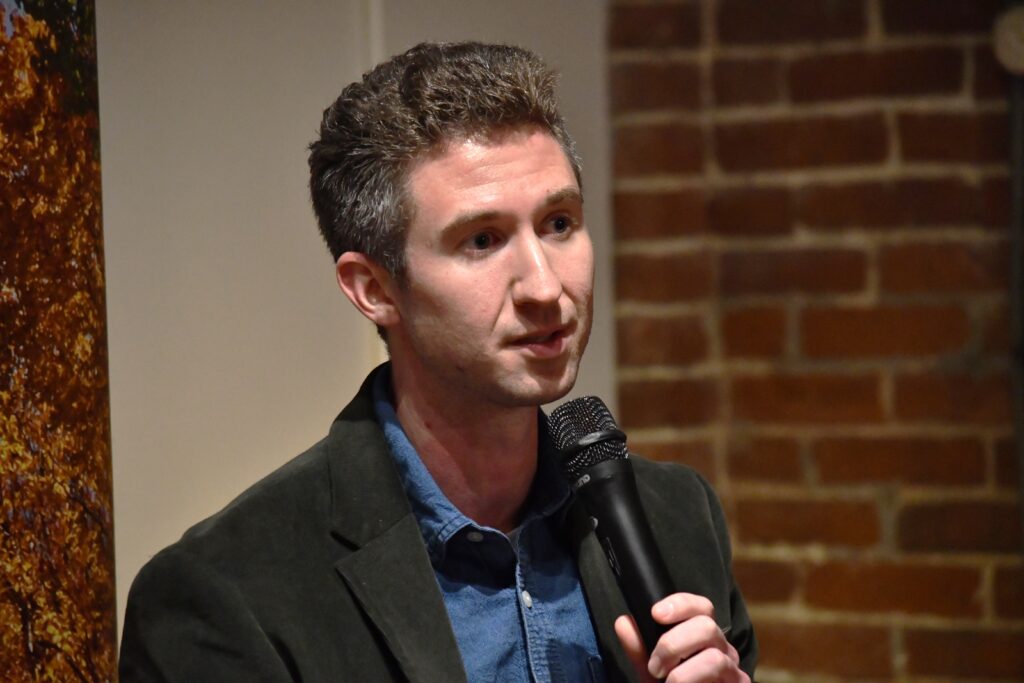
State Representative Steve Kesselring (R-Manchester), a member of the audience during the event, built on this idea. Kesselring stated 70 companies in the experimental medicine field worth a combined $128 billion are looking to move to New Hampshire given its proximity to the concentration of bioscience companies and employees in Massachusetts and the New Hampshire legislature’s attempts at reducing regulatory barriers for companies such as theirs.
Connolly and Scott also warned that New Hampshire could easily lose this envy from other states, and their advantage over other states, if New Hampshire veered toward policies promoting more government intervention.
State Representatives Lisa Mazur (R-Goffstown) and Julius Soti (R-Windham), agreed with his sentiment while providing examples from their own personal experience while noting policies promoting more government interventionism should be avoided.
Mazur was born in Manitoba, but eventually moved to Belgium and New York State before settling in New Hampshire and transforming from a dual Canadian-US citizen into just an American citizen following the COVID-19 epidemic.
She explained her disapproval in particular with Canada’s medical system, sharing the story of her father, who had to wait four months for a medical appointment even though he had progressed to stage-4 cancer by the time that appointment arrived.
“I’ve seen what its like in Canada. I’ve seen what its like in Europe. I’ve seen what it’s like in New York. The three worst places you could be,” she said. “I refuse to acknowledge that there is a better state than ours”
Soti shared the story of his father, who lived in Hungry under Communism and was imprisoned for trying to make a profit off his farm. Like Mazur, he talked about his opposition to legislation providing free school lunches for children, believing that if food waste was addressed, that issue would resolve itself.
And like Mazur, he said he got involved in politics to maintain what he sees as New Hampshire’s status as the best state in the country.
“Plato said if you don’t get involved politics, you will be ruled by fools,” he said.
More information Americans for Prosperity – New Hampshire can be found at nh.americansforprosperity.org