
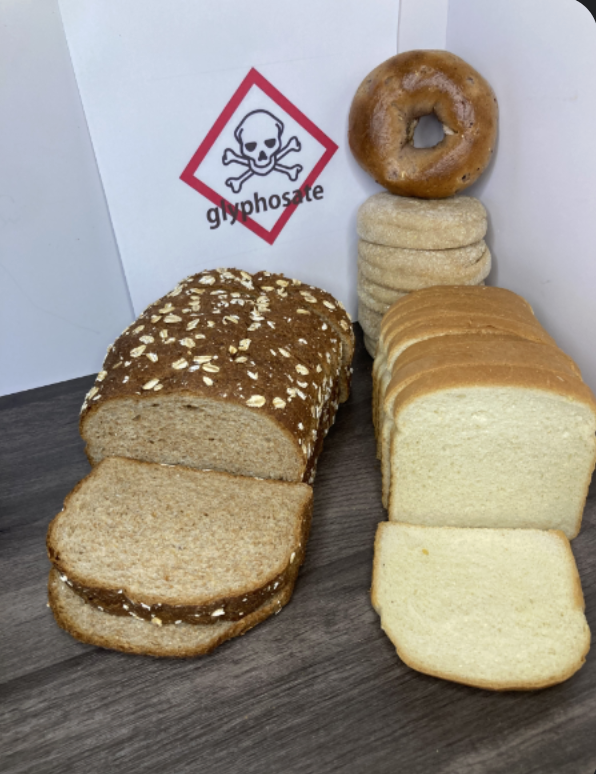
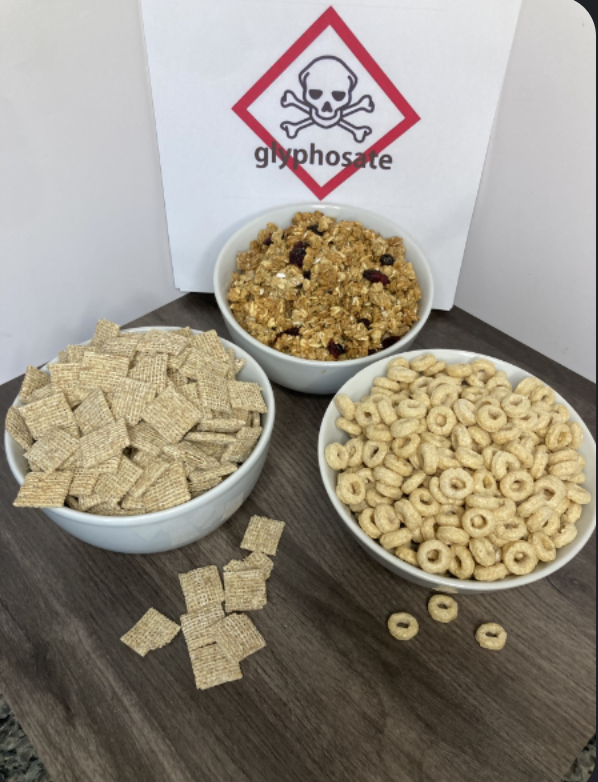
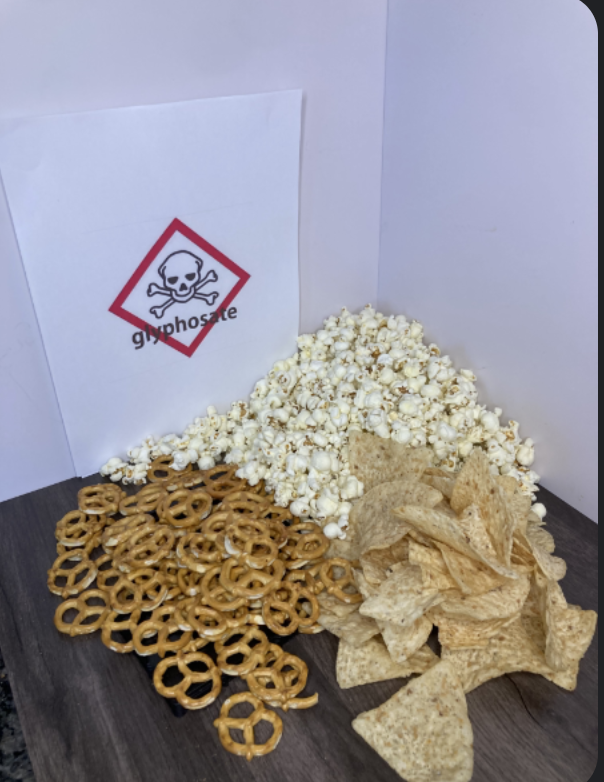
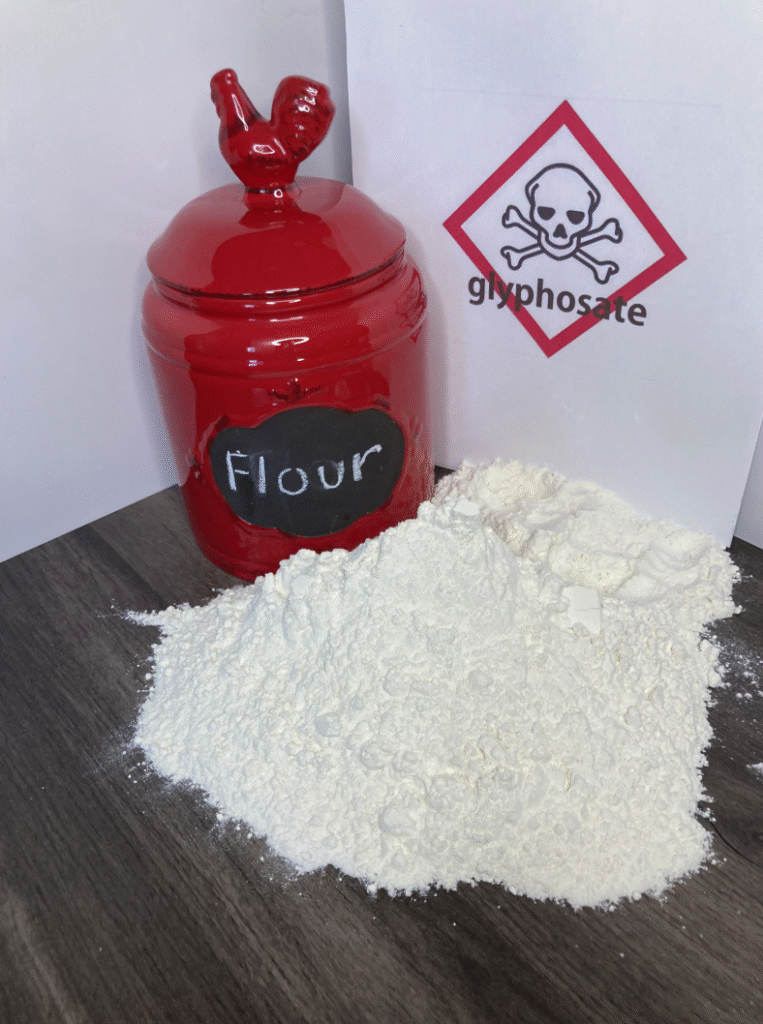
Yes, those photos from my last post have been updated to include an ingredient they all share. As do hundreds more. One that has human health and environmental advocates deeply concerned. Glyphosate.
Glyphosate is a non-selective herbicide used in residential, industrial, and small commercial farm settings to kill weeds. The chemical stops plants – and some microorganisms – from making needed proteins for growth. (National Pesticide Information Center: Glyphosate General Fact Sheet; Update March 2019) Seven to 10 days. Lights out.
Bought by Bayer in 2018 for $63 billion, glyphosate was originally developed by Monsanto and sold as Roundup in the retail market beginning in 1974. Today, farmers large and small use between 600,000 and 750,000 metric tons globally per year in numerous ways, (Environmental Science: Glyphosate: a review on its widespread prevalence and occurrence across various systems, May 2024)
- Sprayed en mass before planting in spring to kill weeds
- Sprayed en mass after harvest to control weeds that germinated over the growing season
- Sprayed between rows of crops in fields, orchards, and vineyards to control weeds
But the most common method of glyphosate application is the most controversial: pre-harvest desiccation. Deemed the gold standard on industrial farms, glyphosate is sprayed directly on the crop itself just one or two weeks before harvest. Oats, wheat, soy, corn, beans, canola, the list goes on and on. Seven to 10 days. Lights out.
Advocates argue this chemically-induced drying method is very cost effective and results in a more uniform crop; that it decreases moisture content of the crop if used in areas susceptible to rainy conditions; and, because the plant is already mature, the “fruit” of the plant is largely protected from glyphosate absorption.
Unless it’s not.
You’ve heard the term, genetically modified? Well, scientists have genetically modified crops to be tolerant of – won’t be harmed by – glyphosate. Namely soybeans (94%) and corn (92%), (Oldways Whole Grains Council, April 2021)
Genetic modification is a hot mess of a topic all its own but as to the safety of glyphosate on public health and that of the environment, research keeps nagging at Bayer’s longstanding posture that glyphosate is safe and backed by “2,400 studies across 50 years.” (Bayer.com)
Hold on.
For starters, oats are not genetically modified. Nor does the hull protect the edible portion of the oat plant – the groats – from glyphosate absorption as farmers spray it when the plant is still actively growing.
No surprise then that those independent and university labs working with nonprofits like Friends of the Earth and Environmental Working Group (EWG) found 100% of samples of conventional oat cereals tested to have an average of 360 parts per billion (ppb) glyphosates. That’s more than twice the recommended health benchmark set by the (EWG) at 160 ppb for a single 60-gram serving. (Roundup for Breakfast, Part 2: In New Tests, Weed Killer Found in All Kids’ Cereals Sampled, EWG News Release, 10/2018)
The EPA limit is 30,000 ppb.
After multiple legal challenges beginning in 2020 to the EPA’s determination that glyphosate does not pose health risks when used in accordance with current labeling, it doubled down in 2022 on its previous conclusion. A Reference Dose (RfD) of 1.0 mg/kg/day offers no observable adverse effects over a lifetime, based on a review of the available scientific evidence. (https://response.epa.gov)
Good to know: A reference dose is the EPA’s maximum acceptable oral dose of a toxic substance below which no adverse noncancer health effects should result from a lifetime of exposure. (Reference Dose Description and Use in Health Risk Assessments, EPA, 3/1993)
Environmental Working Group, wants the RfD lowered to 0.01 mg per day. A total that would be reached easily by consuming just two cups of oat-based cereal with 160 parts per billion glyphosates. (How Does EWG Set a ‘Health Benchmark’ for Glyphosate Exposure? EWG News & Insights, August 2018.)
Americans eat tons of oats. Me included. Granola, granola bars, oatmeal, overnight oats, oat bread. If I eliminated all the organic oat products I eat in a week, there would be huge void in my dietary regimen.
Organic oats have little to no glyphosate residue.
Beyond Pesticides, EWG has been on Health & Human Services secretary Robert F. Kennedy’s case about glyphosate since he rolled out his Make America Healthy Again plan in May of this year. While he mentioned glyphosate when the proposal was first released, he has since gone radio silent leading many to assume industry interests/lobbyists have made their influence known.
So, what does recent research say about the effects of glyphosate on humans and the environment? What about Bayer’s lobbying efforts to limit their liability for cancer and other health effects? And, what about glyphosates residual exposure in other crops like wheat and soybeans? That’s the next round of my coverage on Roundup aka glyphosate.
Make yours a healthy Thanksgiving!
Carolyn R. Choate, a lifelong foodie, has discovered a deeper relationship between health and diet. She is certified in whole food, plant-based nutrition from Cornell’s T. Colin Campbell Center for Nutrition Studies. You can reach her at crchoate13@gmail.com.
Disclaimer: The writer’s experiences and observations are intended for informational purposes only and are not intended to provide medical advice about the avoidance, diagnosis or treatment of any medical condition. Medical advice should be sought from a qualified healthcare professional.