
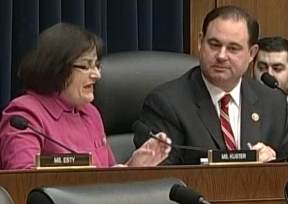
WASHINGTON, D.C. — New Hampshire was in the House Monday, as U.S. Representatives Frank Guinta and Anne Kuster, founding members of Congress’ Bipartisan Task Force to Combat the Heroin Epidemic, held a Washington, D.C., briefing Jan. 11 to explore treatment methods that would improve addiction recovery rates.
“Republican and Democrat members from across the country are joining us to prevent more Americans from falling victim to heroin abuse, often starting with prescription opiates and ending in death for tens of thousands,” said Guinta. “For Granite Staters who have lost hope, my colleagues and I are trying to restore it – to direct more resources to a problem in desperate need of solutions.”
⇒Click to watch the complete Heroin Task Force session.
The Centers for Disease Control and Prevention (CDC) reports that drug-induced overdose deaths – opiates and heroin responsible for most – were the leading cause of injury-related deaths in the United States in 2013, the latest year for which CDC figures are available.
In New Hampshire, more than 400 deaths were attributed to heroin in 2015, up from about 320 in 2014. Without swift action, the rate will continue to rise, Kuster said.
“In NH we face a particularly deadly combination: We have the nation’s highest per capita addiction rate but the second lowest treatment capacity,” said Kuster.
She spoke about the testimony relayed last week during a Special Order session before Congress on behalf of Kriss and Mark Blevens of Manchester, who lost their daughter to a heroin overdose.
⇒RELATED STORY: From NH to D.C.: No rest for the weary in the trenches of recovery from addiction
Since 2010, deaths due to heroin overdose have increased nearly 300 percent. The Task Force heard testimony about Methadone and Naltrexone, which can help addicts to avoid relapse, as well as psychological therapy, which can increase their chances of long-term success.
“Communities are the key to recovery,” said Rep. Guinta. “We need to do a better job communicating the dangers, intervening in the early stages of heroin abuse, and monitoring addicts’ progress.”
Guinta and Kuster introduced the STOP ABUSE Act to strengthen local treatment, prevention and law enforcement programs, and to provide treatment and prevention grants to communities “overwhelmed by the scale of heroin and opiate addiction.”
At the briefing, experts from the American Psychological Association, National Institute on Drug Abuse, and Substance Abuse and Mental Health Services also addressed Reps. Bruce Poliquin, Jackie Walorski, Steve Knight, Elizabeth Esty, Keith Rothfus, Donald Norcross, Barbara Comstock, Ryan Costello and John Sarbanes.
 You’re one click away! Sign up for our free eNewsletter and never miss another thing.