
O P I N I O N
NOT THAT PROFOUND
By Nathan Graziano
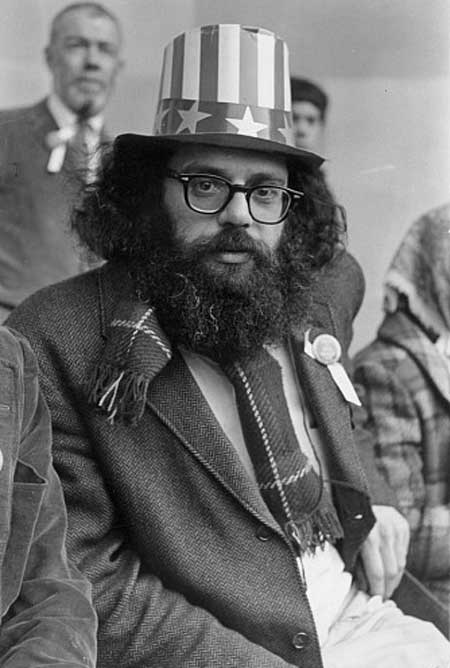

As we approach the Fourth of July this year, which commemorates the signing of the “Declaration of Independence” in 1776, it is hard to miss the irony.
Right now, this country seems as polarized as it has ever been, although the case can be made that we’ve always been polarized by things such as race, class, geography and political affliation, which reached its previous fever-pitch as we approached The Civil War and Southern succession.
However, you don’t have to be a history buff—simply a reader and a thinker—to understand that the widespread panic being created by social media, 24-hour news cycles and propaganda arms from both sides is by design.
And while certainly Donald Trump scares a lot of people invested in the preservation of democracy, his antics are far from unique in American history.
The second president, John Adams, was the first to take an authoritarian approach to the role of the presidency, using The Sedition Act to try to silence his critics and opposition. Woodrow Wilson was an unrepentant white nationalist who showed D.W. Griffith’s “The Birth of a Nation” in the Oval Office, and Richard Nixon, like Trump, was a criminal caught with a smoking gun.
Hell, even Abraham Lincoln suspended habeas corpus rights—although unlike the Dept. of Homeland Security Secretary Kristi Noem, he understood what those rights meant—in trying to suppress Southern succession and revolt.
So there is nothing historically new or novel about Donald Trump.
However, one of the reasons that authoritarianism has never succeeded in The United States can be attributed to the hard work and courage of writers and newspaper editors, speakers and orators and—believe it or not—poets.
If you want to check the pulse of any culture, throughout any point in history, read the poets. Poets have a unique way of tapping into the veins that send the lifeblood through a society. This also holds true for America and our democracy.
Please, I implore you to read Walt Whitman’s poetry about America, and your soul will thank you as well. Go ahead, read “Song of Myself” or “When Lilacs Last in the Dooryard Bloom’d” or “I Hear America Singing.” It certainly wasn’t easy for the nation during the Civil War or Reconstruction, but Walt Whitman still found cause for optimism.
Read Allen Ginsberg’s “America” written from the perspective of a gay man living in the early-Cold War-era when America was “great” for the first time.
While admittedly over-the-top, read or listen to Amiri Baraka’s infamous poem “Somebody Blew Up America,” in which the poet calls out his perceived forces of oppression in a post-911 world. You certainly don’t have to agree with him, but are you capable of listening to him with an open mind? If not, why?
You can also throw the late-George Carlin—who I would place under the broad umbrella of “poet”—into this mix. In his 2005 special “Life Is Worth Losing,” he accurately describes the demise of the apocryphal American Dream and seems to predict the “Big, Beautiful Bill” in this bit.
This weekend while watching colors explode in the night sky, try to take a few moments to reflect on what you’re celebrating. If you’re incapable of listening to rational arguments from your fellow American citizens who disagree with you, you’re not celebrating America, you’re celebrating a rigid ideology and a myopic worldview.
That, my friends, is not “We the People.”
Nathan Graziano will field your comments at ngrazio5@yahoo.com