
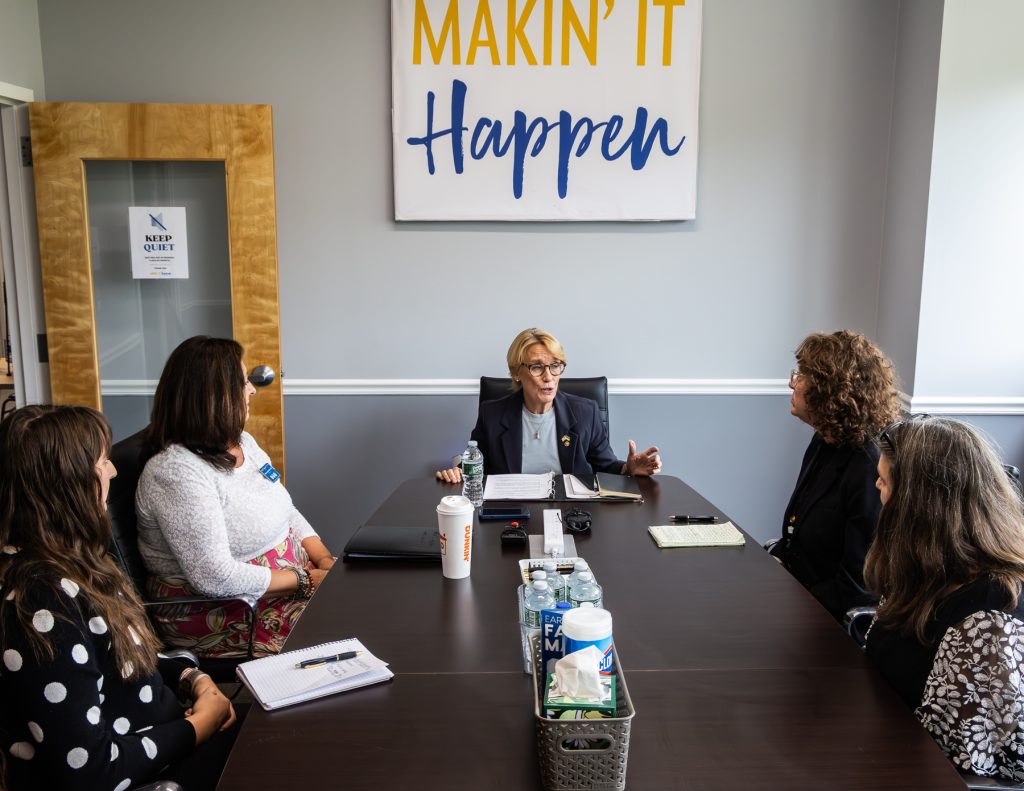
MANCHESTER, NH – US Senator Maggie Hassan met with addiction care professionals in the office of Makin’ it Happen in Manchester. The group gathered to review the status of the Support Act and to update the Senator on the progress their recovery programs are making with addiction.
The Support Act, a landmark investment in addiction prevention, treatment, recovery, and law enforcement efforts, was passed in 2018. It was the largest Congressional investment in overdose prevention at that time. The act provided funding for community-based treatment and recovery programs and required state Medicaid programs to cover all FDA-approved medications for opioid use disorder (OUD).
That law, originally signed by President Trump, has expired. Last week, in an effort spearheaded by Senator Hassan, the Senate unanimously passed an updated and expanded version of the Support Act. The bill is heading to the President’s desk for signature.
“The law that says money can be spent on this kind of effort, helping people get into recovery, helping them get treatment, helping particular populations like pregnant women to deal with addiction. That law has expired, and it is really concerning because we still have so much work to do,” said the Senator, “I was able to work with members of the House and the Senate, both parties, because opioid addiction hits everybody, every walk of life, in every part of the country. And we were able to come together, agree on basic provisions in this bill, and agree that we need to keep this effort going. And passed it unanimously last week on the Senate floor.”
In the early 2000s, New Hampshire began to see a sudden increase in overdose deaths due to prescription opioids. In the early to mid-2010s, the epidemic expanded to heroin-related addiction and deaths. Synthetic opioids like fentanyl followed, and by 2016, New Hampshire had one of the highest fentanyl-related overdose rates in the U.S By 2023, fentanyl accounted for over 80% of drug overdose deaths in the state.
The SUPPORT Act represents the foundation of the federal response to the fentanyl crisis, and its reauthorization includes:
- Increased training and resources for first responders and other essential community members on how to use life-saving overdose reversal drugs, like naloxone, and how to connect people to treatment
- Significant funding for training and recruitment for health care workers who want to work in mental health, addiction medicine, and related fields, including measures to expand student loan repayment for health care workers who focus on addiction medicine and recovery in underserved areas
- Funding to provide residential treatment for pregnant and postpartum women who need addiction treatment
- Expansion of access to fentanyl and xylazine test strips, a critical tool to help lower overdose deaths
- Funding for community organizations that help people stay in recovery over the long term, as well as those that help connect people in recovery to jobs
Senator Hassan has been involved in the fight against this crisis from the start. The original Support Act has clearly contributed to some of the successes made in battling and treating the addictions involved.
“I think the thing that I really wanted to learn today and get updated on is what we have learned that works. And we’ve heard a lot about the importance of meeting people where they are, understanding that people who are struggling with addiction come from all walks of life, but may have particular barriers. Making sure that we’re dealing with whole families, and especially the children of people with addiction, who are impacted in ways that are hard sometimes for people who aren’t experts in this area to fully understand and grapple with. So a lot of progress has been made,” said Hassan.
“I think the thing that is most encouraging to me overall over the trajectory of the opioid epidemic is just that we have begun to see it as a challenge that we all need to address together. And we’ve begun to understand that it’s not a character failing, that it’s an illness that can be treated, that we can learn more and more about it, and learn about what works and use evidence to address the problem and make sure that we’re reducing deaths and preventing addiction to begin with,” Hassan said.