
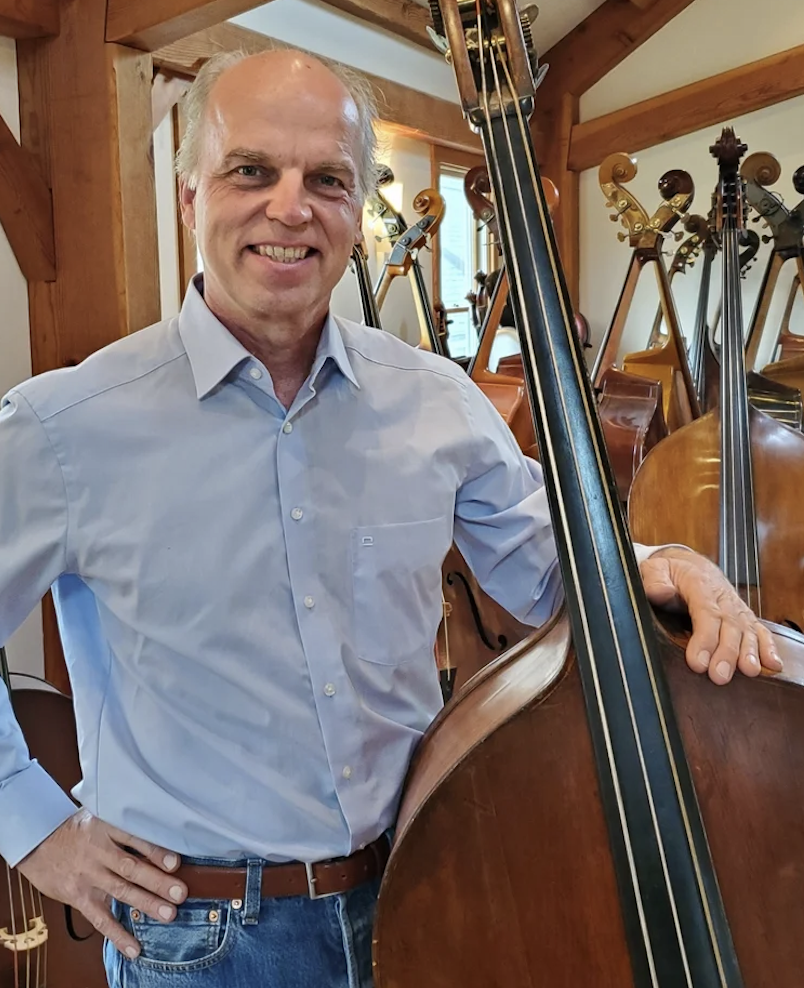
MANCHESTER, NH – Music has a unique way of setting the mood. A song can dictate the atmosphere or vibe of a specific setting, or it can fuel certain conversations. Jazz can be fitting for the serene feeling that comes with the autumn season. This is the creative nexus for the show “City Lights & Blue Lights,” which is being put on by the Symphony New Hampshire Jazz Quartet at The Rex Theatre in Manchester on November 6. The show starts at 7:30 p.m and it features a diverse set of music that’s both rhythmic and soulful.
I had the chance to interview principal bassist and leader of the Jazz Quartet, Volker Nahrmann, ahead of the upcoming show about his journey to “The Granite State,” running his own instrument repair business, and what people can expect from the performance. Ticket link for the show is below.
Rob Duguay: You’re originally from Germany, so what originally brought you from there to New Hampshire?
Volker Nahrmann: I came over in 1986 on a scholarship to study at the Berklee College of Music in Boston. Prior to that, I was in two conservatories in Germany and Austria, and the one in Austria was kind of modeled on the Berklee system. They had a dual major program in classical and jazz performance with the jazz very much modeled after the one in Berklee, so I lived in both worlds of the jazz and classical since I started playing bass in my teens.
That’s initially what brought me to Boston, and having that classical background from my other conservatory studies after graduating from Berklee had me seeking out some performance options in the New England area. From that, I’ve been playing with Symphony New Hampshire since 1992, which is 33 years now, and the jazz group coming out of the symphony kind of started as an idea 10 years ago under a different music director where we had several performances as part of fundraisers.
We put a big band together to play swing tunes, and during that, I sort of discovered that there are people in this orchestra who can play something other than jazz classical, kind of like myself. They’re more broad in their style, so then a few years back, the idea came up to start a smaller ensemble that could utilize some of those people and play other venues where we can showcase the label of the symphony while targeting a different audience and playing some music in different ways. The symphony has some other smaller ensembles like a wind ensemble, a string quartet, and other groups that came out of the orchestra, but play at different venues than our big concert hall.
RD: What initially gravitated you to the upright bass when you first started pursuing music? What made you feel that you could acclimate yourself more to this particular instrument versus piano, guitar or anything else?
VN: When I started, my first instrument wasn’t the upright bass. I started playing the piano when I was 9, and then I discovered the bass when I was 13, which was primarily through my love of jazz music. I went to this high school in Hamburg, where I grew up, that was kind of like the one from the movie “Fame” where it had an arts concentration. What was peculiar about that school is that unlike American high schools where it’s like a college type of setting and everybody walks around to their various classes, the teachers walk around and the kids stay in the same classroom. You would have a class of 130 kids and then the French teacher comes into the classroom, the chemistry teacher comes into the classroom, and so on.
At any grade, there would be four parallel classrooms that were in the same grade with around 30 kids in each classroom. One of these classrooms per grade was an arts and music featured classroom where there were kids who’d do more of that stuff where other kids in the same grade, but in a different classroom, would be doing more of a standard academic curriculum.
In my school, somebody started a jazz band with a small combo. I thought it was super cool and I wanted to be in it, but they already had a piano player, so my piano skills didn’t really help. They didn’t have a bass player, so having played some piano, I was familiar with chords and the bass clef, so I figured that I could learn how to play bass.
The music teacher showed me some fundamentals and then I started playing with this jazz group, which was really fun. That’s how I discovered the bass, and then the symphony music director of the school said, “Oh, another bass player, would you like to come play with us in the symphony?” and I said, “Sure, sounds fun. I’ll try it” and that’s where I learned to love both styles as a teenager. I basically lived in both universes of sound with symphonic classical and jazz, which sort of became my interest.
RD: You also run your own music shop called the Nahrmann Bass Shop in Billerica, Massachusetts, so how did you go about starting this endeavor and what has the experience been like with running your own business?
VN: I have to sort of go backwards a little bit on my story that after I graduated from Berklee, I went on tour with several bands. I was touring all over the country and during one of those concerts with that band, I met my wife. We started living together and I started to figure out how to pursue my career, whether I wanted to keep on touring while not being at home, because we talked about starting a family, and I didn’t want to be a dad who wasn’t home when the kids grow up. I thought about what else I could do that really interested me that I could do while being more local rather than being a touring musician.
I hadn’t mentioned it yet, but I was a foreign exchange student in the United States for a year when I was 16 years old. In the high school I was at, they had more vocational classes, which was something totally new to me. I really enjoyed taking woodshop, and during that class, I made my first instrument from scratch, which was a five-string banjo. I made all of the wood parts while ordering all of the gears and metal parts, so I learned to really love woodworking and things like that. Then I started thinking about whether to become a violin maker, because instrument repairing and woodworking became a real interest to me, or whether to pursue more of a performance career.
I talked to people at a violin-making school in Germany, and everybody said, “Well, if you’re going to do this luthier thing, then you’re going to have to give up your playing and just focus on the craft.” I said, “OK, this isn’t really what I want to be doing because I enjoy the music too much to just want to fix other people’s broken instruments.” That interest went on the backburner for a little bit after I made my choice to pursue performance education by going to the conservatories. When I was figuring out what to do to support my family, I realized that I could turn what was a hobby up until then to repair instruments and things. I had done work for my students and other colleagues, so I could expand on that and grow a business out of it while being at home rather than being on the road, which was the motivator for starting this endeavor.
It’s been a little over 25 years now since we started in 1999, which was originally with one bass that I bought for my student. I fixed it up and I sold it to them, and then the next thing I know, their band director calls me saying that they have a bunch of broken basses that they’re looking to get fixed, so I fixed those and other people started calling me. It all happened organically out of me wanting to do something with there being a supply and demand. I was also in a fortunate situation that right at the time when I started all of this, a business in the Boston area called Boston String Instrument went out of business because the owner had passed away. They had specialized in basses while doing other string instruments and there was a little bit of a void in the market where people were looking to take their basses to be fixed, so I stepped into that demand and proved that I could do it well and that’s how it all got started.
RD: “City Lights & Blue Nights” is described as a soulful journey through jazz and American standards that are reimagined with elegance, edge, and effortless groove. When it came to crafting a vision for this performance via the setlist and everything else, how did you and the rest of the quartet go about it?
VN: We have some players from the symphony that play classical and jazz, specifically my friend Rich Kelley, who is a trumpet player and a wonderful vocalist, which we discovered after we started playing together. I had no idea that he did all this stuff, I just knew him as the second trumpet in the orchestra. I have a longtime friend Ben Cook on keyboards, who also plays in the Boston Pops with Rich, and on drums, I have another friend of mine, Bertram Lehmann. He teaches at Berklee, and we played in a world music group together for a while, so we have shared histories of various backgrounds of music. I think that’s sort of what makes this show interesting, we draw from such a broad musical experience of styles, whether that is Latin music, R&B or funk or straight-ahead jazz. We’ve all played in many different groups, so we can draw our aesthetic from these various musical experiences in that regard.
RD: What would you say is the biggest selling point for people to attend “City Lights & Blue Lights”? What can they expect when they arrive and the show starts?
VN: We’re going to be playing music that older people might recognize from show tunes or songs that were popular in the ‘50s and ‘60s up to more contemporary styles. We did this show previously at the Capitol Center for The Arts in Concord in a candlelight atmosphere, so we might do some things that are seasonal or there might be songs that relate to where we are. I haven’t quite figured out the setlist in its entirety yet, but it’ll be a broad spectrum of jazz, swing, Latin and poppy R&B things. We can do a lot of different things from various genres, but I think everything is going to be very classy because that’s where I’m at with how I want to present our music. It’s why I like The Rex, it isn’t a smokey bar where nobody pays much attention.
It’s a concert in a nice venue and I think it’ll be a great time. The other thing that I enjoy about the people I play with is that they’re at the top of their craft in multiple styles of music, and it’s going to be really conversational when it comes to how we play with each other. There’s going to be a lot of interacting, listening to each other and responding on the spot. We don’t play written arrangements, we each know thousands of songs and we play them while having a conversation amongst each other. I think people will really enjoy it.