
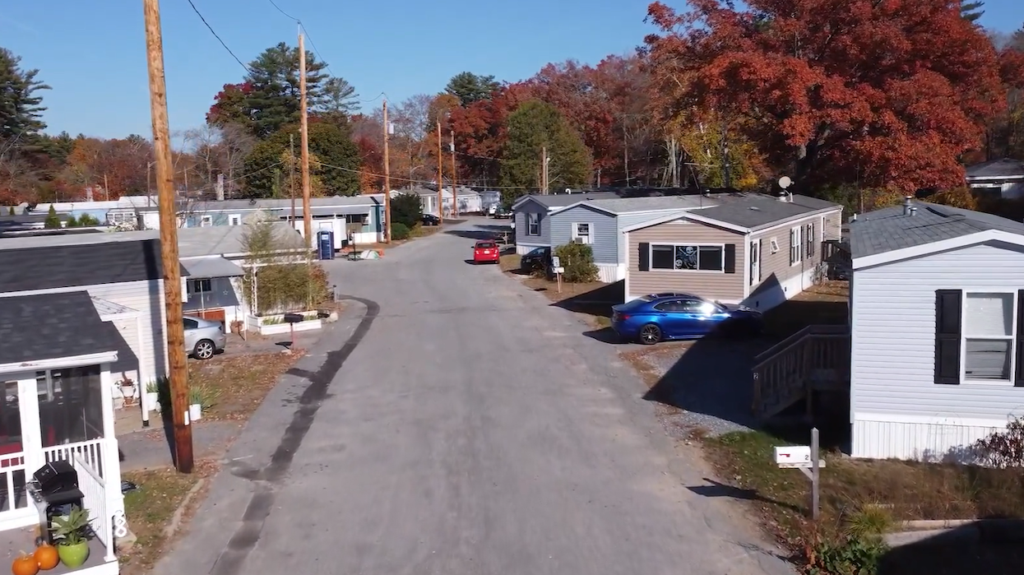
New Hampshire residents who live in manufactured home communities have a chance to air their concerns in a survey that U.S. Senator Maggie Hassan, D-N.H. is making available online, part of a study she’s doing on the rising corporate control and resulting costs of living in the traditionally affordable housing.
Hassan’s effort is one aspect of a larger look at manufactured and mobile homes and obstacles that keep the traditionally affordable housing from fully realizing its potential to help ease the housing crisis.
“In recent years, as big corporations have bought up more of these communities, reports of exploitative rent increases and neglected facilities have surged,” Hassan said in a news release this week. Hassan, who is ranking member of the Joint Economic Committee, said she wants to learn more about the experiences of Granite Staters living in mobile home communities.
“The residents of New Hampshire’s mobile home communities deserve affordable rent, safe living conditions, and the ability to protect themselves from mistreatment,” Hassan said in the release. “If you live in one of these communities, I would love to hear from you. By completing the survey, you can share your experiences and support our work to protect Granite Staters from being pushed out of their own homes due to rising rents.”
Hassan’s effort is one of several that look to make manufactured housing a more active part of housing crisis solutions from two separate angles – easing the grip of corporate ownership that drives up prices and easing the grip of local zoning regulations that restrict manufactured housing.
In December, Hassan launched an investigation into the largest corporate owners of American mobile home parks, pressing the companies for answers on how their business practices affect residents in New England. The responses to the survey will help inform that investigation, the release said, and “efforts to improve Granite Staters’ access to safe, affordable housing.”
Mobile home park residents can access the survey here via Hassan’s website. Responses will remain confidential unless residents provide permission to share their names, the release said.
While Hassan’s survey is specific to mobile home communities, the mobile homes and manufactured housing overall have been in the spotlight more in the past couple of years as the state’s housing crisis intensifies.
Mobile homes are often clustered in “parks,” with the land owned by one entity and the lots for the homes leased to the owners. This is largely because many communities have restrictions on where mobile homes – now manufactured homes – can be located. Homes made before 1976 are “mobile homes.” That year, Congress set standards for construction, which is regulated by the U.S. Department of Housing and Urban Development, for what are now “manufactured homes.” The code for the homes was largely in reaction to resistant local zoning and other local restrictions, and in the interest of making more safe and affordable housing available.
An estimated 22 million Americans live in mobile home parks, Hassan said in December, when she launched her investigation. Traditionally “mom and pop” operations, corporations have increasingly bought up the properties, raising rent and making the traditionally less-expensive homes unaffordable.
“As corporate ownership of these communities has surged in recent years, so have reports of exploitative rent increases and neglected living conditions,” Hassan said.
A little less than 36,000 of the state’s 664,000 housing units are manufactured housing, according to the annual housing supply report by the state Department of Business and Economic Affairs. Permits issued for manufactured housing in 2024, the most recent year available, were 2.4% of the 5,822 issued that yar, according to the report.
The monthly cost of owning a manufactured home, including mortgage, lot rent and property tax, is $1,525, according to the Community Loan Fund. That’s half of the average monthly cost of a stick-built home. The average mortgage on one is $128,500, compared to most recent U.S. Census figures.
Residents of manufactured housing communities include “significant numbers” of seniors, people with disabilities, and low-income families, Hassan said. She said many are also in rural areas, and the combination of factors means residents often have limited ability to move, homes can be difficult to resell, “and homeowners rarely relocate them because of the costs and risk of structural damage.”
That leaves residents with “few if any options when faced with egregious rent increases, changes in lease terms, or other business decisions by community owners,” Hassan said.
Since the 1980s, 152 mobile home communities in New Hampshire have been bought by their residents under the ROC-NH [resident-owned community] program, representing nearly 10,000 units. Tenants run the community as a cooperative and own the land under the home.
The cost of buying the parks has risen considerably, according to the Community Loan Fund, which oversees the program. In ten years, the cost of buying a manufactured home community has gone from about $40,000-$50,000 a lot to $120,000 a lot because of competition from corporate investors. That increases the mortgage and other costs for the owners.
For the past several years, U.S. Sen. Jeanne Shaheen and others in Congress have sponsored the Manufactured Housing Tenant’s Bill of Rights, which would provide tenants and owners of manufactured housing with protections against predatory landowners, including more transparency about rights related to rent hikes and evictions, if the owner has received federal financing through Fannie Mae, Freddie Mac or the Federal Housing Administration. The bill also calls for tenants to get 60-days notice of a sale of the property, giving them time to explore a resident purchase.
The bill has continued to stall in Congress.
Housing advocates have been pushing to both loosen the hold both corporations and local zoning have on mobile and manufactured housing as a way to ease the housing crisis.
Modern manufactured homes are built off-site, at a much small cost than building a home on-site, including shorter build times and less energy use. They’re built with the same materials other single-family homes are built with, still regulated by those HUD rules, which have been upgraded over the years so that new homes are energy efficient. They’re installed on a permanent foundation and not “mobile” in the manner that pre-1976 homes were. [The name “mobile home” actually originates from where the first ones were manufactured after World War II, in Mobile, Alabama.]
Recently Cross-Mods have been added to the mix, which have site-built garages and other modern design features, but are still 30%-40% less expensive than stick-built homes.
A bill in the Legislature this year to treat manufactured housing the same as “stick built” housing, HB 1357, would have required newly built manufactured housing to be permitted in all areas where residential uses are allowed. The House Housing Committee voted to “interim study” the bill, which means that it isn’t moving forward this session.
“The committee acknowledged the debate is less of a policy disagreement than a political challenge, trying to convince their fellow legislators to overcome the stigma attached to manufactured housing,” the New Hampshire Association of Realtors, which supported the bill, wrote in a recent blog post.
As part of the effort to erase that stigma, last year, New Hampshire Housing, in partnership with New Hampshire Community Loan Fund and filmmaker Jay Childs of JBC Communications, released a Housing Fact or Fiction series that includes episodes that highlight manufactured housing as an underappreciated solution to the housing crisis, using stories of “residents who have found stability, community, and affordability in these homes.”