
RELATED STORY: A decade later, family of Denise Robert still pressing for justice, answers in unsolved murder
CONCORD, NH – The New Hampshire Cold Case Unit, which has 129 cases of missing and murdered people to solve, now has two full-time investigators because of funding prioritized by the Governor and passed by the Legislature.
“As a former murder prosecutor and Attorney General, I know how painful it is for families when a case goes unsolved,” said Governor Ayotte. “This is about delivering justice, no matter how much time has passed. That’s why I included expanding the Cold Case Unit in my budget. By giving law enforcement the tools and support they need, we can pursue these cases with the urgency and care they deserve. I’m proud New Hampshire is the safest state in the nation, and we intend to keep it that way by continuing to invest in public safety.”
Funding allocated to the Cold Case Unit for 2026 totals $237,988 and for 2027, $252,490:
Baseline (FY 2025 Adjusted Authorized):
The 2025 adjusted budget serves as the reference point for all increases.
Phase 1 – Agency Request:
- Purpose: Convert current part-time investigator to full-time.
- Funding Increase:
- FY 2026: +$103,191 (includes both full- and part-time positions)
→ Actual increase after conversion: +$22,176 - FY 2027: +$110,252 (includes both full- and part-time positions)
→ Actual increase after conversion: +$29,010
- FY 2026: +$103,191 (includes both full- and part-time positions)
- Funding Source: 100% General Funds
Phase 2 – Governor’s Budget (Final Proposal):
- Purpose: Expand the Cold Case Unit by removing the part-time role and adding:
- 1 full-time permanent investigator
- 1 full-time temporary investigator
- Funding Increase Over FY 2025 Adjusted Authorized:
- FY 2026: +$153,367
- FY 2027: +$167,869
- Funding Mix: 70% Federal Funds, 30% General Funds
Todd Flanagan, the NH Department of Justice’s longtime deputy chief investigator, was reassigned as a full-time investigator for cold cases. A former investigator with the Concord Police Department, Flanagan is widely respected for his success in reopening and solving complex cold cases.
Bruce Foremny, who has more than 40 years of experience including specialized cold case work in Maricopa County, Ariz., is now full-time as well.
He had been working with the Cold Case Unit part-time.
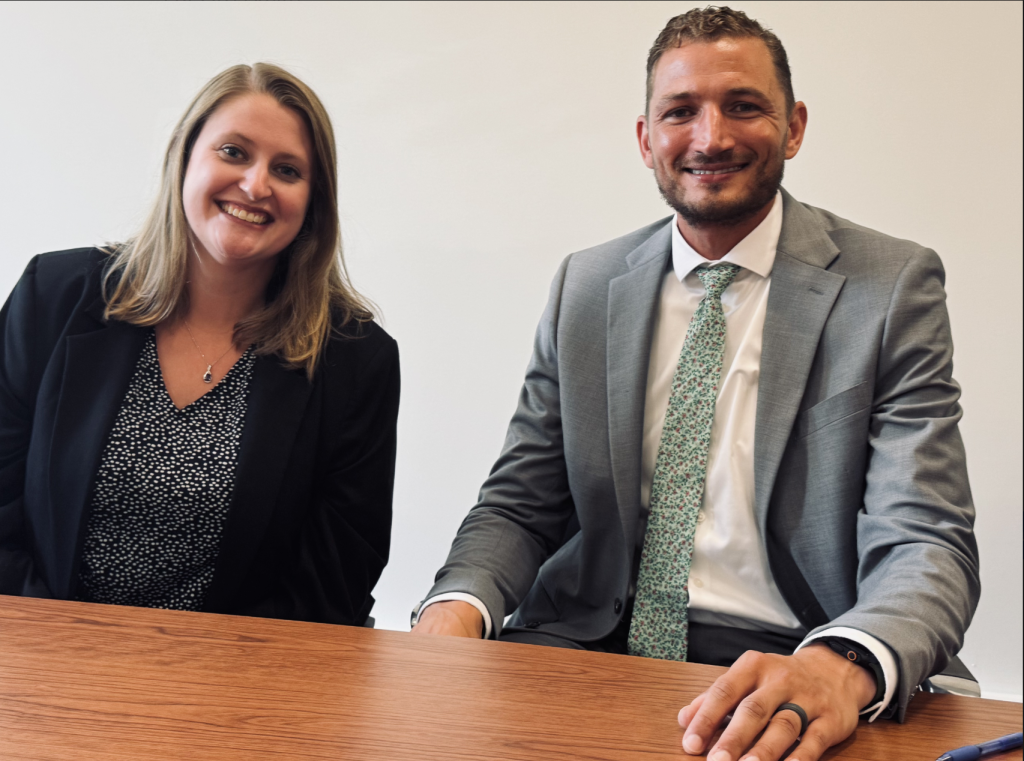
The unit is comprised of two attorneys – Senior Assistant Attorney General R. Christopher Knowles, chief of the unit; Assistant Attorney General Rachel C. Harrington; two full-time investigators; two part-time investigators with the attorney general’s office; and two full-time state troopers with the Major Crime Unit.
Additionally, the state’s five victim/witness advocates are assigned to work with families.
Prior to joining the Attorney General’s Office in January 2023, Knowles was a district attorney in Alaska, one of nine covering the entire state. “We all worked on the cold cases,” he said.
He was born and raised in the Bahamas. (His father is a U.S. citizen so he has been a U.S. citizen since birth). He earned his Bachelor of Science in economics from the University of North Carolina at Charlotte in 2012; his Master of Science in Applied Economics from Johns Hopkins University in 2015; his Juris Doctor from Vermont Law School in 2015; and Master of Laws from Indiana University, Robert H. McKinney School of Law in 2017. He is admitted to practice law in New Hampshire, Alaska, and New York.
Knowles joined the Alaska Legal Services Corporation in Bethel, Alaska, as a staff attorney in 2017, where he was responsible for tribal court development in the Yukon Kuskokwim Delta Region, coordinating outreach and travel to 64 surrounding communities, and represented victims of domestic violence and sexual assault in district and superior courts.
He was appointed District Attorney in 2018 for the Bethel District Attorney’s Office, which has jurisdiction over an area the size of Oregon.
He chose to leave the beaches of the Bahamas and head to the Yukon because it was the “highest level in the state of domestic violence, sex assault, alcoholism, depression. It is a beautiful part of the country,” he said. The area is so remote, he said, that he had to fly in to reach it.
He, his wife and four children relocated to New Hampshire because they have family here.
Knowles joined the N.H. Department of Justice in 2023 and was one of the prosecutors of Adam Montgomery, found guilty of killing his 5-year-old daughter, and Stephen Murphy, a former Youth Development Center (YDC) counselor accused of raping a teenage boy at the YDC in 1998. That trial ended in a mistrial.
Now, Knowles’ caseload will focus on cold cases and an occasional active homicide case, he said.
Families feel the frustration
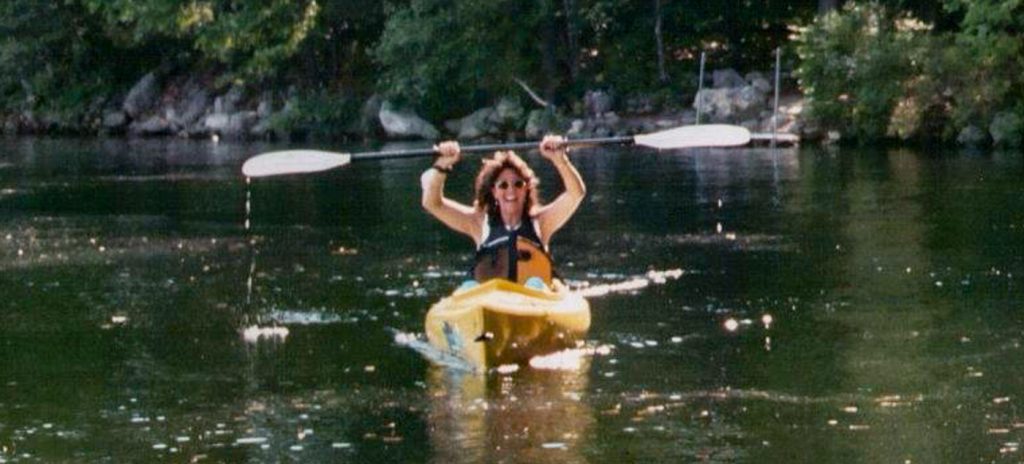
Families of murder victims, whose cases have gone unsolved for 10 years or more, have been critical of how the state investigates unsolved murders. They are angry that as the years turn into decades, they get the same response: There’s nothing new to report.
Ken Dionne of New Boston has been waiting to obtain justice for his murdered sister, Roberta “Bobbie” Miller, 54, since she was found dead in the kitchen of her Gilford home In November 2010. Her dog was killed as well.
It will be 15 years in October that Miller’s murder has gone unsolved. Miller grew up in Bedford and after marrying Gary Miller, lived in Wolfeboro for about 30 years. She had only moved to Gilford two months before her death, after divorcing her husband.
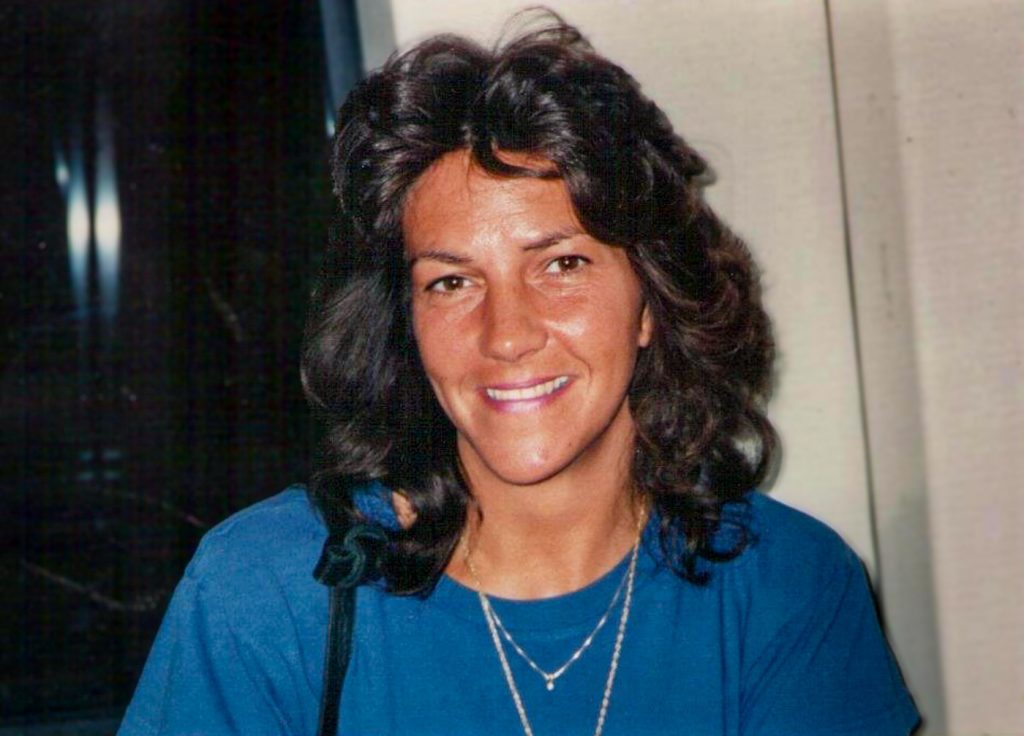
The mother of two, Bobbie had been a stay-at-home mom who always was into arts and crafts. Her husband owned several dealerships and she sometimes worked with him there. The night she was killed, Dionne said, she was working on an arts and crafts project in her garage. She planned to make window boxes for her new ranch home.
Dionne said the issue is not the still unsolved murder of his sister, but the entire system. Funding needs to be approved by the legislature and New Hampshire’s, he said, is the third largest in the world.
“There’s too many cooks in the kitchen,” he said.
With nearly 15 years having passed, Dionne doesn’t believe his sister’s murder will ever be solved and maintains the investigation was botched. He believes investigators know who murdered her and he names that individual. Manchester Ink Link is not publishing the name because the Attorney General’s Office has not publicly identified a suspect or named a person of interest.
And, Dionne doesn’t believe the attorneys assigned to the unit will exclusively handle cold cases because, he said, in the past they always carried a caseload prosecuting recent homicides.
“Chris Knowles and Rachel are NOT full time for cold cases as they both are and will prosecute current cases,” he said. “With 129 cold cases I would think two prosecutors could certainly spend at least 40 hours a week on just 129 cold case files. This is all just smoke and mirrors.”
The New Hampshire Coalition of Missing and Murdered Persons (NHCMMP) maintains that there are 340 unsolved murders in NH, not the 129 that the Attorney General’s Office lists.
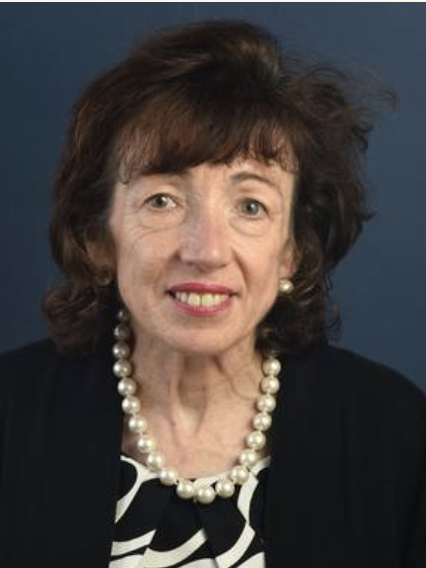
John Robert, brother of murder victim Denise Robert, who was killed in 2015 in Manchester but whose murder is not designated a cold case, is an advocate for his sister and also for families who have yet to find justice for their loved ones. The 340 unsolved NH murders cited, he said, is from the The Murder Accountability Project (MAP). That group lists the number of New Hampshire murders, dating back to 1965, at 1,022; with 67% solved, and 338 unsolved.
Mike Garrity, director of communications for the NH Department of Justice, said there may be many variables in how states, agencies and organizations define or categorize homicides and other types of cases. “So direct comparisons aren’t always apples to apples.”
He provided the following statistics:
- In 2022 investigators and prosecutors were able to solve 92.3% of the state’s active homicide cases. In contrast, the national 2022 homicide clearance rate was 54.3%.
- New Hampshire’s 10-year average homicide clearance rate is 88.9%, compared to 59.9% nationally.
- NH Cold Cast Unit also has a clearance/solved rate well above the national average. That is based on the Murder Accountability Project’s statistics.
Garrity noted that the statistics reflect the “dedication and persistence of our investigators and prosecutors. We fully recognize that they do not take away the pain experienced by victims and their families. Our hope is simply that this information offers some measure of reassurance—and perhaps hope—to those still waiting for answers, as a reflection of how deeply committed we are to seeking justice in every case.”
Knowles said after a review of MAP statistics, the discrepancy between his office’s and MAP’s numbers appears to stem from “the nature of their data sources and methodology. As noted in the fine print on their website, their figures are estimated by the FBI based upon incomplete reporting. (Emphasis noted by Knowles in his email response to InkLink.) This is an important distinction, as it means the numbers they present do not reflect full or verified data from each jurisdiction.”
Additionally, he said their definition of “clearance rate” may differ “from how we track case resolution. For instance, their site appears to treat ‘cleared’ cases as those resulting in arrests only. However, cases can also be cleared by exceptional means (such as the death of a suspect or refusal to cooperate by a witness), and those may not be captured in their totals.”
He cited as an example that MAP’s reporting suggests that 10 of 26 homicides in New Hampshire in 2023 were unsolved. “That figure does not align with our internal case tracking for that year,” he said.
“We continue to stand by our previously reported clearance rate, which reflects actual data tracked by the New Hampshire Department of Justice and local law enforcement agencies, rather than modeled or estimated data from outside organizations,” he said.
Investigators are able to make inroads in the murder cases from decades ago because of advances in DNA testing and public access to websites such as Ancestry.com and 23andMe.
In recent years, The Cold Case Unit has made two arrests in cold cases, one from 22 years ago, while also reopening a case from 1968.
In June, investigators arrested Douglas Herlihy, 39, and charged him with the murder of his father, Paul Herlihy, 50, in August 2003. Herlihy’s decomposing body was found wrapped in a rug and covered with a blue tarp inside his Milford home on Aug. 27, 2003. He died from blunt force trauma and his death was ruled a homicide.
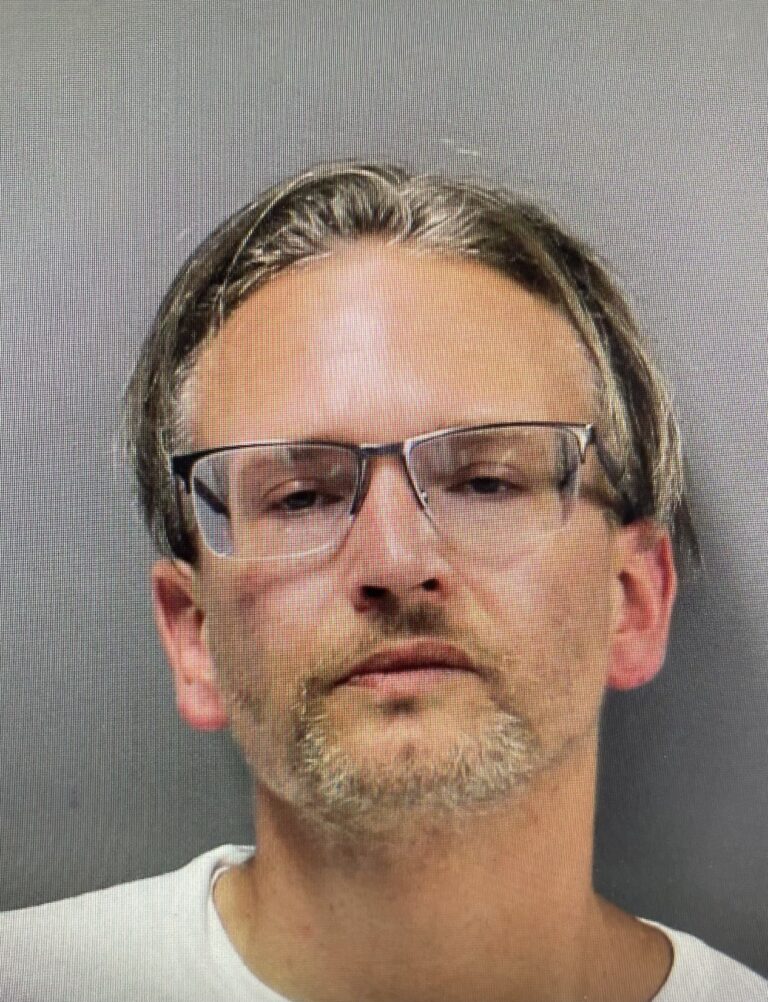
On June 16, 2025, a warrant was issued for the arrest of Douglas Herlihy, charging him with second-degree murder. At the time of the murder, Douglas Herlihy was 17 years old. Herlihy was arrested in Saugus, Mass.
How investigators came to arrest Herlihy is detailed in the arrest affidavit. It shows a series of State Police troopers had investigated the case over the years when Investigator Foremny began looking into the murder again, resulting in Douglas Herlihy being charged.
In another case, investigators arrested Robert Dowling, 53, of Haverhill, Mass., in 2023 for second-degree murder in the killing of David Bruce Goodwin, 64, in Conway in May of 2016.
Earlier this year, investigators reopened the 47-year-old case of Joanne Dunham, a 15-year-old girl who was murdered in 1968. She was last seen on June 11, 1968 while walking to her school bus in Charlestown.
Her body was found the following day on a remote dirt road in Unity, about 5 ½ miles from where she was last seen. Her cause of death was asphyxiation.
Investigator Flanagan, in reviewing the case earlier this year, visited her grave to find that it was unmarked. Victim/witness advocate Amy Cerullo said because Dunham was under the age of 15, money could be used from the state’s Victim’s Compensation Program to pay for a gravestone.
The granite headstone was put in place on her grave at St. Mary’s Cemetery in Claremont. It’s inscription reads: “Taken too soon, loved forever.”