
Story Updated June 12 at 10 a.m. to include comments from Sheriff Brian Newcomb.
GOFFSTOWN, NH – Hillsborough County’s Sheriff Brian Newcomb has signed a contract with ICE, joining the task force cracking down on undocumented residents.
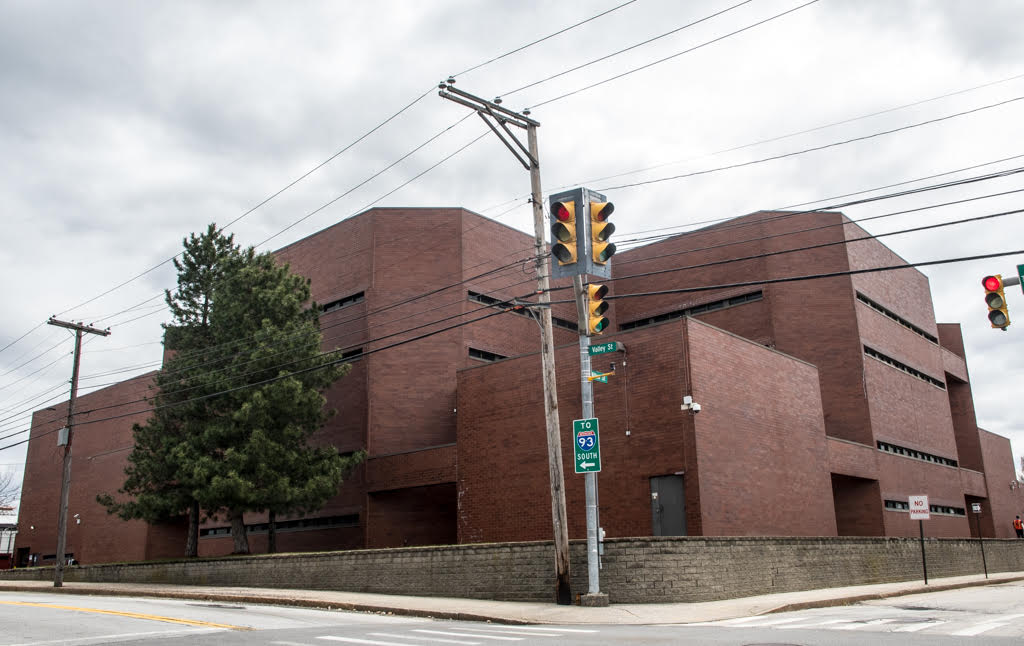
At the same time, the county’s Department of Corrections is exploring entering into an agreement with ICE to hold federal detainees at the Valley Street Jail.
Newcomb said he will be deputizing about 35 employees to carry out U.S. Immigration and Customs Enforcement (ICE) actions across the county.
“Hopefully, this agreement will help ensure that we are keeping the citizens of Hillsborough County safe,” he said.
Once trained, the deputies will be able to arrest and interrogate people for alleged immigration violations. They can also issue immigration detainers and hold custody of people arrested locally or by ICE, as well as transport them to ICE-approved detention centers.
The deputies must undergo mandatory ICE training. Newcomb said he expects everything will be ready to go in 60 days.
He said he believes people are underestimating the importance of the training which he said is “crucial” and will give his deputies the knowledge needed concerning detainers.
“This is a specialized field and I want to make sure that our deputies have the knowledge to properly understand and enforce the detainers,” he told Manchester Ink Link.
Some members of the Hillsborough County Executive Committee, comprised of state representatives, were caught by surprise by the contract. County Commissioner Chairman Toni Pappas said the commissioners were unaware of it as well until the May 30, 2025 executive committee.
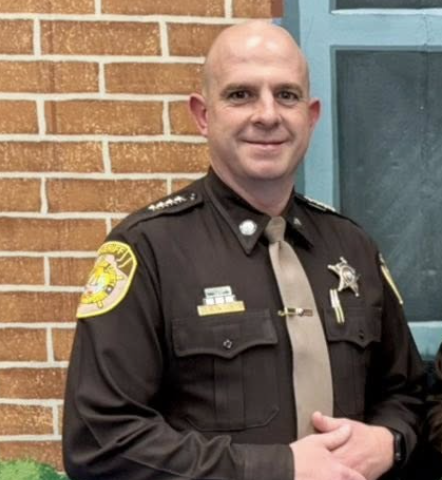
“The sheriff said he had signed a letter of ‘intent to participate with ICE,’” she said. “I was not aware of it until the Executive Committee meeting. We didn’t know. It was a surprise to us.”
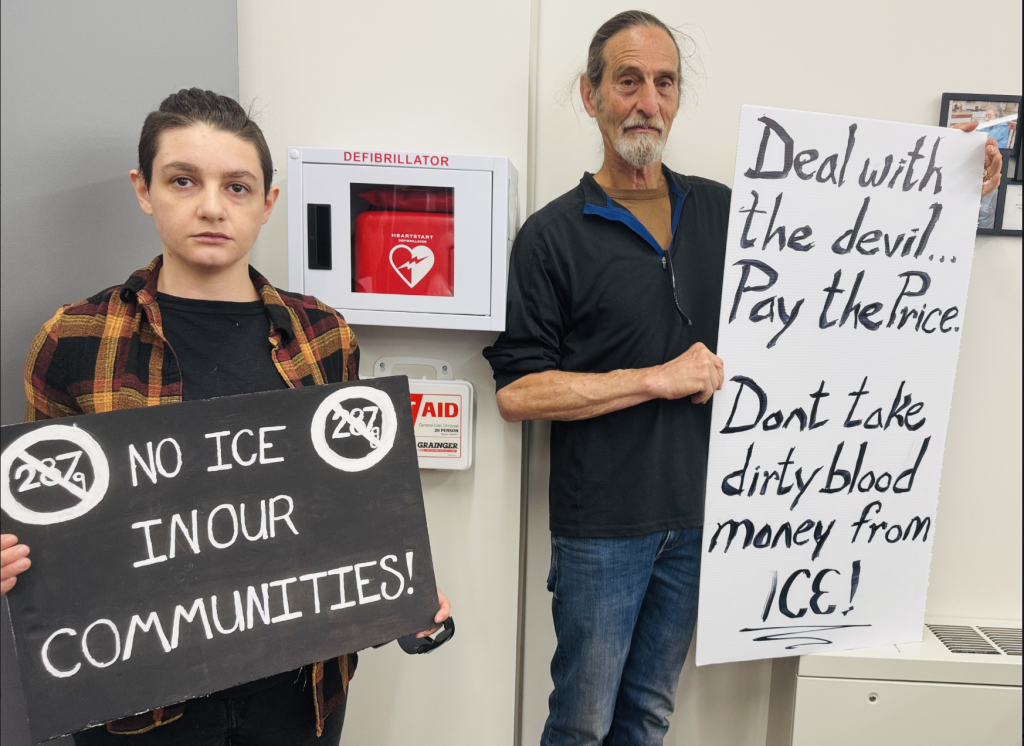
He informed executive committee members of the contract at its May 30 meeting at the Bouchard Building in Goffstown. A few protesters were on hand that day, both inside and outside the building.
Some people learned of the contract prior to the meeting, after viewing ICE’s website, which lists law enforcement agencies that have signed contracts with the agency. Hillsborough County was listed as one with the notation “ink pending.” Other law enforcement agencies listed were New Hampshire State Police, Belknap, Rockingham and Grantham County sheriff departments and the Candia, Troy, Colebrook, Gorham, Pittsburg and Ossipee police departments.
Pappas said as a constitutionally-elected officer, Newcomb has authority over law enforcement matters and “so he needs no approval.” In March, the county delegation elected Newcomb sheriff. He replaced his boss, Sheriff Chris Connelly, who resigned after Gov. Kelly Ayotte named him her chief of staff. Ayotte supports law enforcement agencies signing the ICE contracts, known as 287g agreements.
County Delegation Chair Megan Murray said while it is true Newcomb does not need approval to enter into the ICE agreement, when it comes to contracts the usual process is for departments to present them to the county commissioners. Those over a certain amount of money routinely are presented to the commissioners.
Newcomb, she said, maintained at the executive committee meeting that there would be no cost to the county. Murray said she doesn’t see how that is possible.
Newcomb confirmed for Manchester Ink Link that he does not believe there will be a cost to the county. He envisions his deputies’ involvement with ICE will be in the course of their everyday duties. The sheriff’s department, for the most part, enforces criminal warrants, serves court orders or writs, and transports prisoners.
But, Newcomb said, being a law enforcement agency, deputies patrol towns and stop motorists for motor vehicle violations.
It is during the latter that a deputy, when running the driver’s license in their onboard computer, can determine if ICE has issued a detainer for that motorist.
He said it varies how often a deputy encounters someone who ICE wants detained; it could be three times a week or once a month, he said.
Murray has yet to see the ICE contract but said she has read contracts signed by the other New Hampshire law enforcement agencies. All the contracts are the same and indicate that except for ICE training, the law enforcement agency is responsible for all expenses including wages, overtime, benefits, etc. Also, they are to use their own equipment including cruisers, uniforms, handcuffs, guns, etc.
Murray said the federal government is using the county to do its work for free.
“We’re simply arresting people on immigration detainers if we come across them,” Newcomb told the Ledger. “If we come across somebody and we happen to run their name … and it comes back that they have a detainer from ICE, we would go ahead and act on it.”
Newcomb said he won’t be focusing immigration enforcement anywhere in particular, “it’ll be more baked into the department’s regular operations.”
Murray said her delegation role is to look at budget implications. Newcomb, she said, was unable to answer questions as to the cost to the county and maintained he believes it isn’t going to cost the county anything.
“If they’re transporting someone to Berlin, that’s going to cost the county,” she said.
Newcomb said his deputies transport prisoners all over the state.
“It’s not unusual for us to probably hit 9 of 10 counties in a week,” he said. He explained that someone may be jailed in Sullivan County but also is charged with committing a crime in Hillsborough County. The court issues a transport order for the Hillsborough County Sheriff Department to pick up that inmate in Sullivan County and bring them to the court.
Jail Superintendent Joseph Costanzo, in his 2026 proposed budget, budgeted $734,781 in contingency funds to cover any ICE agreement. He told Manchester Ink Link the funds would be “cost neutral,” that is, ICE would reimburse the jail for the cost of detaining the immigrants.
He said the contingency is not a response to the sheriff’s contract, but to legislation requiring the county to hold ICE detainees up to five days.
“Ice used to come and pick them up right away,” he said. “The only way the county would be reimbursed would be if we enter into a contract with ICE.”
“The jurisdiction where the crime took place is responsible for transporting the prisoner,” he said.
As for the jail requesting the contingency funds, Murray said Constanzo in explaining the need for them referred to the detainees as a source of revenue for the county.
“My heart sank when he said immigrant revenue,” she said. “These are our neighbors, people whose lives are going to be fundamentally changed and it’s so unnecessary.”
Murray said the last time the Valley Street jail housed federal inmates, it didn’t work out so well.
The jail, which is about 40 years old and can hold up to 750 inmates, last housed federal inmates in 2000. At that time, a federal grand jury investigated allegations of sexual and physical abuse of inmates by corrections officers.
The inmates alleged male correctional officers were having sex with female inmates, sexually harassing them and watching them as they showered. Male inmates complained they were being physically abused.
As the investigation was underway, federal officials removed 250 inmates from the jail for their safety, placing them at other facilities.
On average, the jail houses 291 inmates a day. Costanzo said, however, that he anticipates the numbers will increase due to a change in bail requirements.
The condition of the jail and it not being fully staffed are other issues when it comes to ICE inmates being housed there. Last year, the county allocated $600,000 for a “needs assessment” of the jail, which was built in 1986. Pappas said the jail “is not suitable and needs to be torn down.”
Murray said she has concerns for the county, the immigrant community and the potential for legal liability if a person is wrongly identified and jailed.
She said she believes the county “could be on the hook for millions of dollars in lawsuits” if someone is unlawfully detained or there’s an issue in someone being transported from another state.
The executive committee voted to recommend passage of the 2026 proposed county budget, which totals $147,441,604, but with the proviso that the $734,000 jail contingency line item be revisited, Murray said.
A public hearing on the budget is set for Wednesday, June 18, at 5 p.m. at the Bouchard Building, 329 Mast Road, Goffstown. The delegation meets the following day, Thursday, June 19, 2025 at 5 p.m. in the Bouchard Building.
“
.