
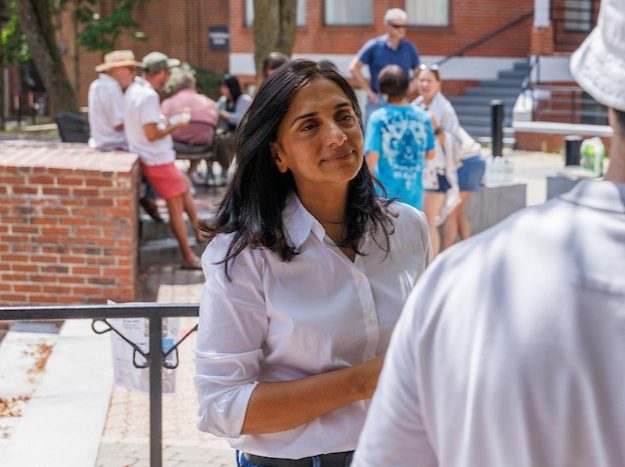
When Karishma Manzur moved to the United States from Bangladesh as a high schooler it wasn’t a choice, but a matter of survival for her family.
Like millions of other immigrants right now, Manzur’s family was fleeing violence after the death of her father in a newly independent, politically unstable Bangladesh.
Her father, Major Gen. Muhammed Abul Manzur, was higher up in the military that was leading the Bangladeshi Liberation War against Pakistan in 1971 — and years later, in 1981, as political tensions ensued, Manzur’s father was killed, leaving her mother and three siblings in dire straits.
“The 1971 war concluded before my birth, and the United States president at the time was Richard Nixon, who sent a large amount of weapons to the West Pakistani military that was used to slaughter nearly 3 million Bangladeshis,” Manzur said, adding that her focus as a U.S. Senator would be to invest money in communities within the U.S., and not spend taxpayer money on wars.
Fleeing all this political turmoil and economic hardship after the death of her father, in 1989, Manzur moved to Massachusetts, where she started attending The Cambridge School of Weston. Her three siblings and mother immigrated over the next few years.
“My mother sold everything that she had to find money to be able to send us over [to the U.S.], because it was so important for us, for her, that we all survived,” she said.
Manzur said her childhood in a politically active family, followed by her struggles as an immigrant living paycheck to paycheck, and experiences living through medical crises in the family prompted her to launch her campaign for the U.S. Senate in fall of last year — making her Congressman Chris Pappas’ primary Democratic contender. Manzur is running on a progressive agenda.

Hardships as a teen immigrant
Life on this new shore wasn’t easy.
After graduating from high school, Manzur enrolled in the University of Rochester, N.Y., but had to discontinue her education due to financial hardships.
“I worked on campus, at the cafeteria cleaning dishes, and where I had even thought I was at the university, I was living a very working class lifestyle,” she said, adding that her immigration status at the time did not permit her to work outside of campus. “…sometimes I actually had to make a decision on which course I could take or not take, depending on the cost of the book, because sometimes a book was $100.”
By way of seeking political asylum — available to individuals physically present in the U.S. or at a port of entry who fear persecution in their home country — Manzur and her family got permanent residency and eventually U.S. citizenship.
But even when Manzur got permanent residency, and a work permit, her struggles as an immigrant didn’t abate quite yet. Sometimes getting to work was an obstacle in itself.
“Sometimes just to get to my job was a lot of challenge because we didn’t own a car, and so public transportation is not available in many cities. I had to take several buses,” Manzur recounted. “You wait in the snow, or you wait in the heat for a bus. You didn’t have cell phones at the time to check when the bus would arrive.”
What was more for Manzur’s family was the lack of healthcare, which deeply impacted the Manzur family’s well-being.
“My mother, by the time she passed away, was in her 60s, but her body was that of an 80-year-old, because the stress, the anxiety, the lack of treatment, has a huge impact on a person’s physical health as well as their longevity,” she said, adding her priority as a politician will be to advocate for universal healthcare for Americans.
Studies find that rich Americans live longer than poor Americans, especially those who lack healthcare, Manzur added.
“Out of the 33 developed nations 32 have universal health care. We are the richest country in the world, we have the resources to provide universal healthcare,” she said.
Medicare for All would save the country money, several studies indicate.
“Unfortunately, too many lawmakers are serving the private health insurance companies on Wall Street that are benefiting from the building system, and they’re putting profits before people,” Manzur said. Having access to quality, affordable healthcare would have added years — or even decades — to her mother’s life, she said.
Not only did this personal experience prod Manzur to consider stepping into public life, but also led her to the path of becoming a Ph.D scientist who work to cure illnesses such as epilepsy and depression.

Commitment to serving the country
Manzur’s involvement in community service, and activism isn’t new. She’s served on the boards of several local New Hampshire nonprofits.
The most significant community effort that she was involved in, however, was during 9/11 when Manzur and her husband volunteered to get Americans affected during the attacks to get out of harm’s way.
“My husband and I were involved with the American Red Cross on ground zero. Because we were locals and we knew the streets, we were able to help in different ways,” she said, noting that she lived and worked in New York City at the time. “We drove the cars for the American Red Cross to transport other volunteers for the Red Cross back and forth.”
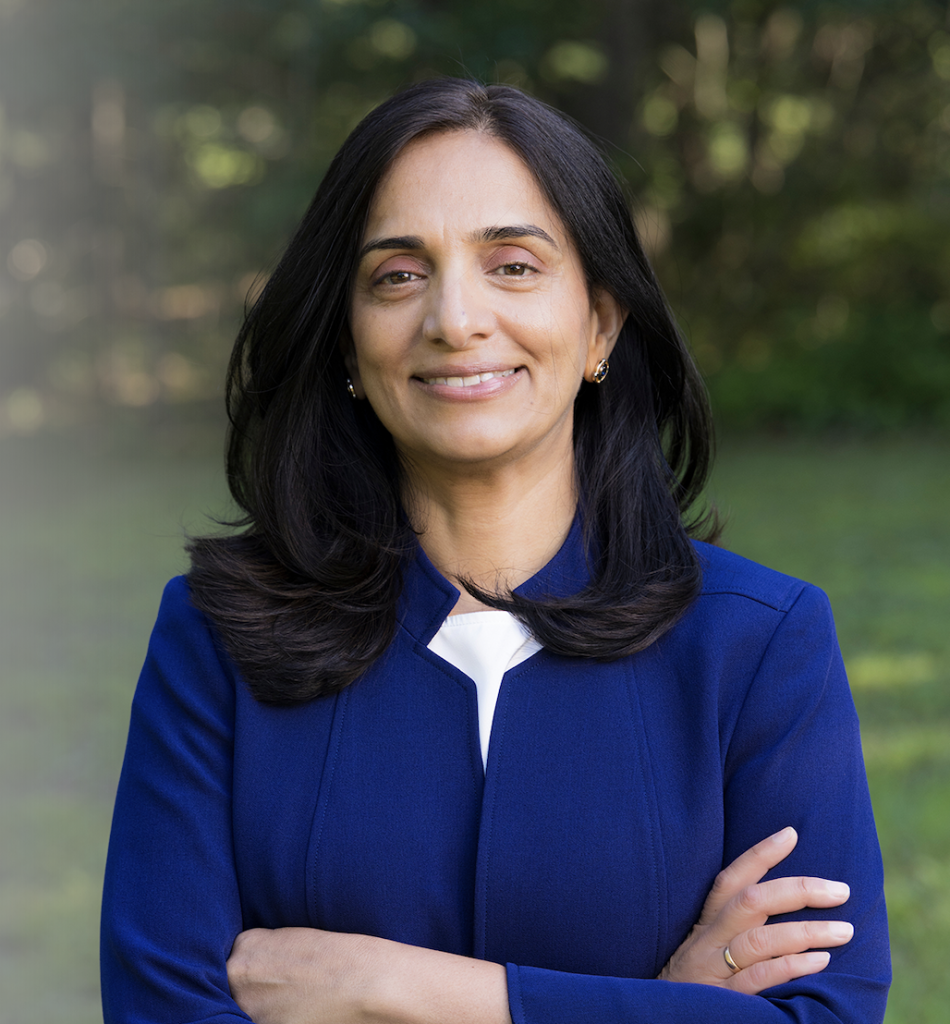
In addition, Manzur organized efforts to feed first responders who were aiding in relief efforts in the aftermath of the September 11 attacks. In the years to come, much of what happened as a result of attacks to the Twin Towers, led to a huge wave of anti-immigrant sentiments, which have intensified recently, says Manzur.
“I am who I am – my ethnicity, my origin story – is there. But the beauty of America is that it is a mix. It’s the melting pot,” she said.
Manzur said her campaign aims to improve life for every American — to bring down the cost of living, to make healthcare and childcare affordable, to improve public education and strengthen democracy.
“The system is not working for many people, regardless of gender, race or political ideology,” Manzur said, explaining how her focus is to unite Americans and Granite Staters to work toward a better future.
She wants to continue serving the country that made her, and gave so much to her. And that’s why she wants to devote the rest of her life to public service, she said, mentioning that if elected, she will be the first non-white, Muslim and immigrant senator from the Granite State.
“I’m an American. And being an American means somebody who loves this country, cherishes this country,” she said. “I want to serve this country, as I have for many years.”