
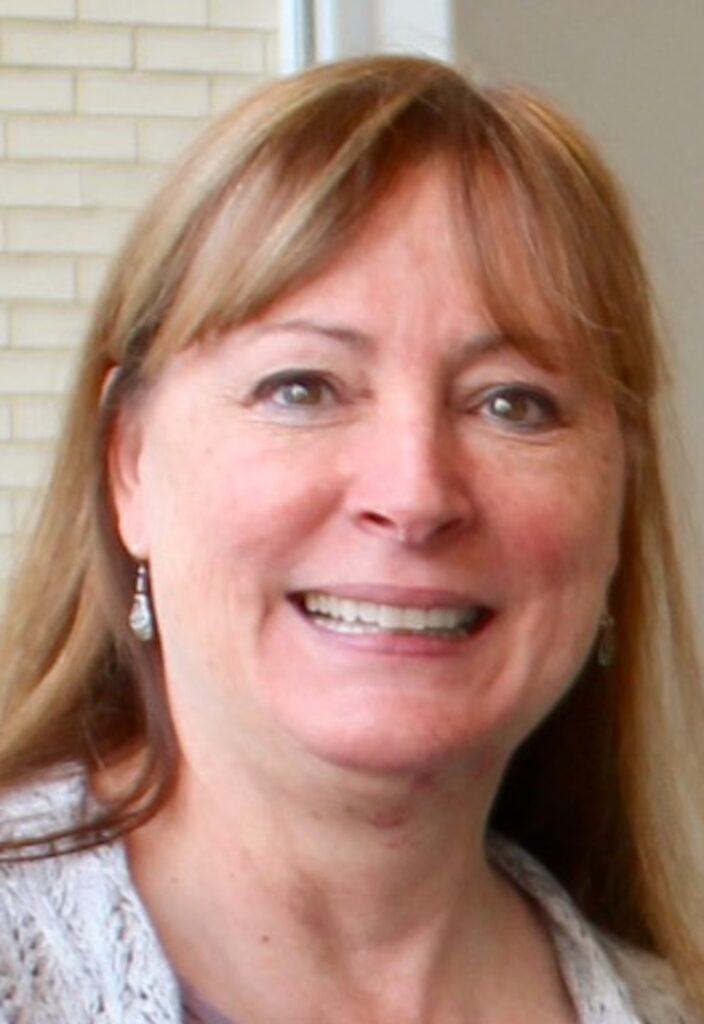
CONCORD, NH – A Manchester woman, who once held a contract to redevelop the former Laconia State School, was sentenced Wednesday to 30 months in federal prison for bilking 24 investors out of more than $3 million.
Robynne Alexander, 63, pleaded guilty in federal court Wednesday to one count of wire fraud.
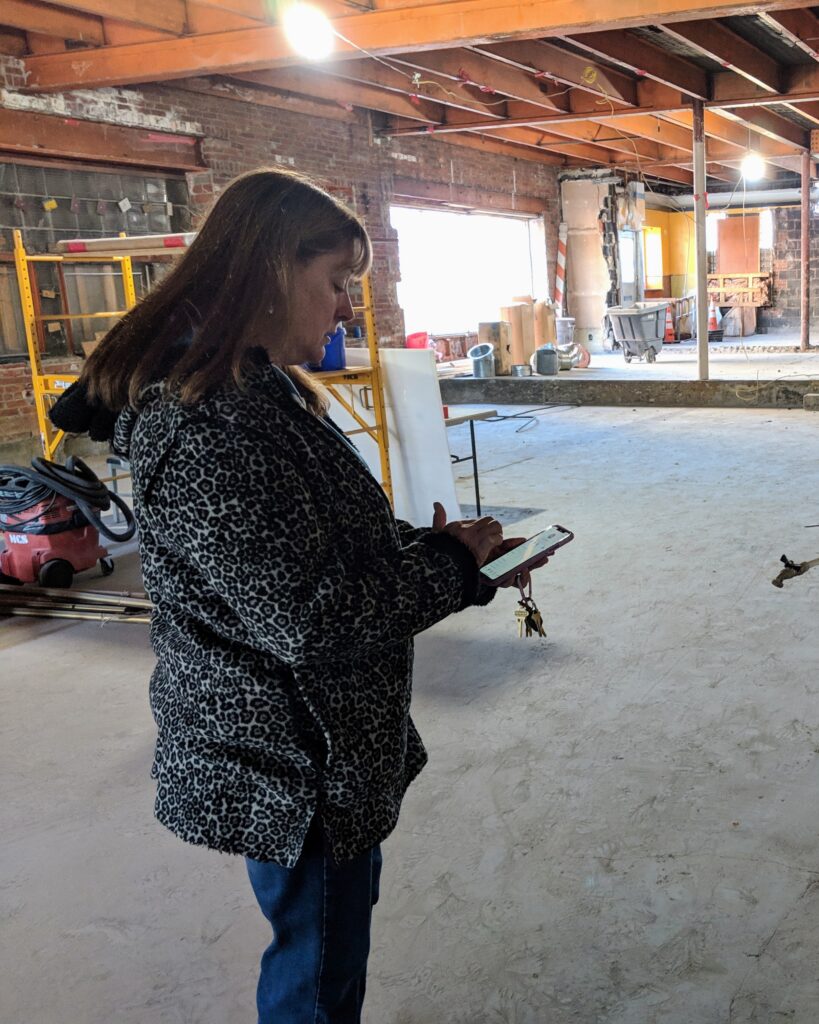
According to documents on file in U.S.District Court, Alexander was a real estate investment coach who in 2018 raised funds from her coaching clients for a New England real estate venture called Raxx LeMay LLC. The funds were to be used to buy and renovate two commercial properties at 1211-1217 Elm St. in Manchester. Between 2018-21, she raised about $2 million from 18 investors, issuing them membership interests in Raxx LeMay.
As part of the agreement, Alexander had to raise the $2 million by May 15, 2018 or at such time the property was no longer under agreement, whichever was later.
Her agreement with investors obligated her to pay them back with interest if the minimum amount of money needed for the investment was not raised by the deadline. Authorities said instead of returning the investors’ money, she used the funds for purposes that were not permitted.
On July 27, 2018, Raxx LeMay purchased the Elm Street property. By that date, however, Alexander had only raised $700,000. To buy the property, she borrowed money from a “hard money lender” in exchange for a mortgage on the property. A hard money lender, Assistant U.S. Attorney John J. Kennedy explained in his sentencing memorandum, is an individual or company, rather than a bank or conventional lender, that makes loans secured by property, generally short-term bridge loans, primarily in real estate transactions. Hard money loans generally have higher interest rates.
Despite not having raised the minimum required dollar amount, Alexander did not return the investors’ money with interest, but instead proceeded to use the funds for other purposes not permitted per the agreement.
Between July and November 2018, Alexander used Raxx LeMay investor funds as collateral to draw $1.3 million from a line of credit in the name of another entity that she owned and controlled.
In September and October 2019, she used a portion of that line of credit to pay back at least four investors in projects other than Raxx LeMay totaling $282,000. She later used Raxx LeMay investor funds to repay the line of credit.
In July 2021, Alexander also used Raxx LeMay investor funds to make payments to two Raxx LeMay investors totaling about $435,000. She also used those funds to pay lender and costs related to other real estate investment projects and to make a loan to herself or other entities she controlled totaling at least $110,000.
That same month, Alexander received $600,000 from a company controlled by two Raxx LeMay investors in exchange for 25% ownership in Raxx-LeMay. That company also was to perform the general contracting services for the Raxx LeMay project. The two investors soon learned that Alexander had failed to keep ordinary business records, was struggling to keep up with payments to Raxx LeMay’s hard money lender, and she was unable to finance the renovation of the buildings.
As a result, the two investors took control of the Raxx LeMay project. Alexander agreed to give them 81 percent interest in an entity called Signature on Elm LLC, she had created in July 2021, with her retaining 19% interest. Alexander then transferred the real estate Raxx LeMay owned to Signature in February 2022.
According to the operating agreement, the sale of Raxx LeMay real estate required a vote of the majority of the investors. Alexander, according to prosecutors, did not obtain investors’ approval and she did not inform them that she was transferring the property to Signature. As a result, Raxx Lemay had no real estate holdings, a fact that was concealed from the other Raxx LeMay investors whose investments then became worthless.
Of the 18 investors in Raxx Lemay, only four received their investments back; the others lost a total of $850,000.
In late 2019, Alexander began soliciting investments for a new real estate project, the renovation of 4 Elm Street. She formed the entity Four on Elm LLC and bought the property after receiving $260,000 from two investors. About a year later, she formed a second entity, Elm and Baker, LLC, to accept additional investments related to the 4 Elm St. property.
About May 27, 2021, a person, identified in court documents as Victim 1, wired $750,000 to a bank account at Bar Harbor Bank & Trust in the name of Elm and Baker, LLC, in order to invest in Alexander’s project. The money was for the conversion of the property to apartments to be sold on the market. The investor was to get back the investment and 25 percent of the net sale profits.
Instead, Kennedy wrote, Alexander used about $327,000 of the money to repay two original investors of Four on Elm; used another $170,000 to repay an unrelated former investor; used about $45,000 to make a personal loan to an individual unrelated to the project; and used another $25,000 to make loan payments on a different project unrelated to Elm and Baker.
Alexander, according to court records, eventually stopped making mortgage payments on the 4 Elm St. property and was foreclosed on in the spring of 2023.
The original $750,000 investor didn’t learn of the foreclosure sale for nearly a year.
In November 2022, Alexander signed an agreement with the state of New Hampshire, on behalf of Legacy at Laconia LLC, to redevelop the former Laconia State School and the 217-acre property where it is located.
The project was described on its website as a project to “create a first in the world, innovative, world class resort implementing universal design with barrier free accessibility with an all-in-one sustainable village.”
Alexander offered ownership interests through a separate entity called Legacy at Laconia Fund LLC seeking $40 million. In exchange for investments, investors would receive equity positions in Legacy at Laconia Fun LLC. No one invested in the fund, Kennedy said.
However, she did receive one investment of $250,000 in Legacy at Laconia – the entity that signed the purchase agreement – on Oct. 11, 2023 from an investor called Victim 2. The investment was secured by a promissory note payable at 15 percent interest by Feb. 15, 2024.
Alexander, prosecutors said, misappropriated at least $75,000 of those funds, using the money for payments on other real estate investment projects, personal living expenses, and nearly $5,000 of personal travel expenses in Paris, Barcelona, Valencia, Nassau, Florida and New Orleans in October and November 2023.
Alexander was unable to secure financing on the Laconia property and the state terminated the agreement on April 21, 2023. Victim 2 did not receive any repayment of the investment.
Prosecutors said in addition to those three investment projects, Alexander’s scheme included several other real estate investment projects for which she solicited investments including: 9 G St. in Hampton; 9 Cross St. in Somerville, Mass.; 23 Country Club Road in Manchester; 37 C St. in Manchester; and a group of apartment units in Providence, R.I. In total, Alexander’s scheme involved at least eight investment projects resulting in losses to at least 24 victims of about $3,023,000.
Prosecutors recommended Alexander be sentenced to 33 months in prison, because when confronted with her crimes, she “quickly took responsibility for her actions.” She also fully cooperated in the government’s investigation.
Still, Kennedy wrote, Alexander knew her projects were failing, that she was not achieving the benchmarks set in the investment offerings yet continued to solicit funds and use those funds to pay off old debt, support her personal life, and move forward on unrelated projects
“Her crimes hurt a lot of people, and many will likely never be made whole. The defendant’s early acceptance of responsibility and cooperation is commendable which is why the government is seeking a downward variance. But the fact is that her crimes caused significant harm and require a serious sentence,” Kennedy wrote.
.