
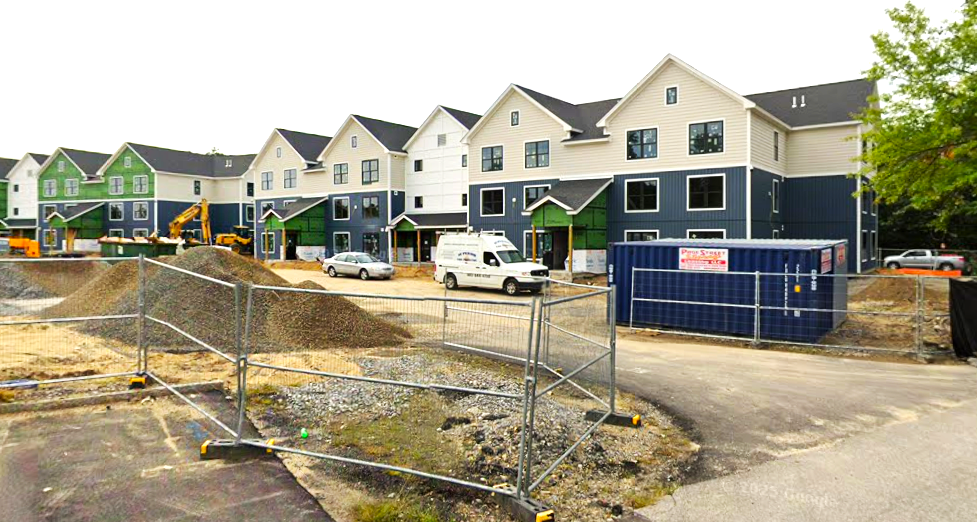
MANCHESTER, NH – Repeal of a program that’s been touted as instrumental in helping the state inch toward closing the gap on its housing needs – including supporting 65 new housing units in Manchester – is scheduled for a vote Thursday in the New Hampshire House.
HB 1196 would repeal the Housing Champions program, which incentives workforce housing production and infrastructure changes that make housing projects affordable for developers. The bill was approved 10-8 by the House Housing Committee Jan. 20, and is scheduled for the a full House vote Thursday.
The Housing Champions program was cited last month as a major factor behind increased building permits in the state in the annual Current Estimates and Trends in New Hampshire’s Housing Supply for 2026.
The program, created in 2023 and implemented with $5 million in the previous state budget, provides grants as an incentive to towns and cities to make changes that remove barriers to creating housing. The first $5 million was distributed in 2024 and 2025 to 11 communities, including $322,253 to Manchester that supported 65 new workforce and transitional housing units.
Housing Champions wasn’t funded in the state FY 2026-27 budget that went into affect July 1, but it still exists and it can be funded in the future. HB 1196 would scrap the program altogether., possibly rescinding about $2.6 million in grants that were awarded but not drawn down on, according to a fiscal note to the bill by the Department of Business and Economic Affairs, which facilitates the program.
Housing Champions is responsible, in the short time it’s been in existence, for supporting 385 housing units already built, and making an estimated 2,280 more possible because of critical infrastructure upgrades in eight communities.
“The program demonstrates that coordinated state and local action can improve housing conditions while preserving municipal autonomy and planning integrity,” noted the program’s annual report, released Jan. 30.
But Rep. Matt Drew, R-Manchester, sponsor of the bill to repeal it, said, “This is a bad program. We can’t afford it and we should end it.”
Drew, during committee discussion about the bill, said that the program is “a state-funded incentive to get cities and towns to subsidize politically favored projects.” He criticized the fact that grants are awarded for work already done.
Committee approval of the repeal was on party lines, with Housing Committee Republicans voting in favor, Democrats opposed.
The program’s supporters tout its success in getting needed housing built. They noted that it works like any other state grant program.
Aside from the housing gains directly related to grant awards, the 28 communities that have been recognized as Housing Champions were responsible for permitting 2,643 housing units in 2024, which was 45% of the total number of units approved in the state that year, according to the annual Current Estimates and Trends in New Hampshire’s Housing Supply for 2026 by the BEA.
“The Housing Champions program is already delivering results,” Nick Taylor, director of Housing Action NH, said in a statement after the committee vote. “Municipalities are updating their regulations to allow for more housing, and communities are using these incentives to modernize water, sewer, and safety infrastructure that directly supports new homes.”
Supporters of the program also aren’t happy that the repeal could pull the rug out of cities and towns that have made changes in order to access the grants.
“Ending Housing Champions would pull support from communities that have already done the work and planned projects around it,” Rep. Karen Hegner, D-Manchester, wrote in an Ink Link op-ed. “It would slow housing. It would raise costs. It would break trust between the state and local governments. Manchester has done its part. The state should keep its word.”
Manchester’s $205,500 production grant helped cover the cost of 51 units – 48 at Upland Heights at 580 and 590 Kimball St., and three at 157 Chestnut St.
The $116,753 infrastructure grant paid for fire and safety upgrades at the 231 Merrimack St. transitional housing project, the former St. Anne’s church, allowing it to expand from 16 units to 30.
The program cited Manchester’s new municipal Affordable Housing Trust Fund, which is supported by surplus land sales, as one of the actions that makes the city a Housing Champion.
Nashua, Salem and Newport also got housing production grants that paid for a total 320 housing units.
Addressing critical infrastructure needs
NH Housing Action, in a memorandum about the program, said that aside from the amount of housing already in the works, the program also addresses some of the critical issues that are slowing housing growth in the state.
“Infrastructure investments are critical to expanding housing options,” the memo said. Only about 12% of the state’s building land has access to water or sewer infrastructure, and much of what exists is aging.
“The Housing Champion Program creates a pathway for infrastructure funds to go towards the communities that are helping address our state’s housing shortage.”
Infrastructure grants represented the largest amounts awarded by the program, with $859,689 each to Concord, Dover and Salem for sewer or water system upgrades. Also getting infrastructure grants were Lebanon, Newport and Rochester, as well as Manchester’s $116,753.
Community officials underlined that issue at October’s Housing and Economy Conference, saying infrastructure issues are the biggest barrier to building more housing, and that the state needs more programs that support infrastructure development, not fewer.
Keene Senior Planner Mari Brunner, a panelist at the conference, said, “Infrastructure is so expensive. We’re having hard conversations locally because there’s no funding.”
Pam LaFlamme, Berlin assistant city manager, said property in areas of the city where there is no water or sewer connection doesn’t sell or get developed. Adding sewer and water costs money the city can’t afford.
“We need more programs to open some doors,” she said.
NH Housing Action also noted that Housing Champions rewards a geographically diverse range of communities.
“There are 28 Housing Champion communities from all corners of the state. The program is working for both our most populous cities and rural communities.”
Housing Champions are Boscawen, Concord, Derry, Dover, Enfield, Farmington, Hinsdale, Hooksett, Jaffrey, Keene, Lebanon, Manchester, Nashua, Newport, Portsmouth, Rochester, Salem, and Somersworth.
One of the priorities listed in the annual report was to increase the geographic range of the program.
The NH Housing Action memo also points out that HB 1196 offers no appropriation, despite the fact that “the grant programs have proven to be a strong incentive and productive framework for ensuring grant funds are going towards the communities that are taking action” on housing.
“By opposing HB 1196, legislators are allowing existing infrastructure projects to continue, maintaining the programmatic framework for an incentive-based state and local housing partnerships, and allowing future legislatures to make a decision on budget choices,” the memo says.
An idea with bipartisan support
The Housing Champions program had been in development since 2019 as part of a task force convened by Gov, Chris Sununu. When it was introduced during the 2023 budget process, it got bipartisan support.
The program rewards cities and towns that take specific action that supports housing construction – zoning changes, policy updates, infrastructure upgrades – by scoring them on criteria related to those actions. Municipalities that score a certain number are designated as Housing Champions and can apply for grants under three programs: Housing Production Grants, Housing Municipal Infrastructure Grants and Housing Planning and Regulation Municipal Grants.
The production grants are for verified production of deed-restricted workforce housing. Recipients can use the money to support infrastructure, revolving loan funds, planning, or matching requirements for other programs. Grant money is distributed once the units that are approved are completed and have occupancy permits and minimum 10-year deed workforce housing deed restrictions. The money is distributed proportionally based on number of completed units.
Infrastructure grants support improvements that enable housing development, including water, sewer, stormwater, roads, telecommunications, electrical systems, and fire suppression.
The planning and regulations grants support third-party planning and technical services to modernize local land use regulations.
The report said that the program works because it pairs regulatory reform with infrastructure investment and production incentives, supporting “municipalities responding to workforce housing demand in ways consistent with local character and long-term economic development goals.”
It’s successful because it lowers development costs, encourages infrastructure investment, and creates new housing options for workers, the annual report said.
“This increase in workforce housing not only helps meet current labor needs but also strengthens local economies by attracting and retaining businesses creating a more robust workforce. Additionally, it ensures that future generations who want to live and work in New Hampshire will have access to affordable housing.”
There were 11 applications submitted for grants in the 2025 round of funding, but since the program was funded in the state budget, those grants were not awarded.
Future priorities for the program, as listed in its 2025 annual report are:
- Increasing geographic participation statewide
- Aligning state infrastructure investment with emerging housing markets
- Strengthening local planning capacity
- Leveraging municipal reform to attract private housing investment.