MANCHESTER, N.H. – The clock is running.
During the first term of Manchester Mayor Jay Ruais, he possessed a clock in his office counting down the days, hours, minutes and seconds until that term would conclude. With Tuesday’s inauguration ceremony at the Palace Theatre, Ruais’ clock has been reset and is once again counting down as a reminder of the urgency he has toward making Manchester better over the next two years.
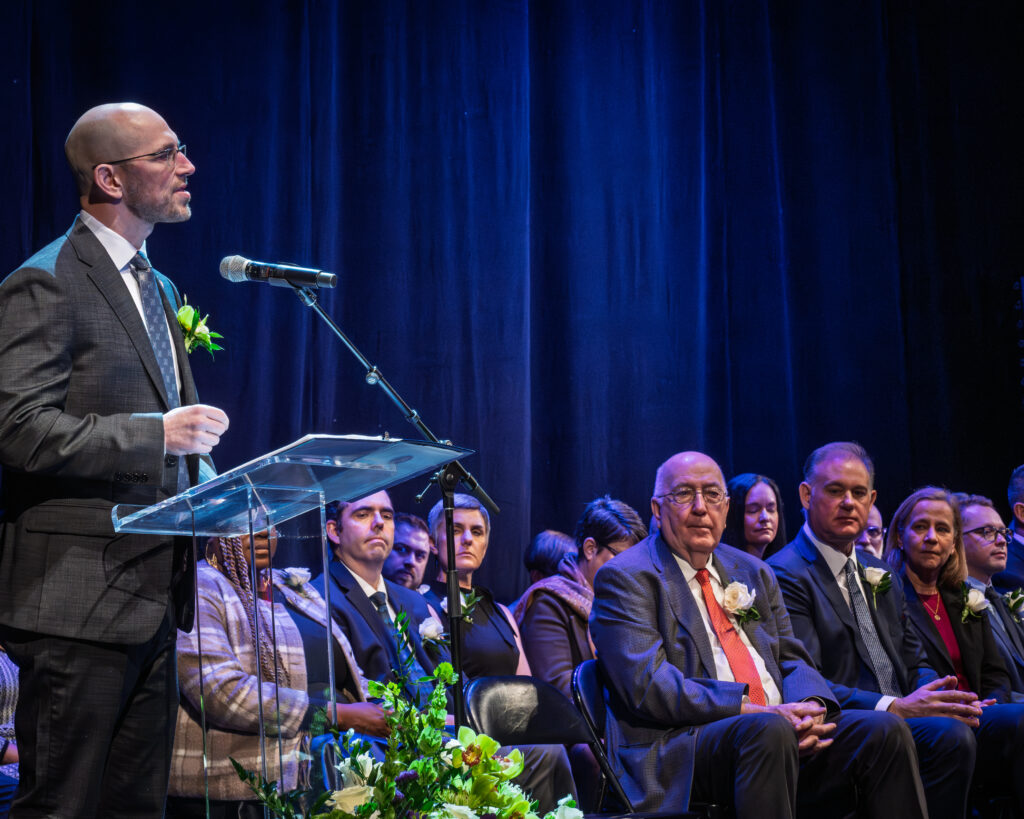
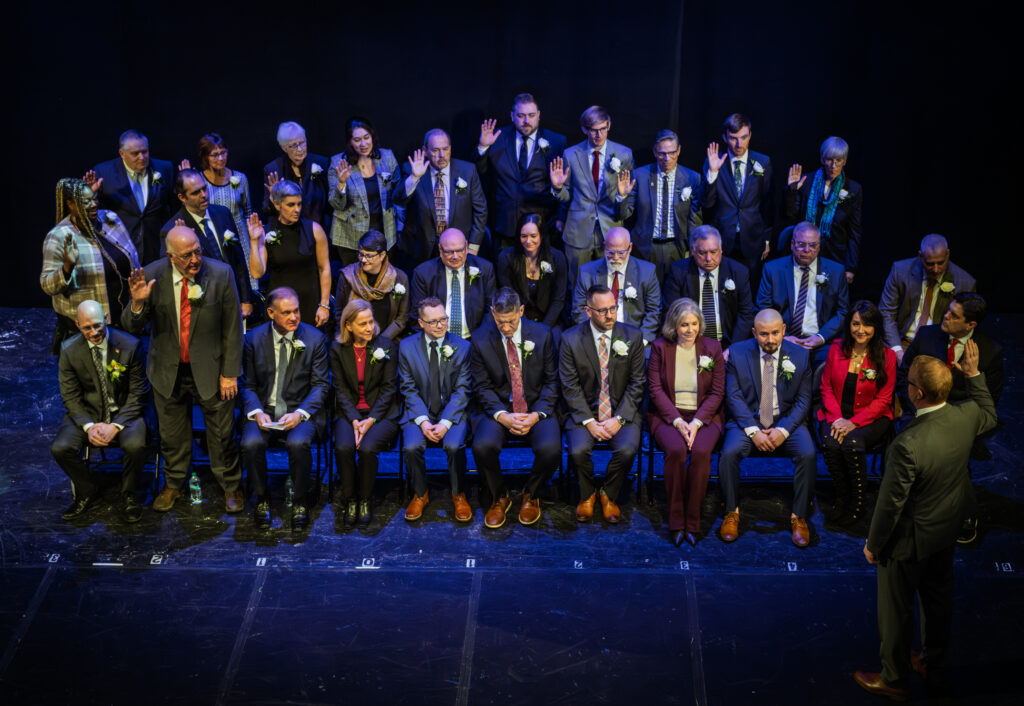
In addition to oaths of office for Ruais, the city’s aldermen and board of school committee members, the ceremony held an encapsulation of the returning mayor’s thoughts on several key issues facing the city’s government as well as recent accomplishments serving as a foundation toward addressing those issues.
A key issue in the mayor’s speech centered around homelessness. Ruais reported to the audience that the 47 homeless veterans initially identified when he vowed to end veteran homelessness in the city had been provided housing and 89 veterans overall without a home had been given housing thanks to collaboration between the city and various local organizations. He also noted that thanks to the Roman Catholic Diocese of Manchester, Manchester Chamber of Commerce Citizen of the Year Bob Singer and a non-profit called Family Promise in the creation of a new 15-18 unit transitional housing program for families experiencing homeless, potentially ending a current waiting list for families facing homelessness.
Ruais also expanded upon the creation of an upcoming streamlined replacement for the Beech Street Shelter that will focus on the city’s elderly homeless population, a continuation of the engagement center established on Beech Street and a winter warming center. In this announcement, he shared his goal to create a sustained funding mechanism that will prevent the start-and-stop cycles that have plagued the city’s efforts to fight homelessness in the past.
Ward 4 Alderwoman Christine Fajardo applauded the mayor’s announcement, which built upon her concern over the lack of an overarching plan to address homelessness.
“I was very pleased to hear him say those things because I think that’s exactly what we need: a runway to make an actual plan rather than constantly being on the back foot and reacting every six months,” she said.
Housing costs were also a concern of note, and here Ruais touted the recently approved zoning ordinance rewrite, upcoming efforts to simplify the city’s site plan and subdivision regulations, work on providing online permitting and growing the city’s affordable housing trust.
Alderwoman At-Large June Trisciani had praise in particular for the focus on the affordable housing trust, which received additional funding during the mayor’s first term after an auction of surplus city properties.
“The most effective way to address homelessness is to prevent it in the first place. By making better use of our existing affordable housing trust, we can give property owners real tools to create affordable and workforce housing, help people stay housed, and support our local workforce before housing challenges turn into crises,” she said. “I look forward to working with my fellow board members and the mayor to get this done.”
Other initiatives mentioned by the mayor included the creation of a new commission dedicated to expanding access to childcare and early childhood education, independent auditing efforts that will add proactive analysis of city spending in addition to the legally mandated annual audits, the creation of a new purchasing division intended to eliminate duplicative spending across city departments and a larger “streaming, taxpayer accountability and reform system” or “STARS” for short, which he has been told by auditors could save the city $1 million annually.
The mayor also stressed budgetary challenges that the city’s leaders will face, such as a $14 million shortfall faced by the Manchester School District, and a 17-officer shortfall in the city’s police department. Here, and in other aspects of the next two years of city governance, he asked his fellow elected officials for guidance and support as he hopes to improve on the news last year that Manchester was considered the third best-run city in the United States according to a recent study.
“Manchester has been tested before, and we have shown that when we work together, we can deliver real results for our residents,” said Ruais. “The people of this city have sent us here to govern responsibly, work collaboratively, and make their lives better and that is exactly what we intend to do.”