

CONCORD, NH – The first step toward providing some relief for the state’s more than 75,000 SNAP recipients was taken Tuesday as the Legislative Fiscal Committee unanimously approved a contingency plan that will provide funding to shore up food bank resources.
The $2 million from the state’s Medicaid Enhancement Tax revenues will allow the New Hampshire Food Bank to add to its mobile food pantry program, exclusively for people who get Supplemental Nutrition Assistance Program [SNAP] benefits. Those benefits likely won’t be available beginning Saturday because of the federal government shutdown.
The Executive Council must also approve the plan when it meets at 10 a.m. Wednesday before it can become official.
The plan allows New Hampshire Food Bank to open additional mobile food pantries, and on additional days, that would be exclusively for SNAP recipients. It doesn’t replace the SNAP benefit for all of the more than 75,000 people in the state who get the benefit, at an average of $169.54 a month per person.
The plan is a “Band-Aid” that will help, but not make up for the $12.6 million a month the state distributes in SNAP benefits, Department of Health and Human Services Commissioner Lori Weaver said Tuesday.
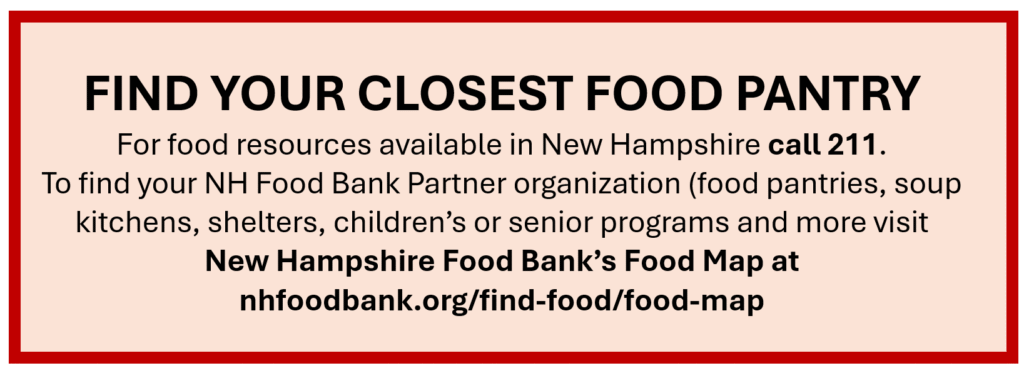
If the plan is approved by the Executive Council, it will take about a week to get up and running, officials said Tuesday. It is designed to continue into December if the shutdown does.
New Hampshire is the only New England state to not join a lawsuit filed Tuesday by 26 states seeking an injunction to force the U.S. Department of Agriculture to use $6 billion in contingency funds that Congress set up to pay SNAP benefits if the regular appropriation isn’t available or falls short. The USDA, which initially cited that money in its shutdown plan filed in September, now claims that it can’t use it to cover November benefits.
If November SNAP benefits aren’t paid, it would be the first time in the program’s 61-year history that benefits were interrupted.