

Editors Note: This story was edited for accuracy on Nov. 24.
MANCHESTER, NH – The Manchester School District’s bus system has faced criticism in recent years – while still working with Student Transportion of Amerca (STA) complaints included suspended charter school bus service, students being forced to sit on the floor, and budget cutback stress. Even now, working under its own Manchester School District (MSD) Transportation Department there are issues in need of resolving, which led to a recent presentation aimed at providing ideas for improvement.
During the November meeting of the Manchester Board of School Committee’s (BOSC) Committee on Finance and Facilities, Manchester School District Assistant Superintendent Kelly Espinola provided feedback from her study of the school transportation system in Worcester, Mass.
Espinola told the committee that Worcester uses geographic data to optimize routes and strategically places its largest stops to increase efficiency. Worcester’s school system also has invested in its transportation needs more than Manchester and added to that investment with the use of Elementary and Secondary School Emergency Relief (ESSER) funding following the rise of the COVID-19 pandemic to restore and retain its bus driver corps. Manchester did not use ESSER funding in this way.
On top of those advantages, Worcester also effectively worked with state officials and local colleges to find 93 new school transportation-related employees through workforce recruitment pipelines, managed to retain a much larger transportation management structure and also provides restrooms and other facilities for drivers that help with retainment.
Espinola added that in addition to these shortcomings, Manchester may have to find a new place to house its school buses after June 30, 2025.
Ward 1 BOSC Member Julie Turner described the presentation as a “10,000-foot view” of a system long overdue for modernization and said the comparison made it clear just how much work lies ahead and hoped some of Worcester’s policies could be adapted to Manchester’s reality.
Turner said that she hopes the district’s policies regarding limitations for bus service to students living within a certain radius from their schools could be addressed in the near future, also hoping that more integration could be found between public school bell schedules and the schedules of non-public schools serviced by the school district’s bus system.
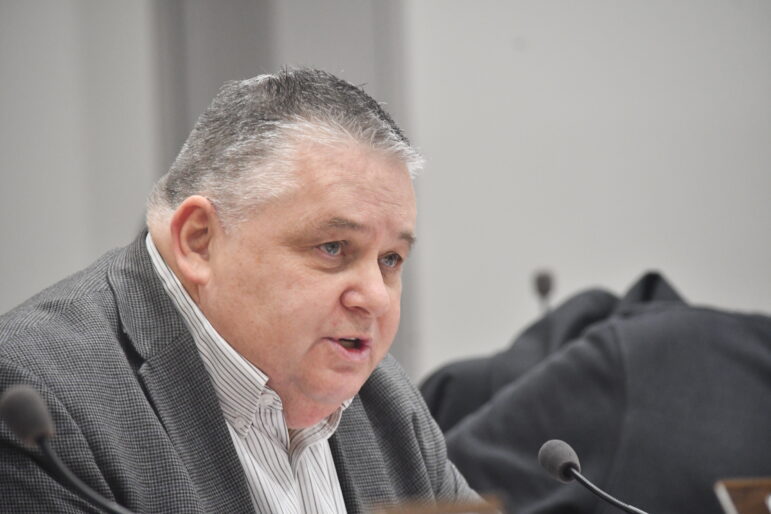
A year before the Manchester School District started its own transportation division, BOSC Vice-Chair Jim O’Connell recommended looking at Worcester for solutions rather than use outside contractors to supplement the city’s Manchester Transportation Authority (MTA) infrastructure it once used but could no longer entirely use for its needs.
To correct these issues, it was his hope that the district would address deep structural issues and acknowledge ways to address gaps in needs while Turner hoped that the district would “get stronger and better” as planning efforts advance.
“We need a plan,” said O’Connell.