
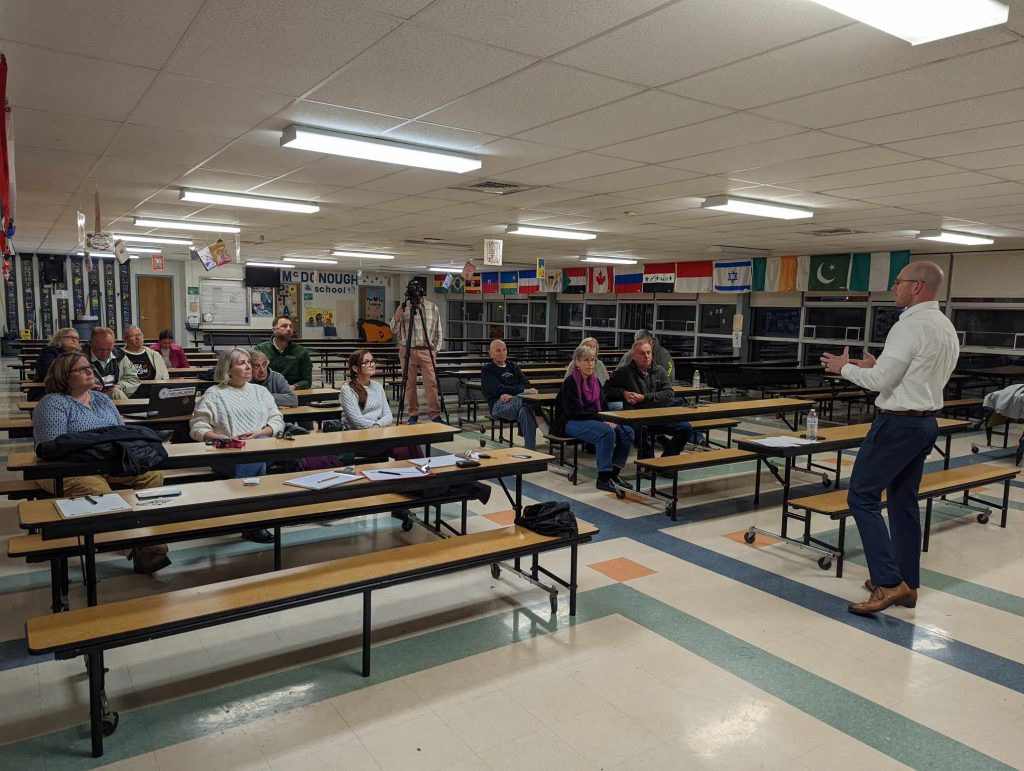
On Thursday night, Manchester Mayor Jay Ruais held the 11th of his town hall meetings across the city, this time heading to McDonough Elementary School to meet with Ward 4 residents. Here’s a recap of what was discussed.
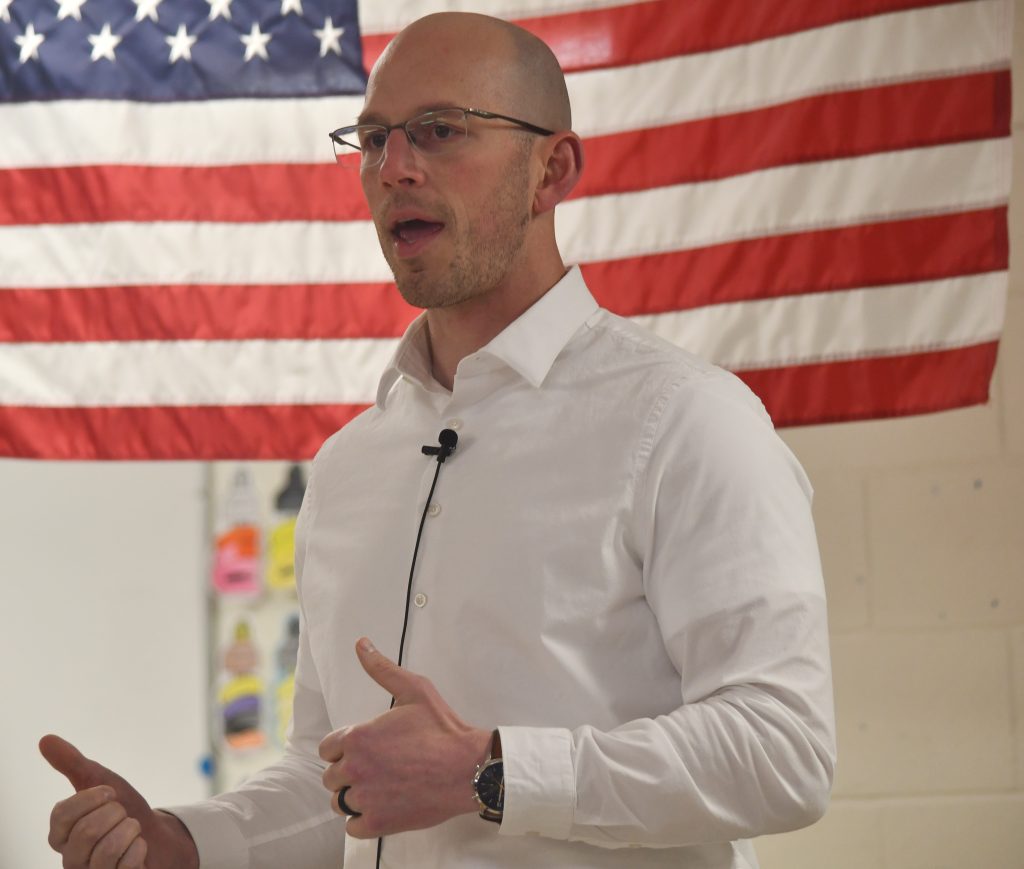
Mayor’s Update
Following up on Tuesday’s Board of Mayor and Aldermen (BMA) meeting, Ruais provided an overview of several items on the final list of American Rescue Plan Act (ARPA) fund expenditures, which are required to be allocated by the end of December.
There was another update on city cleanup efforts, with the Department of Public Works now at 300,000 pounds of trash picked up since the beginning of the year and downtown cleanup efforts from the Street Plus team now at 663 needles, 377 stickers and 259 instances of graffiti removed since July.
A new city auditor has been hired for the first time in six years and a new city-wide grant coordinator has been brought on board as well.
The mayor also discussed the possibility of offering sign-on bonuses comparable to nearby municipalities to fill the 24 remaining vacancies on the police department roster.
He also praised the Manchester Police Department for 123 arrests and 476 citations issued regarding the city’s recently reformed camping ordinance as well as 20 percent year-over-year reductions in opioid overdoses and deaths.
Schools
The first topic of discussion among the assembled Ward 4 residents was another one from Tuesday’s BMA meeting: the future of Beech Street Elementary School.
There was a sense of frustration among some participants in the meeting that the mayor seemed to be out of the loop regarding the Manchester School District’s proposal, as the mayor broke a tie vote regarding a key step toward advancing the school with by siding with the opposition, feeling that the voices that were heard at the meeting made it clear that more insight on development of the new school was needed.
He added that he did not like tie votes, instead seeking consensus whenever possible.
Ruais made it clear that he only sought to pause rather than stop the proposal, and although he had doubts about the first phase of the school district’s facilities update plan, the bonding had already been issued for that part of the plan and there was no going back.
While more details about Phase 2 are expected in early December, there was confusion and frustration as to why those details had been delayed, leading to rumors regarding the future of the city’s high schools.
One man who stated that he is a landlord expressed frustration with the vote, stating that often people moving into the city express concern with the city’s educational system and votes such as the one pausing momentum with the Beech Street proposal make it difficult to argue against that concern. That man felt that it was important to show investment in the schools to ensure the economic future of the city.
There was also debate over whether the money proposed for the new school could be better spent elsewhere in the district given renovations in recent decades at the school it is set to replace.
Homelessness
During Tuesday’s meeting, short-term funding was given for the Beech Street homeless shelter, which will double as a warming station this winter.
There were concerns over the future of the Families in Transition Emergency Shelter building on Manchester Street given that the building is getting older, state aid may be in jeopardy in the near future and local taxpayers are concerned they may not have more to give after a fiscal year that Ruais described as difficult.
One idea was using the Econolodge building on the west side as a potential focal point in helping the city’s homeless population. Ruais said it would be ideal to have such a structure that could provide housing and wrap-around services to the city’s homeless population as they seek to break the cycles that keep them in homelessness.
Meanwhile, Ruais said that his strategy is to increase focus on helping targeted subpopulations in the homeless population such as homeless veterans. With smaller groups, the problem can seem more manageable and lessons can be learned for other subpopulations, transitioning people from those groups out of shelters and opening space for others in need.
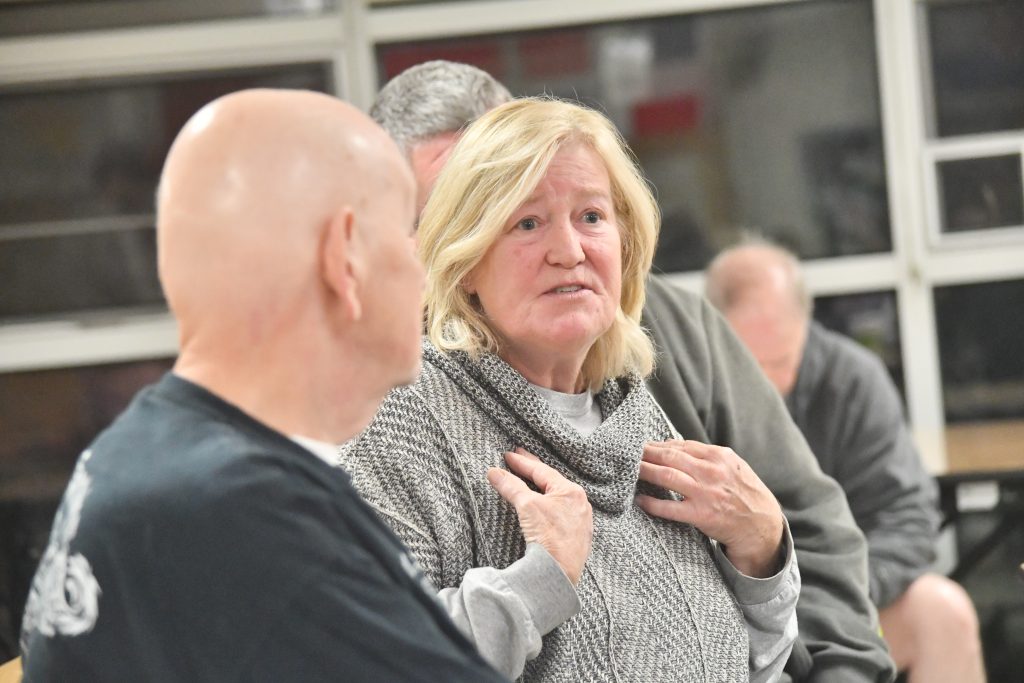
Ward 4 resident Laura Burns felt that more should be done to ensure that assistance goes primarily to homeless people originating from Manchester. She was asked if she was concerned with refugees using those resources, but replied the primary concern was people coming from Massachusetts or Maine.
She also said she would be eager to see more housing for those in need built in parts of Ward 4, earning the praise of Ward 4 Alderwoman Christine Fajardo.
“Having these meetings in our wards are great,” she said following the meeting. “We get to hear from the mayor, we get to know the reasons why things are happening the way they are, and we get to have input into what’s happening in the city.”
Ruais said that the city seeks to help who it can, but its resources are finite and it cannot help everyone, particularly when other towns and cities in New Hampshire are not doing enough to help the homeless population in their area, shunting their responsibilities onto Manchester.
He also added that the ongoing zoning ordinance rewrite will hopefully help alleviate homelessness by encouraging more density in the city center, thus increasing housing availability.
Future of the YDC
One person asked about the future of the Sununu Youth Detention Center site, a large piece of land in northern Manchester that has been at the center of controversy over the last several years.
Ruais said that the future of the site will begin to be determined once the last person at the site is transferred to Brentwood, likely coming in Fall of 2025. During those discussions, Manchester will have a seat at the table, but it was suggested that Manchester residents determine their goals for the property before that process begins.
Ruais agreed that would be wise given that residents of the city have a wide array of ideas for that land. He noted that there could be a series of town hall meetings comparable to this one in Ward 4 asking for feedback from residents on the issue.
For previous monthly mayoral ward meeting recaps, see below
February 16, 2024 (Ward 1) – Ruais discusses city issues during Ward 1 meeting
March 13, 2024 (Ward 11) – Ward 11 Town Hall: Talking the talk with residents on crime, housing, garbage and West High School
March 23, 2024 (Ward 3) – Mayor hears from downtown residents at latest town hall
May 17, 2024 (Ward 9) – Ward 9 Town Hall: Mayor fields questions on tax breaks for developers, bail reform, traffic and school safety
June 19, 2024 (Ward 7) – Ruais tackles questions from Ward 7 residents
June 20, 2024 (Ward 12) Sparse crowd at Mayor’s Ward 12 Town Hall
July 24, 2024 (Ward 10) Homelessness, housing, education and more discussed at Ward 10 town hall with the mayor
August 28, 2024 (Ward 8) Eighth mayoral town hall held in Ward 8
September 9, 2024 (Ward 6) Ruais holds town hall meeting in Ward 6
October 9, 2024 (Ward 5) Ward 5 residents talk about litter, fireworks, illegal parking and more with Mayor Ruais